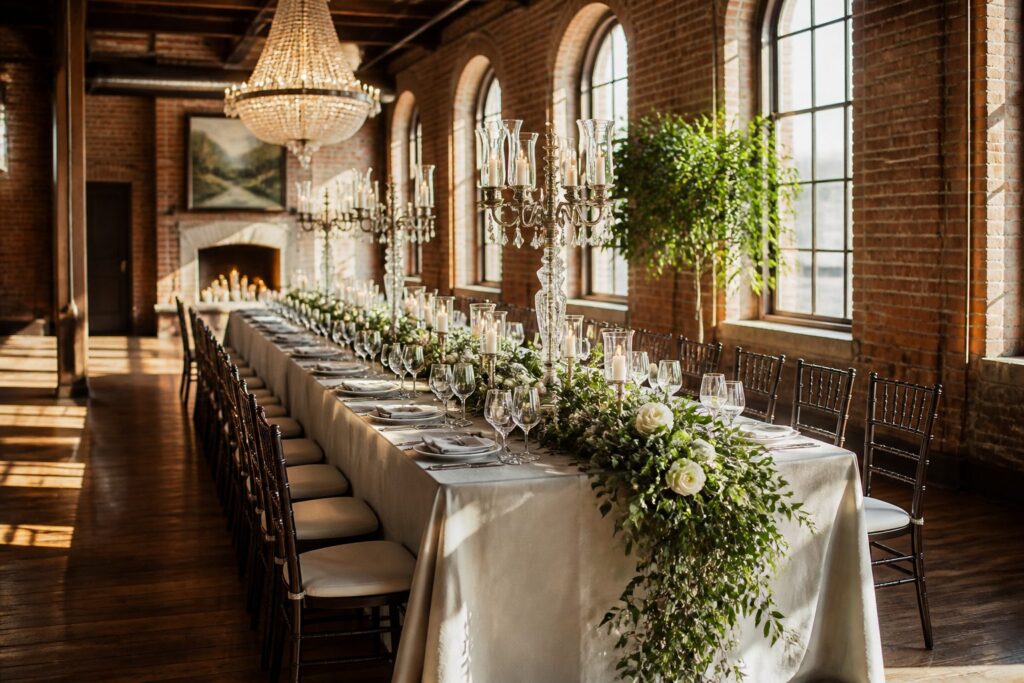
A wedding banquet hall is any dedicated event space built to host a seated reception with a dance floor, though the term covers everything from hotel ballrooms to converted warehouses.
What actually changes between them is whether you are renting a finished room or buying the right to build one from scratch.
The Glenoaks Ballroom in Glendale arrives with crystal chandeliers and a bridal suite for 450 guests; a converted textile mill arrives with brick walls and a catering budget that doubles once you add draping and uplighting to keep the space from echoing.
[link-whisper-related-posts]1. Classic Ballroom Venues
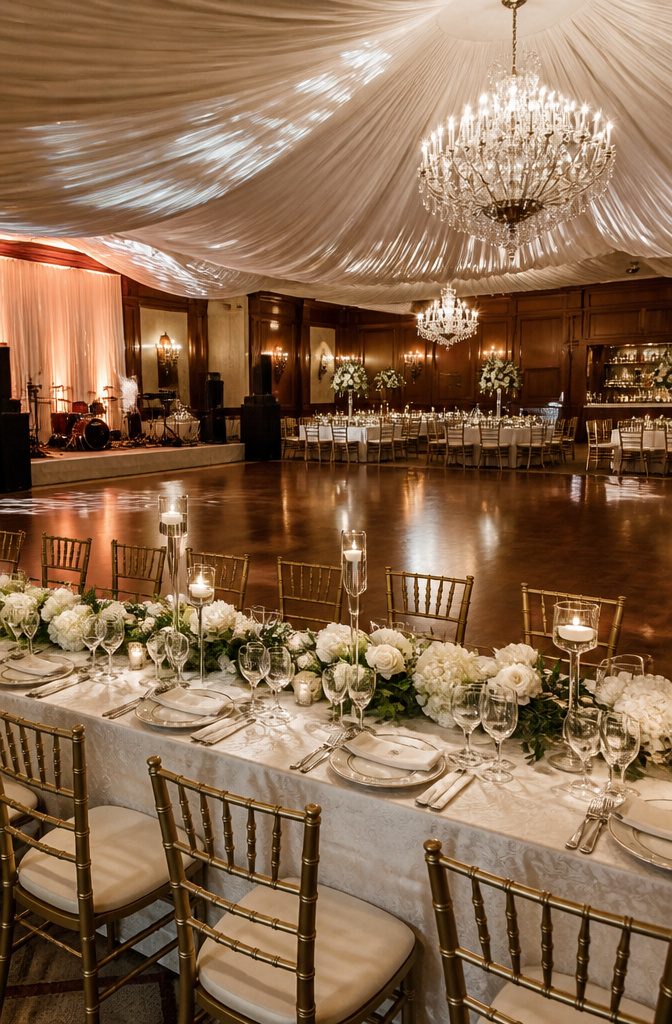
Crystal chandeliers and draped ceilings still define what most people picture when they hear wedding banquet hall.
These are the hotel ballrooms, country clubs, and dedicated event spaces that have hosted generations of receptions, and their whole architecture assumes a formal seated dinner with a dance floor in the center.
Capacity runs large. The Glenoaks Ballroom in Glendale holds 450 guests under special-effects lighting and a bridal suite, while the Landmark pushes that to 850 across 10,000 square feet of soaring ceiling near Mission Hills.
Smaller examples exist, like the Crystal Hall near Dallas at 150 guests, but the classic model really opens up at 200 and stretches past 600.
That scale shapes every other decision: the per-head catering minimums, the number of centerpieces, the decision whether to invite your parents’ colleagues you have never met.
These venues typically bundle the essentials that would otherwise be rented separately. On-site ceremony spaces, bridal suites, patios for cocktail hour, and lighting packages come included, which simplifies planning but also limits flexibility.
The draped ceiling and polished floor are not blank slate; they are a specific aesthetic you either want or spend money fighting against.
What you gain in convenience you give up in control. A classic ballroom delivers grandeur without coordination headaches, and guests over sixty will feel at home.
Couples who want their wedding to feel like theirs rather than like every hotel reception since 1987 need to budget extra for florals, uplighting, or a draping overhaul to soften the formality.

【Multiple Working Modes】U`King stage par light(Corded Electric) consists of 36 high-quality 36x1W LED lamp beads. There are 5 control modes on our dj lights: remote control, sound-activated, DMX 512, automatic, master-slave

2 CONTROL METHODS - Switch and remote control, no cable, this LED under table light for party is convenient and easy to use.

【Complete 8-Pack DMX Lighting System with Controller Included】Unlike single stage light fixtures that require additional accessories, this complete lighting package includes 8 RGB LED par lights, a DMX512 controller panel, and connecting cables, allowing you to create synchronized multi-light shows right out of the box. The 192-channel DMX controller supports up to 12 fixtures and provides precise control over colors, brightness, strobe effects, scene programming, fade transitions, and chase sequences. Ideal for DJs, bands, churches, wedding venues, bars, clubs, karaoke rooms, and event productions.
2. Modern Event Centers
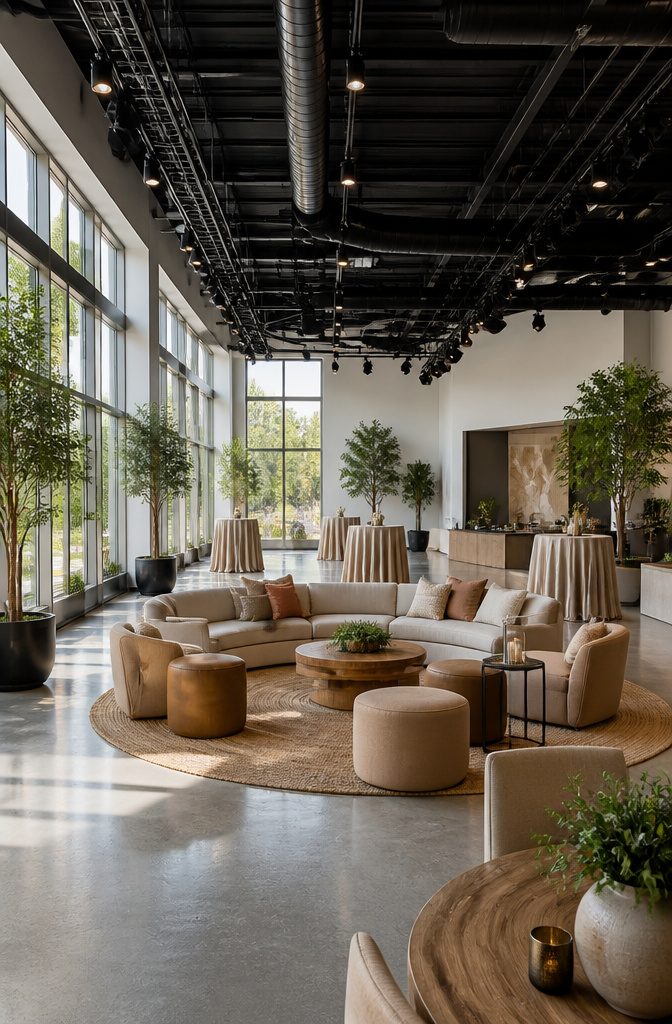
A modern event center built in the last decade solves the problem older ballrooms face: the blank slate without the dated feel.
These spaces come with clean lines and neutral palettes designed to adapt to any vision you bring, whether that is minimalist greenery or saturated uplighting.
The flexible layout matters most for guest counts between 100 and 500. One evening the same floor plan holds theater seating for a corporate meeting; the next, it reconfigures for a wedding reception with modular furniture and no fixed pillars blocking sightlines.
I have seen couples underestimate how much time they spend negotiating with venues over what can move and what is bolted down. Here, the furniture moves.
Technology is usually built in, not retrofitted. That means the sound system, the lighting grid, and the rigging points are part of the architecture, not afterthoughts clamped to crown molding.
The exposed ceiling at Dallas Event Center, dark and polished, is typical of the style: industrial enough to feel current, finished enough that you are not renting a construction site.
What you gain in polish you may lose in warmth.
These rooms do not hand you character; you build it. Budget for rentals or a strong design plan, because the architecture will not do the decorating for you.

【Champagne Ceiling Draping Set】Pack of 6 champagne wedding ceiling drapes with lights (a set of 9.8ft warm white string light), each ceiling draping panel measures 5 feet(60inch)wide x10 feet(120inch) long. Attach to the ceiling of the venue to soften the space and create a stunning fairytale atmosphere, transform any venue space.Drapes and fairy lights can be used for decoration on both indoor as well as outdoor events

6-Pack Ceiling Drapes for Weddings: 6 panels ivory ceiling drapes for weddings, each ceiling draping fabric measure for 5 feet width x 10 feet length. Come with curtains light string, turn any empty room into a party-ready venue is to decorate with beautiful, flowy layers of floor to ceiling drapes!

6-Pack Ceiling Drapes for Weddings: 6 panels white ceiling drapes for weddings, each ceiling draping fabric measure for 5 feet width x 10 feet length. Come with curtains light string, turn any empty room into a party-ready venue is to decorate with beautiful, flowy layers of floor to ceiling drapes!
3. Converted Industrial and Arena Spaces
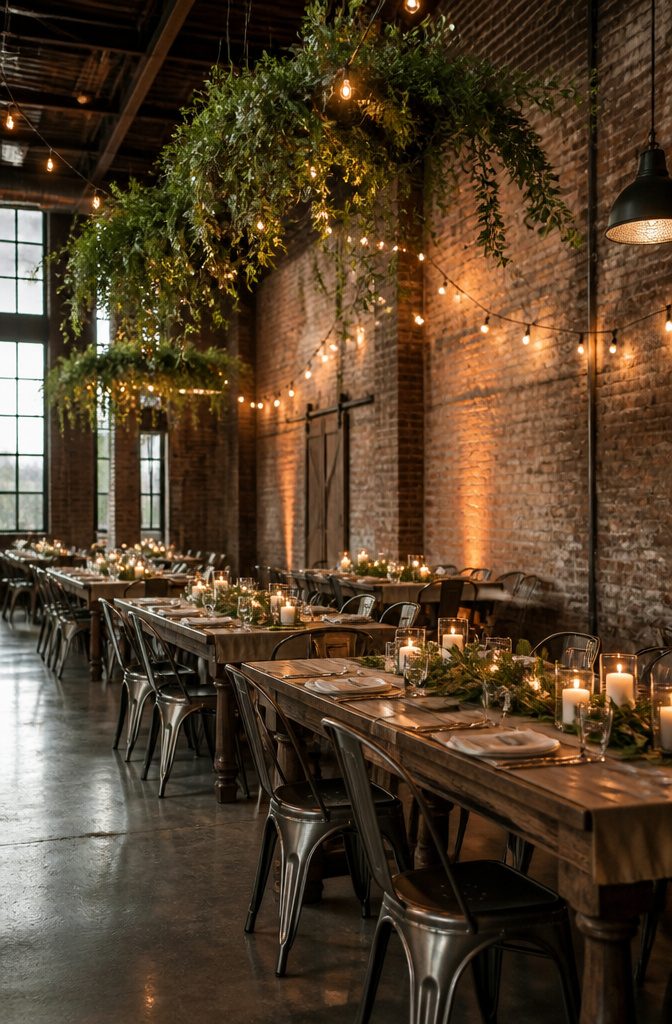
Raw brick, exposed ductwork, and factory windows frame the moment when a couple walks in for the first time.
These spaces carry the history of their previous life, and that history is the draw. A former textile mill or warehouse turned wedding banquet hall typically holds 100 to 300 guests under ceilings high enough to need intentional effort to feel warm.
The contrast between rough architecture and elegant celebration is the entire point.
Without it, you have paid premium rental rates for a drafty box with bad acoustics. String lights, draped fabric, and dense greenery installations do the heavy lifting here, and the budget needs to account for that.
Where a ballroom arrives decorated, an industrial space arrives stripped. Every candle, every linen, every piece of rented furniture is a line item.
Factory windows give natural light for daytime events but turn to black mirrors after sunset without proper uplighting. Exposed ductwork painted matte black recedes visually; left silver, it becomes an accidental centerpiece.
I have seen couples underestimate the heating and cooling needs of a cavernous open floor plan, especially in older buildings with single-pane glass. Ask about seasonal HVAC capacity before you sign, not after you shiver through cocktail hour.
The best industrial venues have invested in modern kitchens and accessible restrooms.
The worst have charming brick and a catering prep area that barely qualifies. Verify which side of that line you are renting.
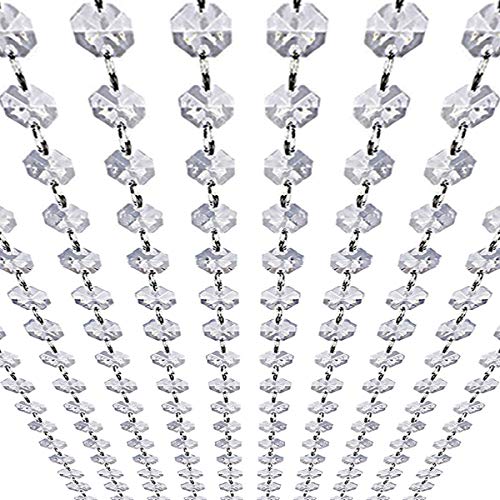


3 Tiers of Sparkling Iridescent Faceted Beads. Measures in 10.25*30" tall with 7" hanging chain.
4. Cultural and Heritage Banquet Halls
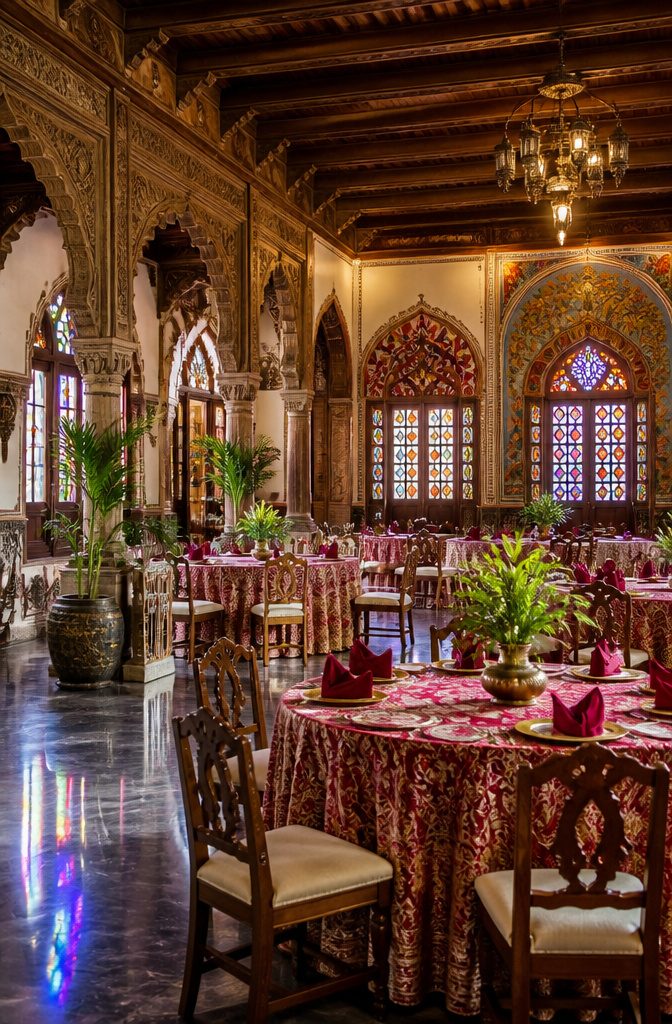
Ornate hand-carved details run along archways and ceiling beams in spaces built to honor specific traditions, which means the decor is already present and non-negotiable.
Community cultural centers, historic society halls, and venues constructed around religious or ethnic heritage fall into this category.
Most accommodate between 150 and 400 guests, though the fixed seating arrangements and ceremonial layouts can reduce usable space below what the capacity number suggests.
The carved screens, murals, or symbolic installations you walk past on the tour will still be there on your wedding day.
This is not a blank slate. Photographers sometimes struggle with mixed lighting where stained glass or gilded surfaces throw color onto skin tones, so a test shoot during your venue visit pays off.
Catering may be restricted to approved vendors familiar with kosher, halal, or other tradition-specific requirements, which limits negotiation room but also spares you from vetting kitchens yourself.
Costs vary widely based on whether the space operates as a nonprofit rental or a commercial venue. A community cultural center often charges less per head but requires membership, donations, or volunteer hours from your family.
Ask directly what stays in place and what you are allowed to cover or move. The answer shapes every other decision downstream.

ADAPTABLE DESIGNS: Assemble's modular furniture solutions provide flexible seating for reception areas, office breakrooms, lounges, and more. This Lounge Ottoman makes a great standalone piece and can also be used as part of a larger configuration.

Professional-Grade Performance Platform: Elevate your production value with a professional stage designed for serious performances. The adjustable height riser (24" to 42") creates a commanding presence and optimal sightlines in any venue, from auditoriums to outdoor events. The robust construction and clean, polished appearance deliver a look and feel that meets the demands of concert stages and professional events.

【3000LBS Ultra High Load Capacity Heavy Duty Portable Stage】 Rated for 1900lbs distributed load. The reinforced aluminum frame eliminates flex, wobble, and annoying squeaks even when loaded with a full drum kit, twin guitar stacks, and 4+ performers. Perfect as a heavy duty band riser, trade show stage, or commercial event platform.
5. Performing Arts and Multipurpose Venues
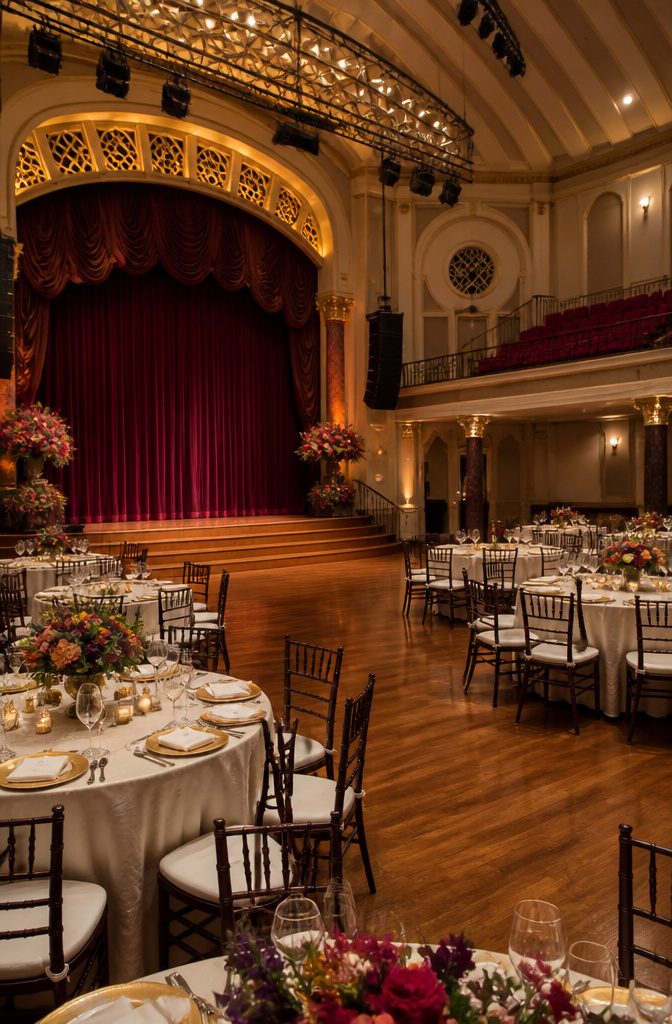
A theater or concert hall brings in production value you would pay thousands to replicate elsewhere.
The lighting rigs, the draped stage, the acoustics already built into the walls, all of it is included in the rental rather than added on by your vendors.
I have watched a couple walk into a civic center and realize their band needed no extra speakers, their florist needed no arch, their ceremony backdrop was already there in velvet and gilt.
What you gain in character you give up in predictability. These venues run on performance calendars, which means your Saturday wedding might bump against a Friday night concert with load-out running until morning.
The staff knows how to flip seating from fixed rows to open floor, but they do it on their own timeline, not yours.
You will also inherit equipment you cannot move, a stage that splits the room in two, or a proscenium that frames your vows like a play whether you want that framing or not.
Ask specifically about blackout dates, load-in windows, and who operates the built-in tech.
Some civic centers require you to use their union technicians for anything touching the board; others hand you the keys and wish you luck. The difference changes your staffing budget completely.

Package: Package including 1 panels wedding arch drapes, each panel is 29 inch x 18ft long.
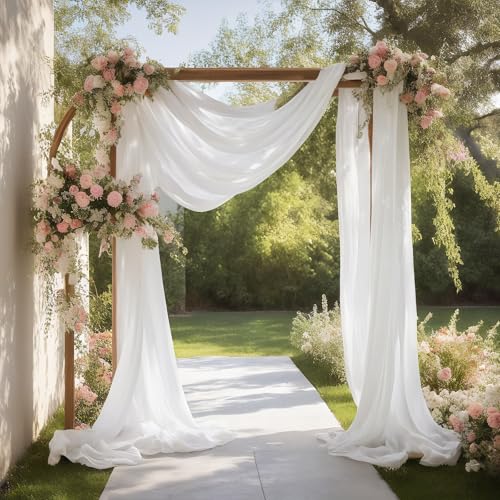
Size: 2 Panels white sheer drapes, 240" L x 31" W, long enough for your summer indoor and outdoor events decorations.

Complete 2 Panel Set: this white lace drapery set includes two panels of wedding arch drapes, each measuring 28 inches wide and 17 feet long; The wedding arch draping fabric provides full coverage for standard arches, arbors, or canopies, creating an inviting atmosphere for guests while offering a complete backdrop solution for ceremony and reception spaces
6. Intimate Boutique Halls
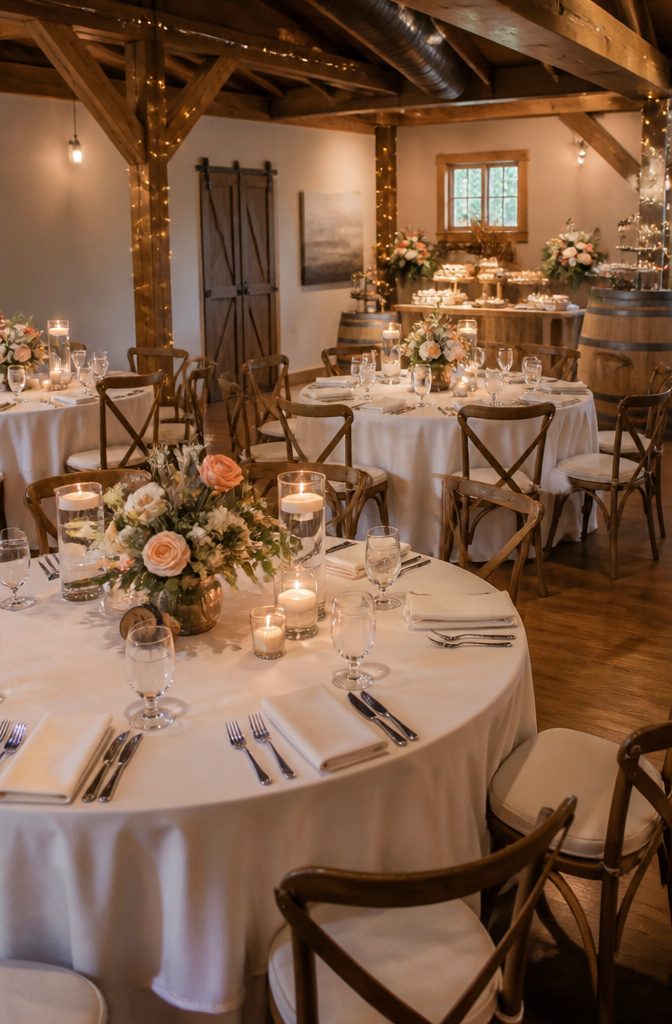
Boutique halls run by independent owners usually cap out around 120 guests, and the owner is often on-site during your event.
That personal investment shows up in details: a remembered name, a last-minute plate for a vendor, a quiet adjustment to lighting no one asked for aloud.
The real savings start with the guest list itself. At 75 people, your catering drops by half, your centerpieces shrink from twenty tables to eight, and your open-bar math changes completely.
One couple I planned with trimmed their list to sixty and suddenly had budget for a plated dinner instead of buffet; another kept the headcount but upgraded from beer and wine to a modest full bar.
What you gain in charm you give up in built-in resources.
These venues do not keep spare linens in every shade or backup AV equipment on a loading dock. A missing microphone or the wrong napkin ring becomes your problem to solve, because there is no corporate office to escalate toward.
Ask specifically what they own versus what you rent, and get the backup plan in writing for anything weather-dependent if the space lacks a connected indoor option.

100% true wireless, battery-operated, quad-color (RGB a) LED Par with built-in bluetooth wireless technology


Crisp White Elegance: Elevate your venue with clean, professional-grade illumination. Ideal for highlighting elegant wedding cakes, art displays, or corporate stage setups, providing a sophisticated backdrop that ensures every detail of your decor is showcased in its most brilliant light.
7. Unique and Non-Traditional Venues
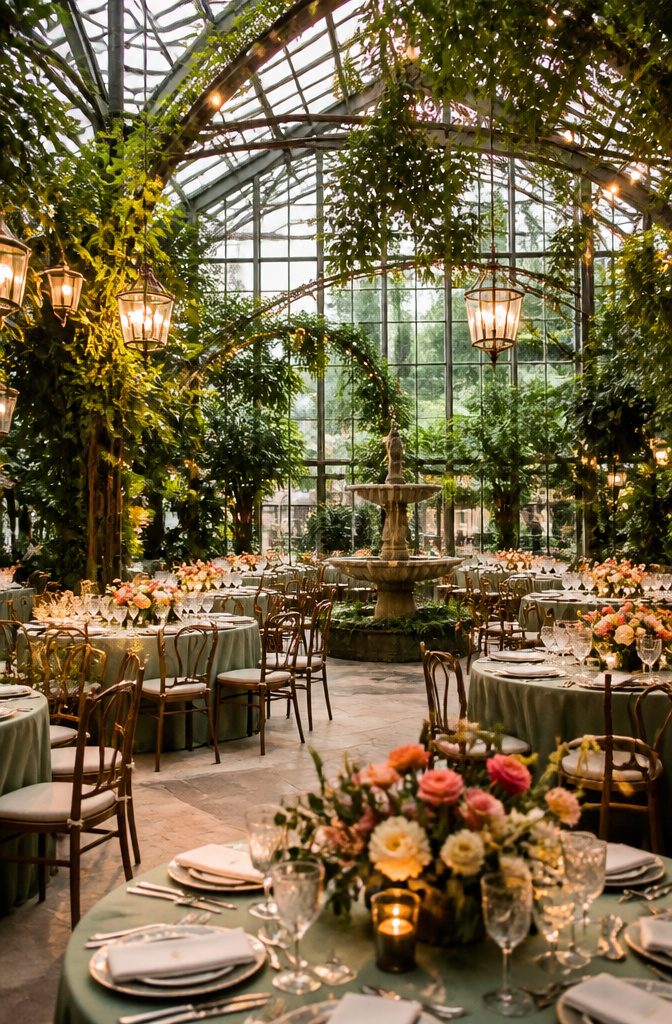
A wedding banquet hall does not have to look like a hall at all. Museums, aquariums, botanical conservatories, and libraries let the setting carry the evening, so guests remember where they were, not just what they ate.
I looked at a natural history museum once and spent half the visit staring at the dioramas instead of imagining a dance floor. That is exactly why couples book these places, and exactly why some regret it.
These spaces break the usual rules entirely. Some keep strict hours and require you to use their in-house team for everything; others hand you the keys and let you bring whoever you want.
Ask specifically whether the exhibits stay lit during the event and whether guests can wander, because a darkened tank or roped-off gallery turns your backdrop into a wall.
Libraries tend toward tight schedules and noise limits. Aquariums often charge premium rates for evening access when the public clears out.
Botanical conservatories can be humid, which affects hair, instruments, and cake. The exchange is real: you get photographs no ballroom can match, but you may lose flexibility on vendors, load-in time, or even the temperature in the room.

Deep Champagne Ceiling Curtains Package Includes: The package will include 6 panels dark champagne wedding ceiling drapes (Not include stand), each wedding extra long curtain measures 5 feet (60inch)wide x 10 feet(120inch) long. 3 Size available can meet your demands for decorating your weddings, parties, receptions, help to create a full and layed sense to your wedding ceiling decoration

【White Ceiling Draping Set】Pack of 6 white wedding ceiling drapes with lights (a set of 9.8ft warm white light), each ceiling draping panel measures 5 feet(60inch)wide x10 feet(120inch) long. Attach to the ceiling of the venue to soften the space and create a stunning fairytale atmosphere, transform any venue space.Drapes and fairy lights can be used for decoration on both indoor as well as outdoor events

Wedding Ceiling Drapes Set: This set includes 8 ivory sheer ceiling drapes. Each drape measures 5 ft wide by 20 ft long, providing ample coverage for ceilings, canopies, or walls. By combining them freely, you can easily create a seamless and luxurious backdrop that transforms any space. Ideal for decorating ceilings at weddings, churches, barns, and more
8. Luxury and Elegant Venues
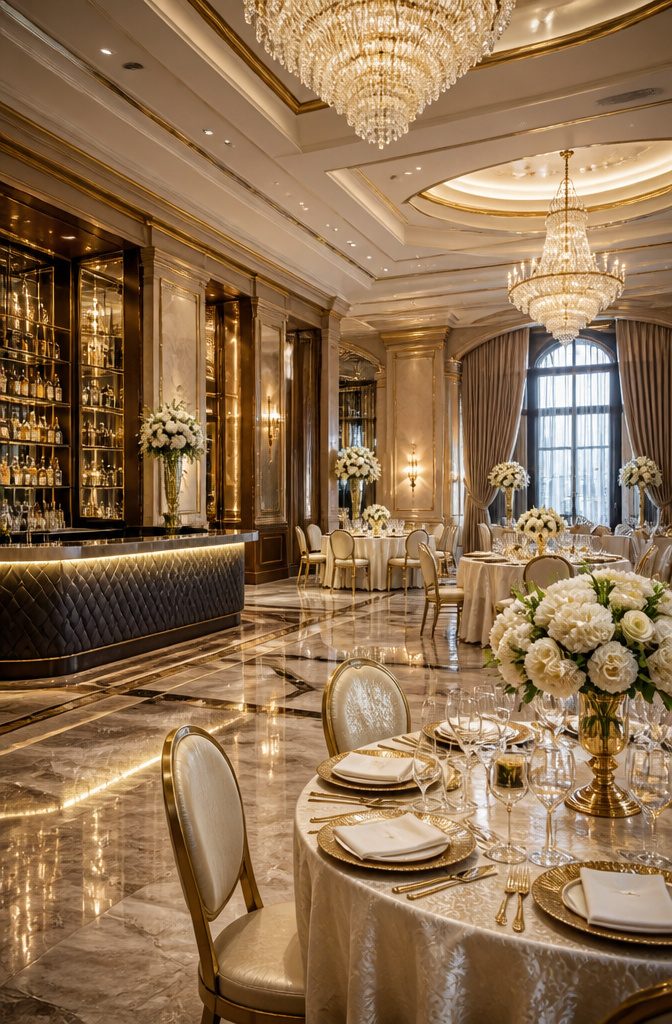
The top tier of the wedding banquet hall market starts around $12,000 and climbs past $30,000 for a single evening.
Prestigious hotels, private clubs, and architecturally significant buildings fall in this band, and the address itself becomes part of what you are buying.
These venues bundle services that mid-range halls itemize separately.
The Landmark in Mission Hills offers 10,000 square feet and capacity for 850 guests, while the Glenoaks Ballroom in Glendale provides 4,500 square feet for 450, both with ballroom space, indoor ceremony areas, special effects lighting, and bridal suites included.
I have seen couples assume the higher rental fee is pure markup, then recount savings when they realize they are not renting lighting rigs, staging a separate ceremony space, or booking a hotel get-ready room elsewhere.
What you gain in grandeur you give up in walkaway freedom.
You are locking in a single aesthetic from the start. Soaring ceilings and grand architecture photograph beautifully, but a couple who wants to bring in an outside caterer or swap the standard uplighting for something moodier may hit contract walls.
Check what flexibility remains inside those inclusive packages before the deposit.

Inspired by vintage Art Deco jewelry, these emerald green earrings for women feature layered marquise crystals and radiant drop details that create a glamorous statement look for bridal styling, formal events, and evening outfits.

【No Assembly required】This is a chandelier decoration and does not come with a Light Cord Kit but it is designed to hold one or just use it by itself as a pretty decoration to fill up the air space with glittering beauty

Crystal Beaded Garland Strand - Our crystal garland strands are 10 strands, 3.1feet(1m) / Strand. Total 33 feets.
What the Best Wedding Banquet Hall Actually Means
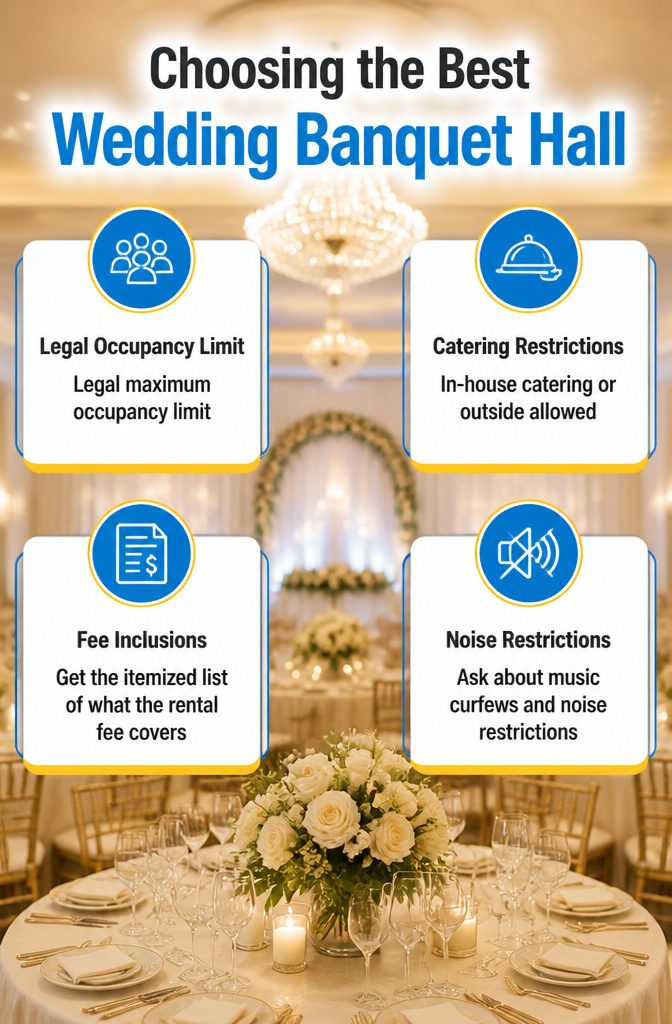
The best wedding banquet hall is not the one with the grandest chandelier.
It is the one that fits your specific combination of guest count, style, budget, and location without forcing you to compromise on the things that actually matter to you.
Every venue has a legal maximum occupancy limit, and the number on the marketing brochure is rarely the comfortable one.
Ask how many guests the room holds with a dance floor, a band, and your catering stations in place, because fire codes do not bend for wedding days. Then push past the pretty questions to the practical ones.
Does the venue require in-house catering, or can you bring an outside team you already trust? An open vendor policy sounds freeing until you realize you are now project-managing rentals that a bundled hall would have handled.
Get the itemized list of what the rental fee covers. Setup and breakdown windows, hours of actual access, and whether security or parking carries extra charges should all be in writing before you sign.
The same goes for cancellation terms. A clear refund policy is not a nice-to-have; it is how you protect your deposit if life shifts your date.
Finally, ask about noise restrictions or music curfews. Some halls sit near residential areas with hard limits on when the party ends, and your DJ needs that number before the playlist gets built.

Foldable and Space-Saving Design: This Rectangular Office Conference Table boasts a user-friendly one-touch folding mechanism, enabling a smooth shift from a flat surface to a vertical position. Its compact size when folded makes it easy to store in limited spaces, perfect for any Office or Meeting Room. Enhance efficiency and versatility in your workspace with this practical solution.

Commercial-Grade Durability – Built with sturdy frame, high-density rebound foam and wear-resistant upholstery, designed for long-term heavy use in office, hotel, training center and public reception areas.

Commercial-Grade Durability – Built with sturdy frame, high-density rebound foam and wear-resistant upholstery, designed for long-term heavy use in office, hotel, training center and public reception areas.
Capacity and Layout
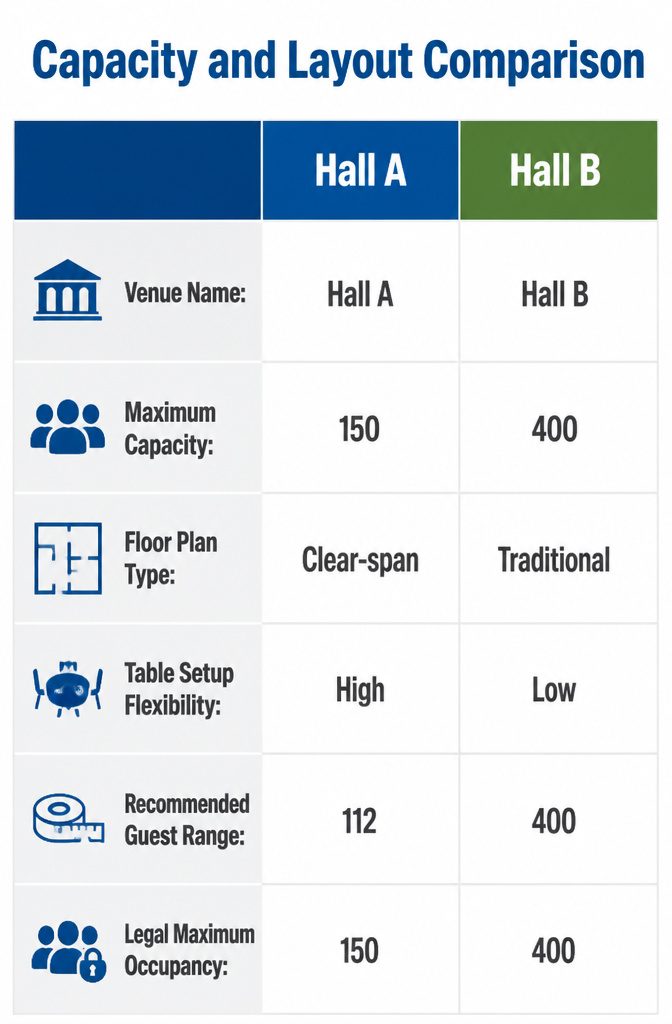
Guest count shapes every other decision about a wedding banquet hall before you notice a single chandelier.
A clear-span floor like Hall C at the Dallas Event Center lets staff shift tables for 112 guests or compress the room for fewer, but the legal maximum occupancy is a hard ceiling, not a suggestion you negotiate around with a friendly coordinator.
Venues in the Charlotte area run from 120 at Raintree Country Club to 400 at Langtree Venues, with most landing between 150 and 350.
Loft spaces like the Flatiron option cap lower, at 100, with a 30-guest minimum that can sting if your list shrinks after a family argument.
Photos distort scale.
Wide-angle lenses stretch a room until a space meant for 130 looks like it could swallow 200, and that distortion costs money when you sign for a hall that seats your guests like a puzzle with missing pieces. Walk the floor yourself.
Pace the distance from kitchen doors to the farthest table. A 50-guest dinner needs intimacy a ballroom destroys; a 1,200-guest celebration needs walls that exist.

Wedding Arch Draping Fabric: Package includes 4 panels ivory wedding arch sheer drapes, each panel is 28.7 inches wide and 20 ft long, polyester sheer drapery backdrop is long enough to fit different size arch decor and create elegant atmosphere on your party

Premium Material & Effortless Elegance: Crafted from premium wrinkle-resistant chiffon fabric, this wedding arch draping fabric provides a substantial weight and fluidity for an easy and romantic decor. The silky-smooth texture allows it to drape into flowing folds, suitable for creating an elegant atmosphere at formal events

Package & Size Flexibility: You will receive 2 Panels of wedding arch drapery fabric, the dimensions are 240" long x 30" wide. The chiffon draped fabric is available in a maximum length of 6.6 yards, which can be adapted to fit any size arch decoration, cut and DIY as needed.
Catering Options
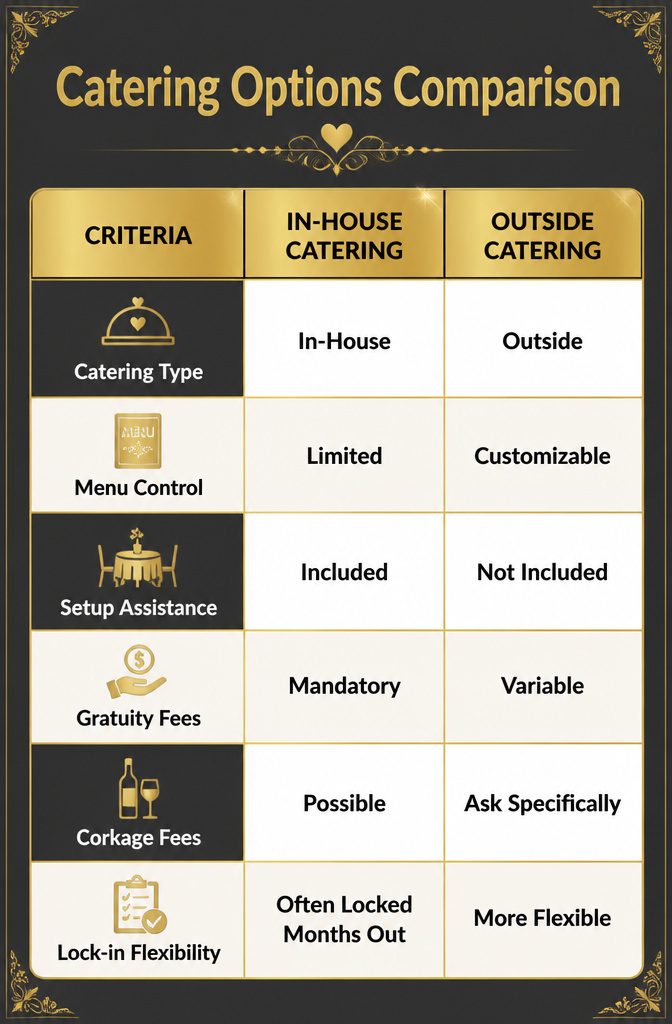
In-house catering at a wedding banquet hall simplifies planning because the venue handles setup, breakdown, and behind-the-scenes logistics without you calling separate vendors.
What you gain in simplicity you give up in menu control, and you may pay mandatory gratuity percentages on top of stated catering costs.
Outside caterers let you customize the menu, but you take on coordination complexity yourself and the venue may charge cake cutting fees or other penalties.
Ask specifically about corkage fees if you hope to bring your own wine or spirits. Some halls ban outside alcohol entirely; others permit it but levy per-bottle charges that accumulate fast across a full guest list.
Bar packages bundle beer, wine, and well drinks at a flat per-person rate, which helps budgeting until you want premium labels the package excludes.
A menu tasting sounds like a perk until you learn whether it costs extra or happens early enough to change course.
One bundled pricing model I considered locked the menu six months out, which felt generous until I realized I could not adjust for seasonal allergies discovered later.
Set aside at least 10 percent of your food and drink budget as contingency; this is where hidden costs multiply fastest, and the spreadsheet never catches them all.
Ambiance and Decor
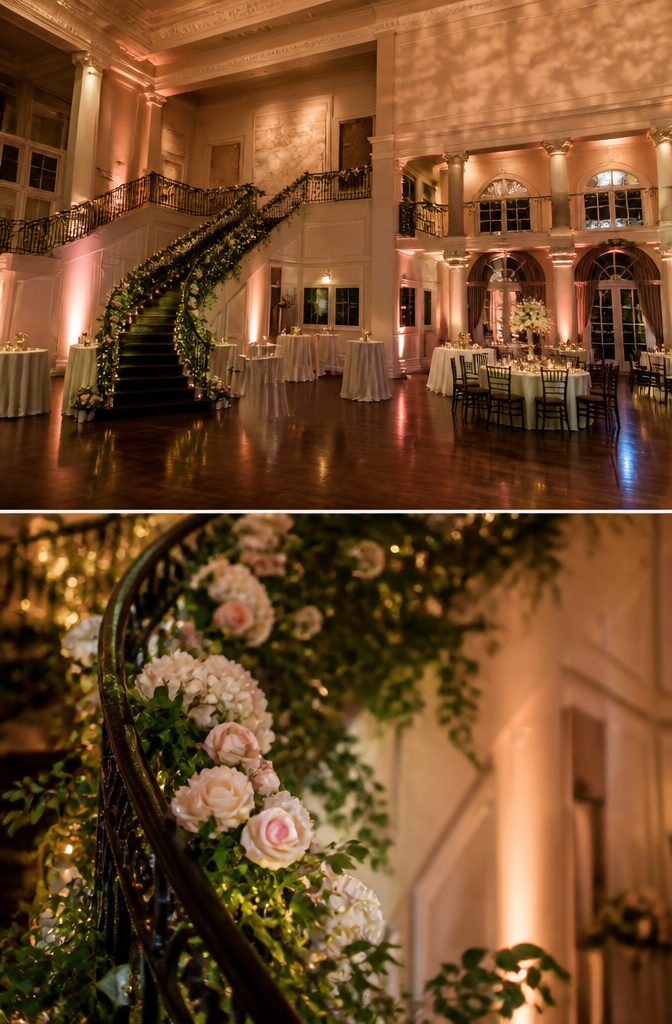
Lighting changes everything in a wedding banquet hall, and photos will lie to you about it.
That golden afternoon glow in the venue’s portfolio? It hits different at 6 p.m. in October, and you will not know until you stand there yourself.
I visited three halls that looked warm and romantic online and found two of them felt sterile once the sun dropped, all because the fixtures were fixed overhead and too dim to bounce off the walls.
Some banquet halls arrive already dressed. Ornate staircases, palace-inspired detailing, soft blush palettes.
These spaces need little more than your personal touch. Others are closer to blank canvas spaces, which sounds freeing until you count the hours and budget required to fill soaring ceilings or industrial brick with decor that does not echo.
One couple I spoke with spent more on rentals than their catering bill to warm up a converted armory space.
Ask what stays and what goes.
Draping, centerpieces, uplighting, even the table linens. Some venues include cohesive design packages.
Others hand you a bare room and a vendor list. The difference is not just cost; it is whether you want to spend your final month sourcing brass candle holders or signing off on someone else’s curation.
Staff and Coordination Support
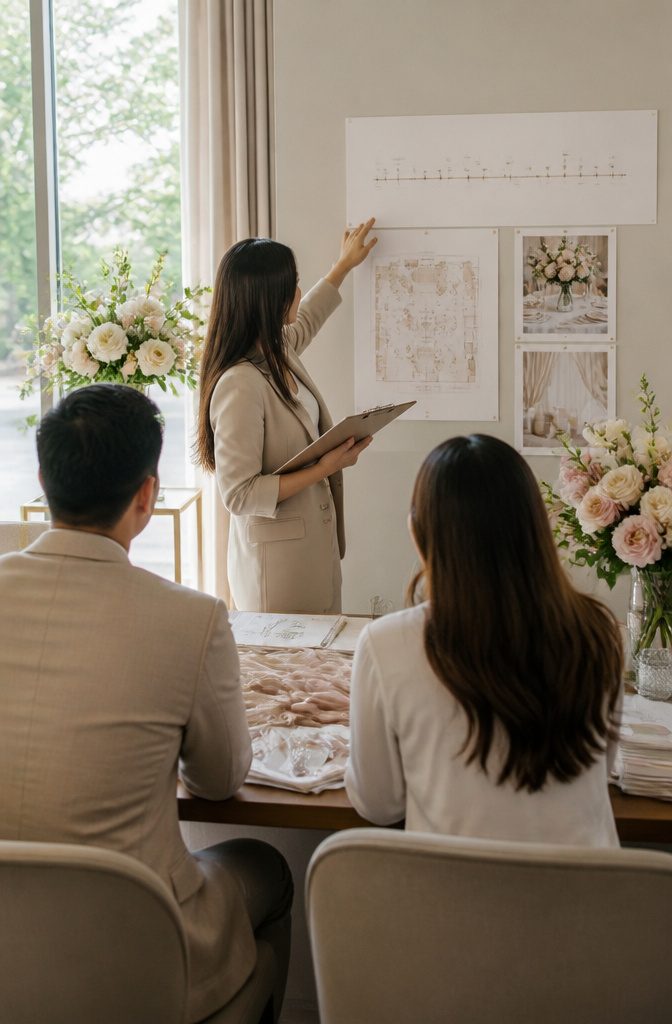
Experienced event coordinators at a wedding banquet hall handle logistics, vendor timelines, and day-of details the couple never sees. That backstage management is where the real stress reduction lives, not in the decor package.
Ask whether a dedicated coordinator is included in your rental, or if you share one across multiple events happening the same day. One coordinator juggling two weddings means your processional pause gets decided by whoever asks loudest.
Their role varies sharply between venues: some handle vendor arrivals, setup flow, and emergency runs to the store; others hand you a timeline printout and disappear until the cake cutting.
Clarify what falls to them, what still lands on you, and where an outside wedding planner has to step in.
The best halls already know their preferred florists, caterers, and musicians, which removes the hours of research you’d spend elsewhere.
But that convenience only holds if the coordinator actually executes the handoff. Ask for specifics on what they organize behind the scenes versus what they expect you to confirm yourself.
Amenities Included
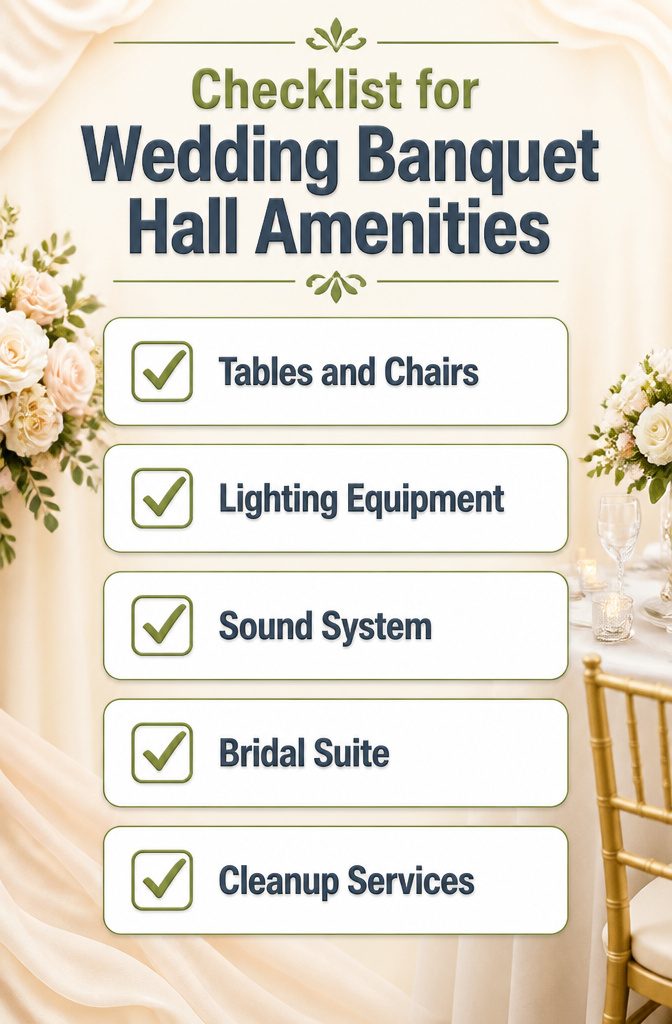
Tables, chairs, linens, a sound system, and lighting equipment are the items that separate a real quote from a teaser rate.
One banquet hall in Plano lists tables and chairs in the base booking, but decor only joins the package if you spring for the eight-hour block. That detail changes the math.
Mid-range wedding banquet halls average $5,000 to $12,000, yet the spread in what that base figure covers makes direct comparison nearly impossible.
A venue near the bottom of that range might include parking and cleanup; another near the top could charge separately for every tablecloth.
The bridal suite, the microphones, the parking lot attendants: each one either hides inside that lump sum or surfaces later as a line item.
Cleanup is where I have seen couples get caught. Some halls roll post-event breakdown into the rental; others bill hourly for staff to reset the room.
Ask for the itemized list before you sign, not after. The true cost of any wedding banquet hall lives in that gap between the advertised price and the inventory of what you actually get to use.
Parking and Accessibility
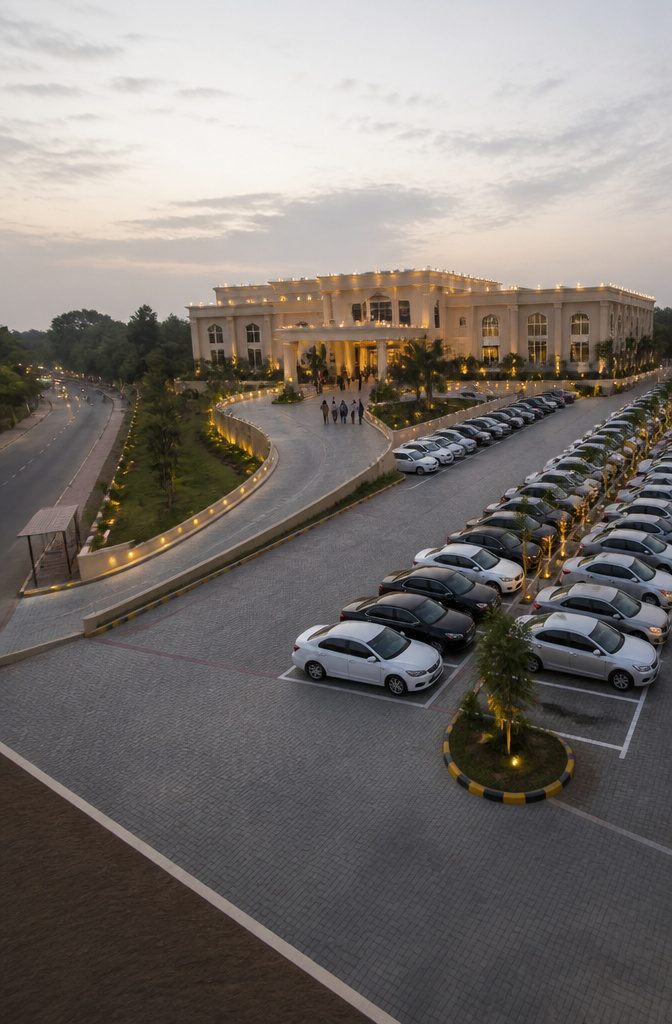
Parking at a wedding banquet hall can quietly make or break the evening for half your guest list. A lot that holds thirty cars for a hundred-person event means guests circle the block, arrive flustered, and miss the first dance.
I always tell couples to visit the venue on a Friday evening and count actual spaces, not rely on the manager’s estimate.
Accessibility goes deeper than a single ramp at the front door. Older banquet halls sometimes have beautiful original floors with uneven thresholds between rooms, or restrooms tucked down narrow hallways that a wheelchair simply cannot navigate.
Load-in matters just as much for vendors. Caterers hauling chafing dishes through a service elevator that fits one cart at a time will run behind, and rental companies charging by the hour will bill you for the wait.
Proximity to a bus or train line can offset limited parking, but only if the last train does not leave before your reception ends. That tradeoff is worth mapping out ahead of time.
Hidden Costs to Confirm Before Signing
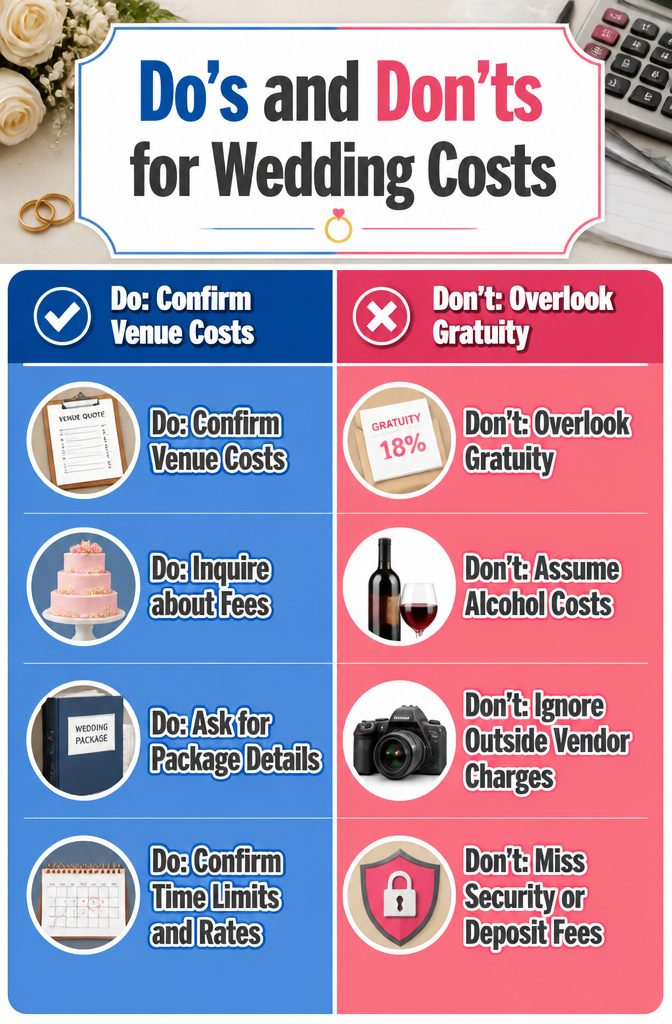
Cake cutting fees still catch people off guard. A wedding banquet hall may charge per slice just to plate and serve a cake you bought elsewhere, which turns a free favor from your aunt into a line item.
Ask whether the fee disappears if you use their in-house bakery, because sometimes it does and sometimes it gets renamed.
Corkage works the same way. Bringing your own wine or spirits sounds like thrift until the hall tacks on a per-bottle opener charge.
Some places waive it for a single signature cocktail; others apply it to every bottle the bartender touches, including the ones their own list supplied. The only way to know is to ask before you haul cases across town.
Mandatory gratuity is harder to spot because it hides in catering contracts as a percentage, not a line item.
It stacks on top of the quoted per-head price, and it triggers automatically at a guest count threshold you might not notice.
Overtime rates matter too: the difference between a five-hour package and a six-hour reality is often a flat hour fee, charged in fifteen-minute increments once you cross the line.
Outside vendor charges are where the real surprises live. Your photographer, your florist, your DJ, each one can carry a setup fee or a required security escort that the hall bills back to you.
Some contracts list approved vendors only; others let anyone in but charge a damage deposit per outsider.
Read for the phrase "exclusive provider" or "preferred list with fee," because both mean money you have not budgeted yet. Set aside at least ten percent of your total venue spend for exactly this kind of gap.
Frequently Asked Questions
What is the maximum guest capacity for a wedding banquet hall?
Every venue has a legal maximum occupancy limit, but the comfortable capacity is usually lower once you add a dance floor, catering stations, and a band.
Classic ballrooms often start at 200 and stretch past 600, while industrial spaces and boutique halls typically cap at 100 to 300. Ask specifically how many guests the room holds with your full layout in place, not just the marketing number.
What catering options are available at a wedding banquet hall?
Some venues require in-house catering, which simplifies setup and breakdown but limits menu choice and may add mandatory gratuity.
Others allow outside caterers, giving you full control but loading coordination onto your plate. Ask about corkage fees for bringing your own wine, and whether cake cutting fees apply if you use an outside bakery.
What is included in the rental fee for a wedding banquet hall?
The base price rarely tells the whole story. Mid-range halls average $5,000 to $12,000, yet one venue at the bottom of that range might include parking and cleanup while another near the top charges separately for every tablecloth.
Get the itemized list before signing: tables, chairs, linens, sound systems, lighting, the bridal suite, setup and breakdown windows, and whether cleanup staff bill hourly.
What is the cancellation and refund policy for a wedding banquet hall?
A clear refund policy protects your deposit if life forces you to shift your date.
Ask exactly what happens to your deposit and any pre-paid amounts if you cancel or reschedule, and get the terms in writing before you sign. This is not a detail to sort out later.
How far in advance should I rent a banquet hall for a wedding?
For large events with more than 300 guests, book a year ahead.
Smaller weddings need 5 to 6 months, though popular locations disappear faster regardless of size. The most sought-after spaces do not wait for your timeline.
What is the average price to rent a wedding banquet hall?
Mid-range wedding banquet halls average $5,000 to $12,000 for the base rental. Luxury venues start around $12,000 and climb past $30,000 for a single evening, but they often bundle services like lighting, ceremony spaces, and bridal suites that mid-range halls itemize separately.
The true cost lives in the gap between the advertised price and what you actually get to use.
Is $5,000 a reasonable budget for a wedding?
A $5,000 budget sits at the low end of mid-range banquet hall rentals alone, before catering, attire, photography, and other costs.
At 75 guests, your catering drops by half compared to 150, and boutique halls cap around 120 people, which helps. Still, $5,000 covers the venue fee at a modest hall with little left for everything else.
How much is a wedding banquet?
The banquet hall rental runs $5,000 to $12,000 mid-range and $12,000 to $30,000 or more at the luxury tier, but that is only the room. Catering, bar service, rentals, decor, and coordination stack on top.
One couple trimmed to 60 guests and upgraded from buffet to plated dinner; another kept headcount but upgraded from beer and wine to full bar. Your guest count and choices dictate the total.
What is a banquet hall wedding?
A banquet hall wedding is a reception held in a dedicated event space designed for seated dinners and dancing, ranging from classic hotel ballrooms with crystal chandeliers to converted warehouses with exposed brick.
The hall provides the shell; you bring or rent the specifics of the celebration inside it.