A wedding bridal party is the group of attendants standing with the couple during the ceremony, a tradition that began not as decoration but as spiritual camouflage.
Ancient Roman brides dressed their friends identically to themselves so evil spirits could not pick the bride out of the crowd.
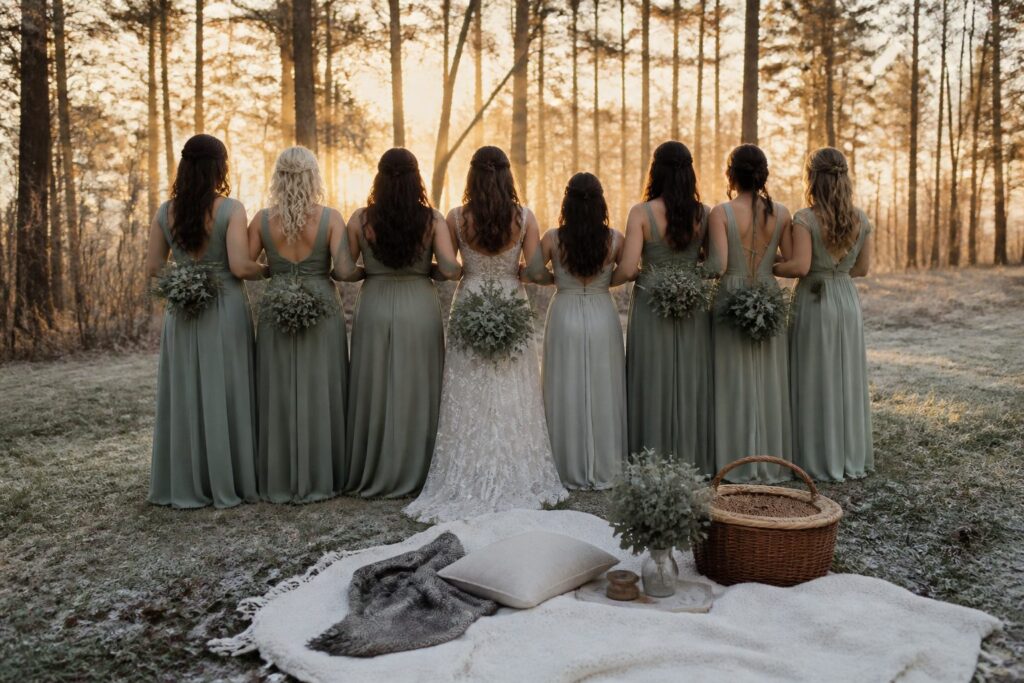
That protective origin still shapes modern choices more than most couples realize; the same dusty sage that reads effortless at a June wedding looks like a mistake against February bare trees, because season does more visual work than matching ever could.
[link-whisper-related-posts]Bridal Party Attire
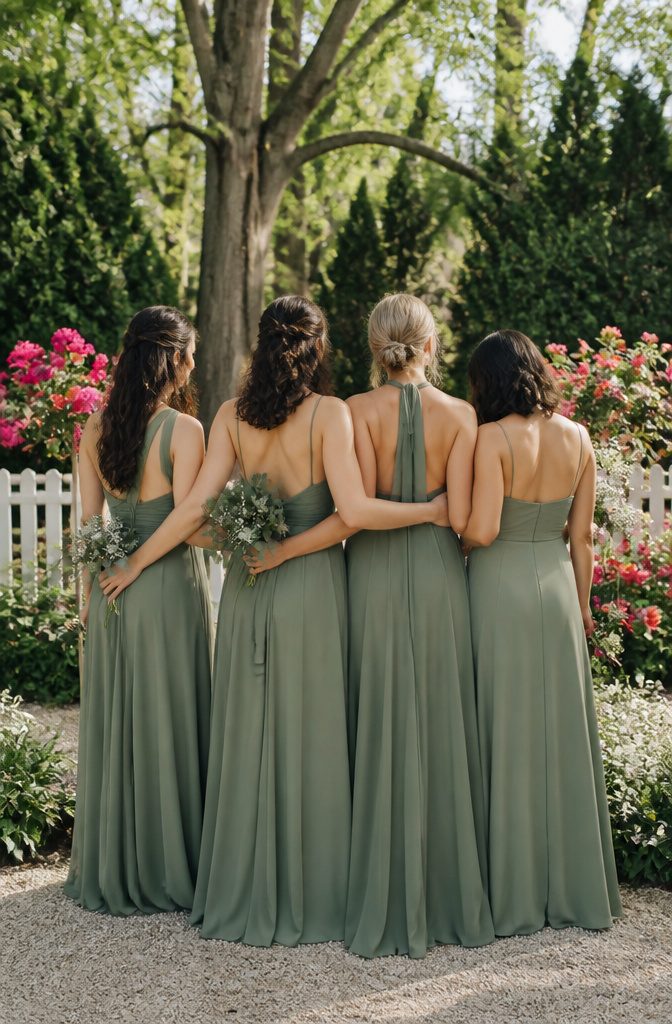
Matching outfits for a wedding bridal party carry a stranger origin than most couples realize. Ancient Roman and Greek attendants dressed identically to the bride so that jealous suitors and evil spirits could not single her out.
The tradition survived as visual unity rather than spiritual camouflage, which is why the question now is how coordinated the group actually needs to be.
Seasonal color palettes matter more than strict matching. A June wedding in dusty sage reads effortless; the same shade against February bare trees looks like a mistake.
Spring and summer lean into softened botanical tones, autumn into muted rust and ochre, winter into deeper berry and evergreen. The season does the work if you let it.
Comfort undercuts coordination in ways guests notice. A bridesmaid shifting straps all evening or a groomsman tugging a too-tight collar photographs as tension, not celebration.
Fabric weight, shoe break-in time, and whether a dress needs constant strapless readjustment should shape the choice as much as the swatch does.
I have seen a bridal party in perfectly matched chiffon look strained because no one could raise an arm, while another in coordinated but not identical separates moved through the night like people at a party they actually wanted to attend.
The balance is simple: one unifying element, color or texture, and then variation within that frame. Same hue, different necklines.
Same fabric weight, different silhouettes. The eye reads unity without the body paying for it.
Bridal Party Flowers
The bridal bouquet sets the tone for every other floral piece in the wedding.
It does not need to be the largest arrangement, but it should carry an intentional point of difference that marks it as yours: a special flower variety, added texture, a more gathered shape, or a subtle shift in color.
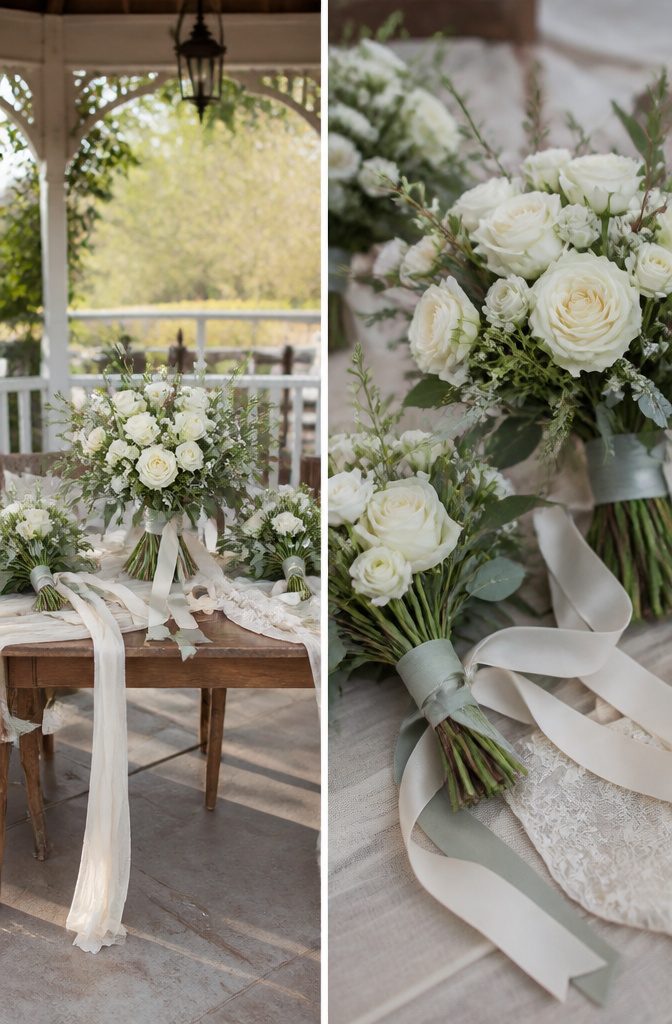
A classic white bouquet might use garden roses, spray roses, lisianthus, and soft greenery, while attendants carry smaller versions with one or two of those same ingredients.
Sentimental details like a family heirloom wrap or fabric from a loved one’s garment make it personal without forcing an entirely different style.
Bridesmaid bouquets should coordinate with yours without necessarily matching.
The scale matters here too. A petite bride can feel overwhelmed by a wide, cascading design, while a tall bride may want something fuller that holds up in photos.
Comfort counts: you will carry this bouquet through portraits, the ceremony, and likely part of the reception, so it needs to feel secure and manageable.
Boutonnieres are small but deserve careful attention.
The groom’s often includes a distinctive bloom or detail pulled from the bridal bouquet, with groomsmen in simplified versions. Corsages for mothers and grandmothers work best as wrist designs, practical for a day of greetings and hugging.
Pin-on styles can feel more traditional but may not suit delicate fabrics. Ask what your honored guests prefer when you can.
Flowers can be tailored to many budgets, and early clarity with your florist makes a meaningful difference in what you get for what you have.
Bridal Party Table Decorations
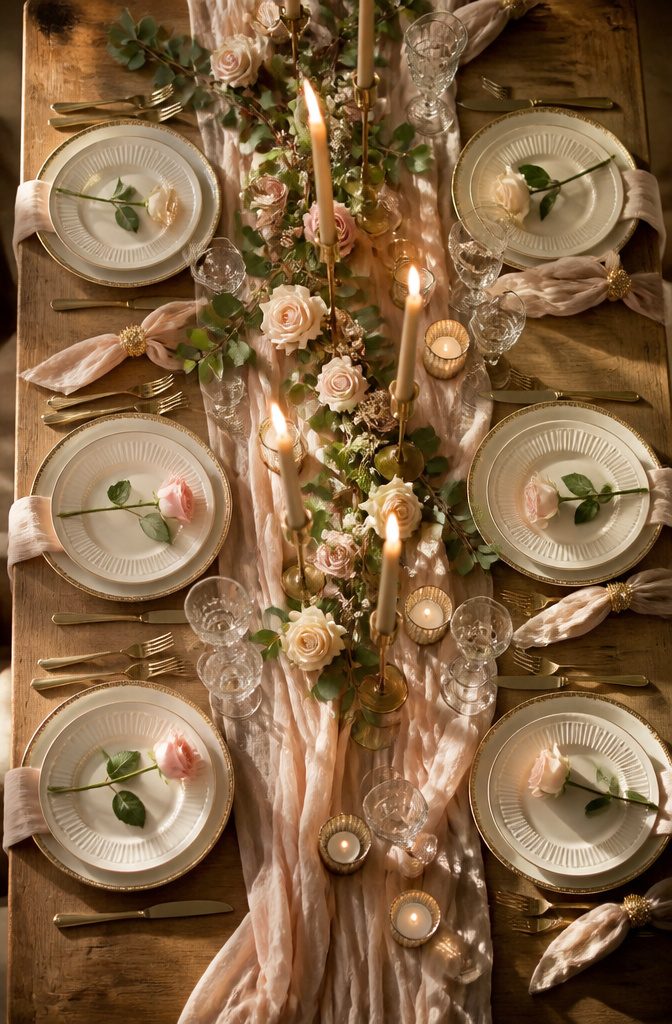
White and gold, blush and champagne, navy and silver, sage and ivory, and black and white are the color combinations that tend to work best for bridal party table décor.
Pick one palette and repeat it across a few chosen elements instead of scattering every idea you like onto one surface.
Start with the shared color palette itself. A runner in blush silk under champagne taper candles gives one mood; navy linen with silver mercury-glass votives gives something entirely different.
Match your metallic accent to your palette and use it in at least three places — napkin rings, the base of a centerpiece, the rim of a charger — or it reads as an afterthought rather than a thread.
Coordinated place settings keep the eye moving. If your flowers are ivory garden roses, let a single stem lie across each plate instead of crowding the center.
A consistent motif, repeated rather than varied, does the actual work of making the bridal party table feel intentional. The mistake is treating the centerpieces as the whole story and letting the napkins fight them.
Where the Bridal Party Tradition Started
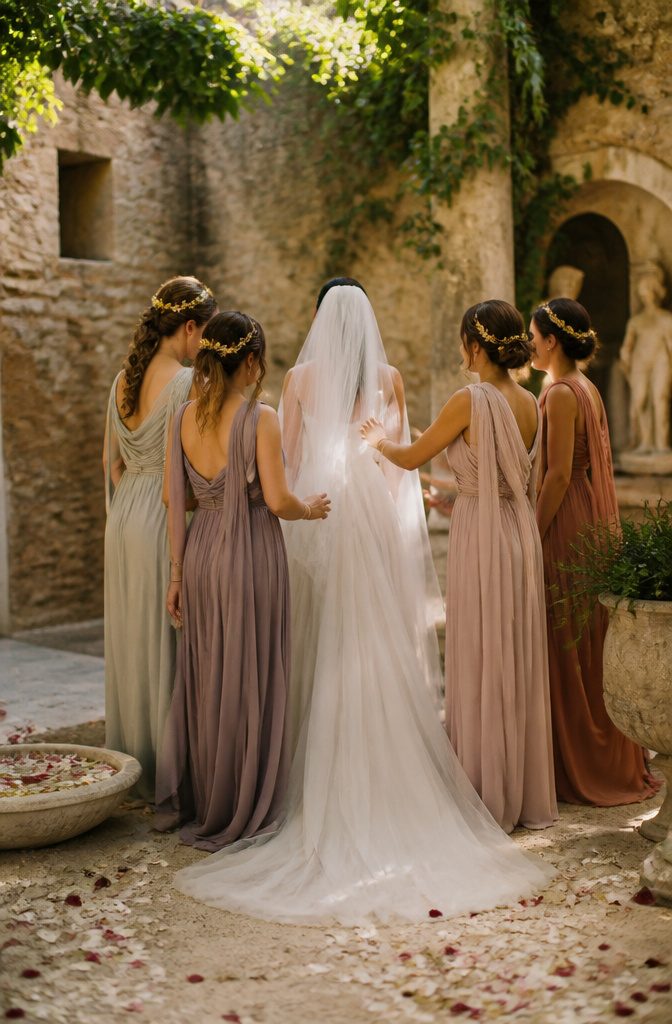
Ancient Roman brides surrounded themselves with attendants for protection, not pageantry.
These women dressed identically to the bride so evil spirits and jealous suitors could not single her out, a practical deception that carried real weight in a culture where spiritual threats were taken seriously.
The attendants also helped her navigate crowded streets to the groom’s home, forming a human shield against anything that might stop the marriage.
That protective role softened over centuries into something closer to friendship.
By the Victorian era, bridal attendants had become witnesses who helped manage the bride’s dress and veil, though the legal function mattered too; English tradition required at least two witnesses to make a marriage valid.
The modern bridal party kept that supportive core but expanded it. Today’s attendants still guard the bride, though now from forgotten earrings and timeline delays rather than malevolent spirits, and the role includes the groom’s side too.
The best man and maid of honor trace back to this same lineage, trusted confidants chosen for loyalty first and celebration second.

Chiffon Spaghetti Strap A-Line Dress with Slit - A sleek chiffon A-line dress for women designed with delicate spaghetti straps and a daring slit, offering modern elegance and standout appeal for formal occasions.
Colors That Belong to Each Season
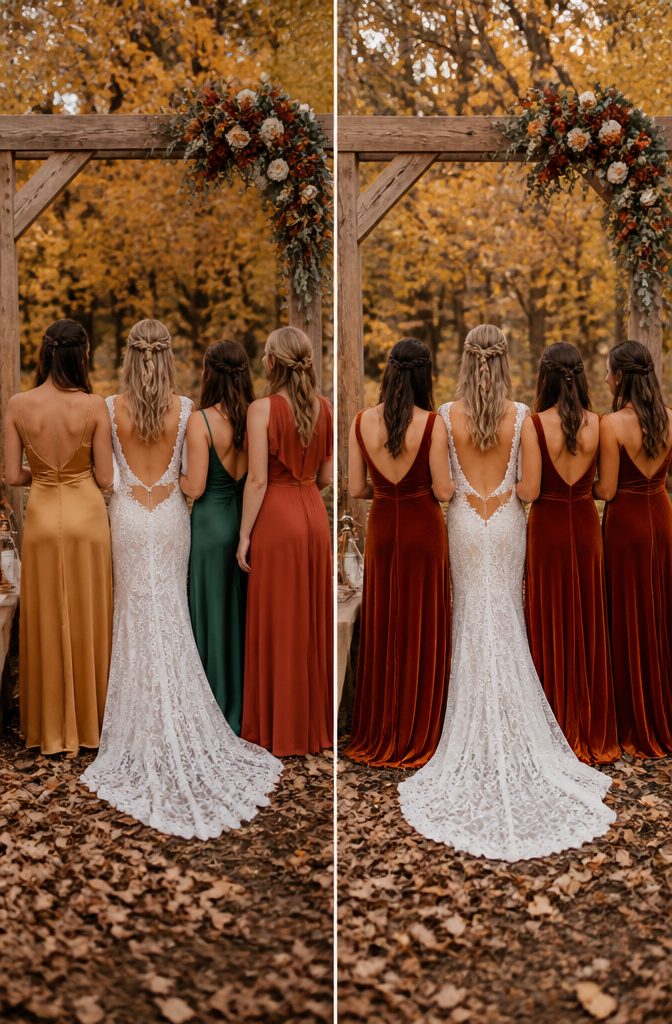
Spring weddings pull toward soft greens and pale pinks because those are the colors waking up outside the window.
The bridal party photographs better when the dresses or suits echo what guests already feel in the air, not fight against it.
Summer opens up warmer territory.
Coral, lavender, and powder blue all read as intentional rather than apologetic in bright light. One mistake I see couples make is choosing a color too saturated; in outdoor July sun, a deep burgundy turns almost black in photos.
Fall belongs to rust, mustard, and forest green. These shades work on almost every skin tone, which matters when you are dressing six or eight people with different complexions.
The practical advantage is that fall colors hide grass stains and wine spills from a long day of hugging and toasting.
Winter forces a choice. Navy and charcoal are safe, almost too safe.
Burgundy or emerald feel festive without sliding into holiday-party territory. Velvet and heavier fabrics carry color differently than chiffon, so the swatch you ordered in March might not read the same in December.
The season should narrow your options, not invent them. Start with what grows or glows outside your venue window, then test it in the actual fabric weight you are considering.

It Gets Better with Sage - Bring home the good vibes with 9 sage, olive and essential neutral shades in Matte, Metallic and Matte Sparkle finishes! It’s good vibes only with this sage palette.

25 SHADE PALETTE: This eyeshadow kit has a wide range of colors, featuring matte, shimmer, and glitter finishes to create versatile looks from natural to smoky eyes in one swipe.
Building Florals Around the Bridal Bouquet
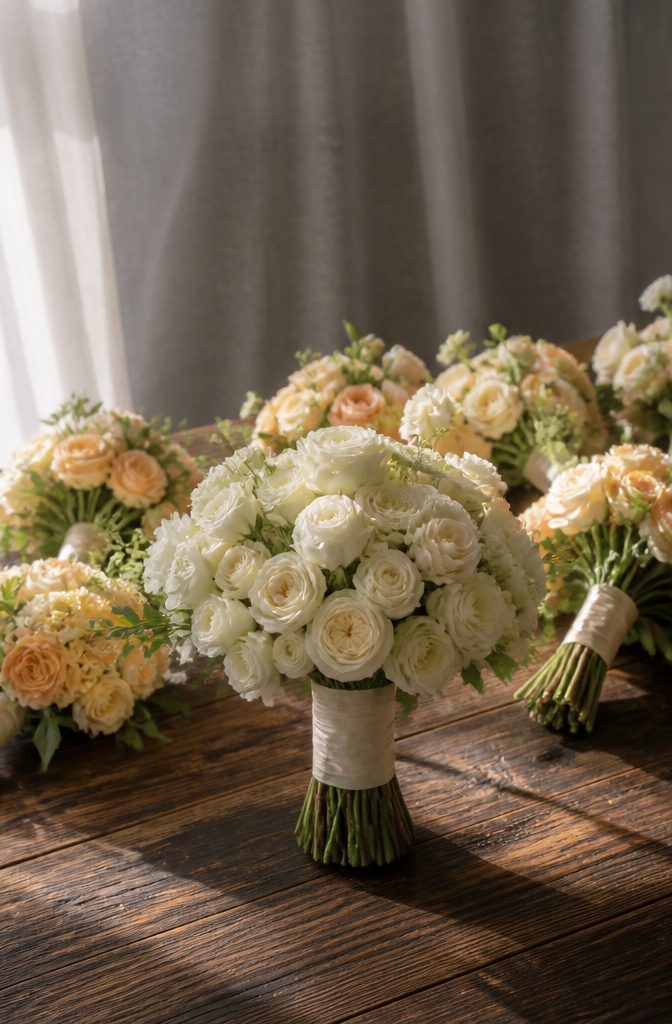
The bridal bouquet sets the direction for every other floral piece in the wedding.
It does not need to be the largest arrangement, but it should carry an intentional point of difference: a special flower variety, added texture, a more gathered shape, or a subtle shift in color that separates it from the rest.
A classic white bouquet might draw on garden roses, spray roses, lisianthus, and soft greenery, while attendants carry smaller versions built from one or two of those same ingredients.
Bridesmaid bouquets should coordinate without competing.
Matching bouquets work, especially when the wedding party wears a single dress color. Coordinated variations can feel just as polished: the same flowers with slightly different color placements, or each attendant holding a similar bouquet built around one standout bloom.
This approach shines when bridesmaids wear different dress colors or styles. Rather than forcing every bouquet to match every dress exactly, choose a floral palette that ties the group together.
Soft blush, ivory, peach, and muted blue create a romantic look; white, green, and a single accent color read crisp and modern.
Let the dresses and flowers take turns being the focal point.
Bold dresses pair best with restrained bouquets. Neutral dresses can carry more color, texture, or playful varieties.
Comfort matters more than most couples expect.
You will carry your bouquet through portraits, the ceremony, and often into the reception. A petite bride may feel overwhelmed by a wide, cascading design, while a tall bride may prefer a fuller bouquet that holds its own in photos.
Choose something secure and manageable in your hands, because you will be holding it for hours.

1.Features: Crafted from high quality, silky satin fabric, this 2026 bridesmaid dress features a sophisticated square neckline with wide spaghetti straps. The ruched bodice adds a romantic, tailored touch, thigh-high slit adds a bold,making it the perfect choice for formal evening weddings, cocktail parties, and other special occasions.

Features: Chiffon bridesmaid dress with delicate spaghetti straps, pleated sweetheart bodice, tiered ruffles, and a flattering A-line cut. It’s the perfect choice for a special occasion

Features: v-neck chiffon bridesmaid dresses with slit, a-line sleeveless long wedding guest dress, floor length party dresses with pleats, twist knot high waist formal dresses for women, lace up back dresses.
Frequently Asked Questions
What should the bridal party wear?
Coordinated attire with one unifying element, such as color or texture, and variation within that frame. Same hue with different necklines, or same fabric weight with different silhouettes, lets the eye read unity without forcing everyone into identical, uncomfortable outfits.
How do I choose flowers for my bridal party?
Build around the bridal bouquet as the starting point, then give attendants smaller versions using one or two of the same ingredients.
Let the dresses and flowers take turns being the focal point: bold dresses pair with restrained bouquets, neutral dresses with more color and texture.
What types of table decorations are available for the bridal party?
Table runners, coordinated place settings, metallic accents repeated in at least three places, and a consistent floral or decorative motif. Popular color combinations include white and gold, blush and champagne, navy and silver, sage and ivory, and black and white.
What is the bride’s wedding party called?
The bride’s wedding party is called the bridal party. The term refers to the attendants who stand with the bride, including the maid or matron of honor and bridesmaids.
Is it a bridal party or wedding party?
Both terms are used, though they differ slightly in scope.
Bridal party traditionally refers to the bride’s attendants, while wedding party includes both the bride’s and groom’s sides, the best man, groomsmen, maid of honor, bridesmaids, and sometimes other roles like flower girls or ring bearers.
What’s the difference between a bachelorette party and a bridal party?
The bridal party is the group of attendants who participate in the wedding ceremony itself. A bachelorette party is a pre-wedding celebration, typically organized by the bridal party for the bride, and is not part of the formal wedding day.
Who traditionally pays for the bridal party?
Historical sources indicate that attendants originally served protective and witness functions rather than financial ones, and modern practices vary widely by region, relationship, and individual arrangement.