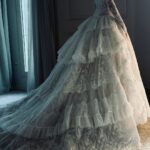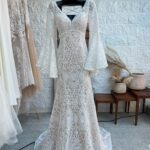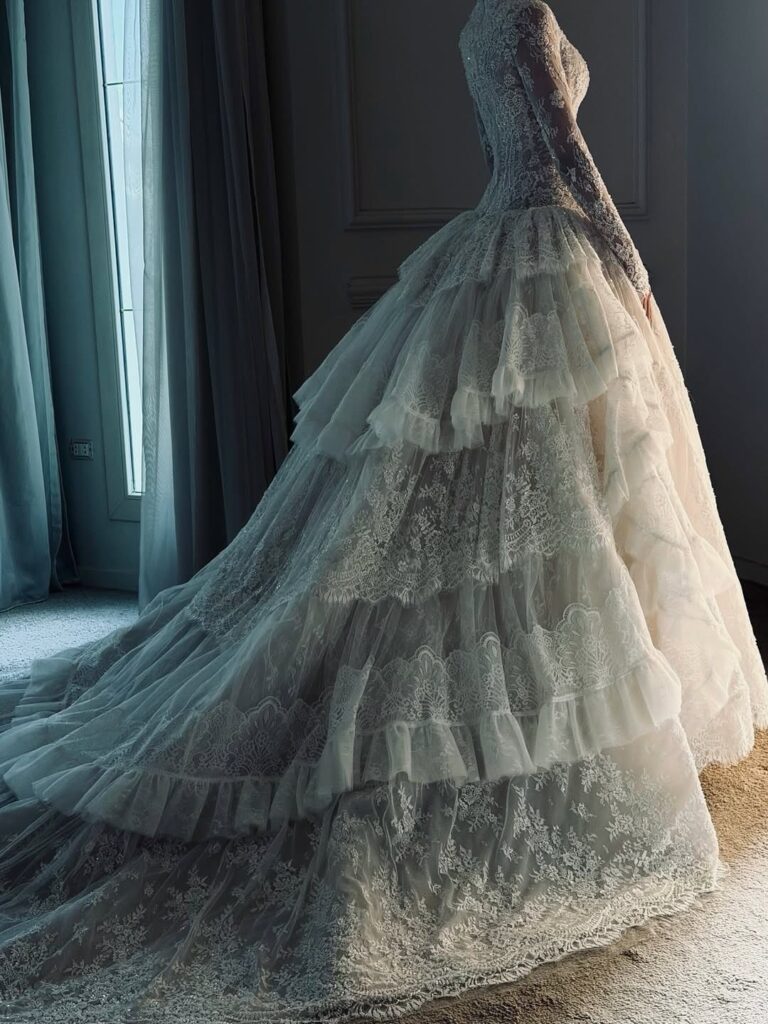
Lace ball gowns come in enough shapes to match different wedding moods: airy A-lines, full princess skirts, long sleeves, off-shoulder necklines, and strapless bodices that each handle light and movement their own way.
The list ahead covers how to read each silhouette, what lace brings that other fabrics do not, and how to hold your own mood up against a dress before you commit to an appointment.
[link-whisper-related-posts]1. Lace Ball Gown Wedding Dresses
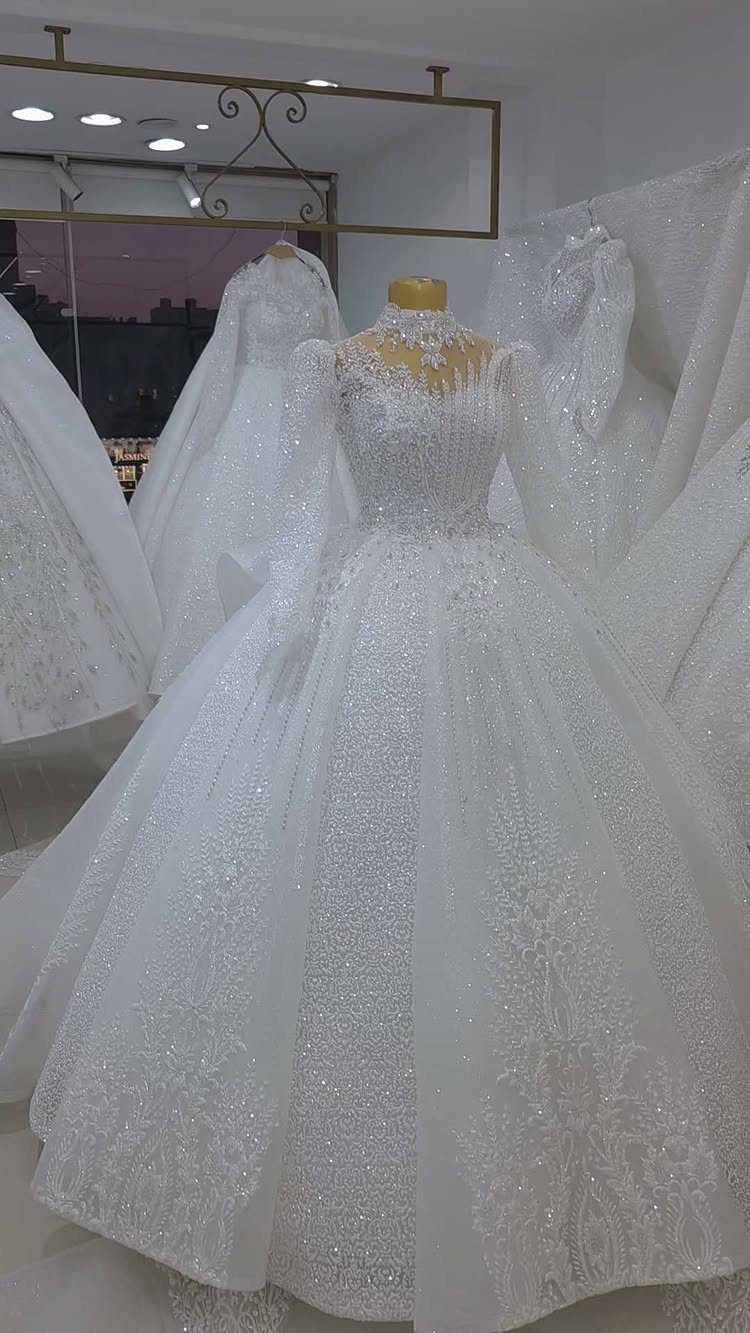
Lace gives a ball gown its memory. The pattern catches light differently than satin or tulle alone, so the dress keeps changing as you move through your day.
A fitted bodice defines the waist and lets the skirt handle the volume below, while the lace itself catches light differently at every angle.
For a bride working inside a real budget, lace is one place where spending shows. Allover lace costs more than appliqued panels, and the denser the motif, the more hours went into placing it.
If you are deciding between 2 gowns at different prices, check whether the lace continues onto the back and train or stops where you cannot see it. That difference is often the gap.

Features: Mermaid wedding dresses for bride 2025 features long sleeve, satin, lace, off shoulder, strapless, v-neck, backless, train, bodycon, long, built-in bra, zipper.

OFF-THE-SHOULDER NECKLINE: Features a classic scalloped neckline with removable long lace sleeves, letting you switch between a romantic long-sleeve look and a sleek strapless style.

Strapless Lace Train Bohemia Bridal Ball Gown Mermaid Wedding Dresses for Bride with Detachable Long Sleeves
2. Ball Gown Long Sleeve Wedding Dresses
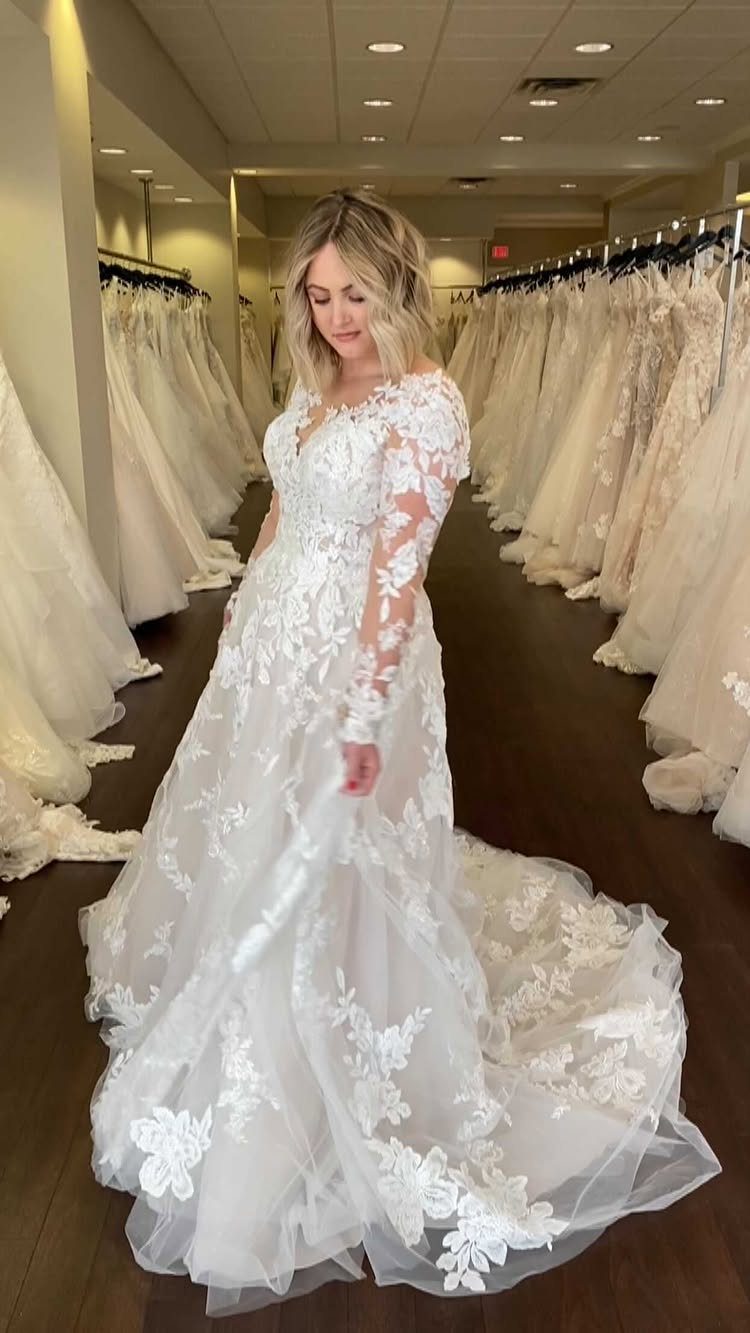
Long sleeves on a ball gown read as formal without needing more jewelry.
The sleeves themselves become the detail, especially in lace or sheer fabric where skin shows through. For a fall or winter wedding, they add warmth you will feel during outdoor photos or a drafty ceremony space.
The silhouette still depends on the waist. A long-sleeve ball gown keeps the same full skirt, so the contrast between the covered arm and the open neckline or fitted bodice is what shapes the look.
Sheer lace sleeves give you that coverage without weight; silk or satin sleeves read heavier and suit a more traditional setting.
Try the gown with the undergarments you actually plan to wear. Sleeves change how the bodice lies, and a sleeve that slips or pulls will annoy you through hours of greeting guests.

Size: [Model's height 5'5", Body Measurements Bust 32.48, Waist 24.6, hips 34.45 inches, wears size XS. Each variation product has a unique size chart. Please follow the size chart in the product photos and choose the size based on your own body measurements before buying. Thank you!

Design Features: This off shoulder elegant maxi dress features long sleeves and a flattering fit that highlights your curves, designed to enhance your figure, this gown has a fitted bodice and voluminous skirt that flatters your curves and creates an eye-catching silhouette

Fabric: the wrapped velvet maxi dress for women is made of 95% Polyester and 5% Elastane, soft and stretchy party dress, is breathable and comfortable to wear. package:1* cocktail dresses for women.
3. Princess Ball Gown Wedding Dresses
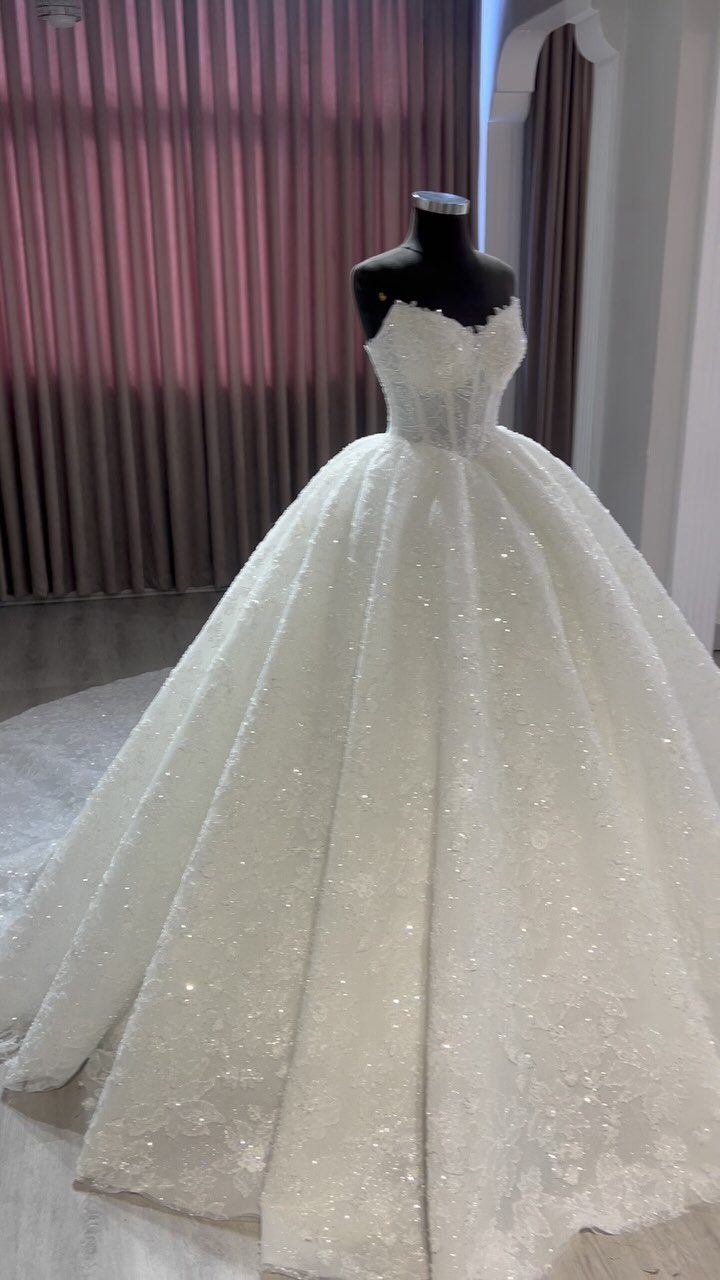
A princess ball gown goes fullest at the skirt, often with layers of tulle or crinoline that hold the shape away from the body.
That volume is the point: it creates the fairytale proportion of a small torso against a wide, floating base. The effect works best in a formal indoor space with enough floor to let the skirt spread.
Petite brides should check the scale carefully. A skirt this full can overwhelm a smaller frame, especially if the waistline sits low.
The sample you try in the salon may have been hemmed for a taller bride, so ask to stand on a platform or imagine the proportions once the length is right for you.
These gowns also need more handling.
The train collects dust outdoors, and the layers tangle in tight spaces. If your venue has narrow doorways or you plan to move between locations, budget time for someone to help manage the skirt.

Sexy Curves -- Mermaid dress is adorned with delicate lace shell, eyelash lace details and off shoulder design.

【Unique Design 】The off shoulder wedding dress with sleeves is a new style,it is a soft lace wedding dress for women bride, flowy lace bridal gown, a line wedding bride dress,strapless wedding dress for brides,off shoulder bridal dress,lightweight lining wedding bridal gown for bride.the long sleeves and slit creates an elegant and unique style.It also has other design details worth paying attention to,backless,corest back,empire waist.

Selected materials: Made of quality lace with soft skin-friendly stretchy smooth lining, this lace dress with sleeves is super soft, breathable and comfortable to wear all day
4. Off-shoulder Ball Gown Wedding Dress
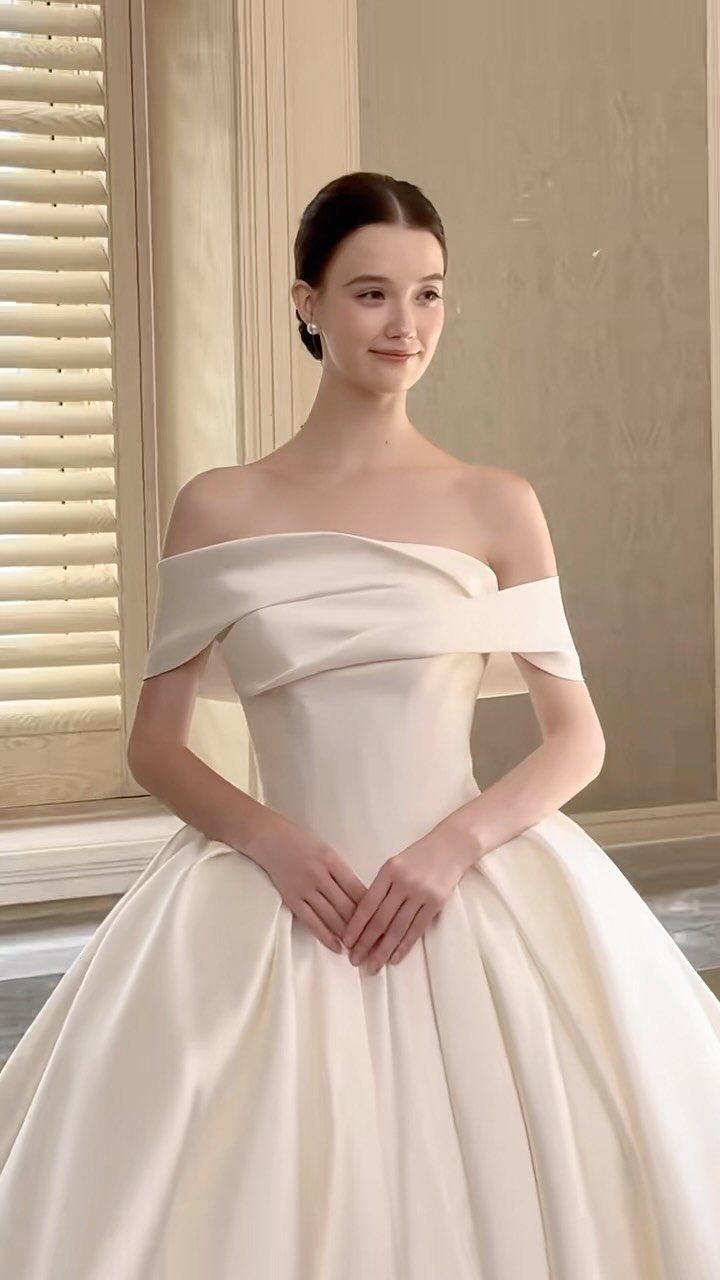
An off-shoulder neckline frames the face and collarbone while the ball gown skirt carries the drama below. That division of labor is what makes the style work: the eye has a clear place to rest, then travels down.
The bodice stays fitted through the waist, and the skirt fullness starts from there, so the hourglass shape builds itself.
Some versions add long sleeves that connect to the off-shoulder drape; others keep the arm bare.
A Bardot fold sits softer and wider across the upper arm than a sharp off-shoulder seam, which reads more relaxed and less constructed. Either way, the neckline needs to stay put.
Test raising your arms, hugging someone, and bending forward before you commit. A neckline that rides up or gaps will need alterations, and not every bodice can take them.

Size: Please check Our Size Chart before you placed the order.

♥Features:Strapless Tulle Wedding Dresses for Bride,Tulle Lace Wedding Dresses for Women,Tulle Bridal Dress for Bride,Tulle A-line Wedding Dresses 2026,Lace Wedding Bride Dresses for Women,Strapless Lace Bridal Ball Gowns,Strapless,Tulle,Lace,Sleeveless,Sweetheart,built in bra.The elegant wedding dress is suitable for every bride!

ELEGANT SILHOUETTE: Features a classic A-line ball gown silhouette with a voluminous tulle skirt that flows gracefully to the floor.
5. A-line Lace Ball Gowns
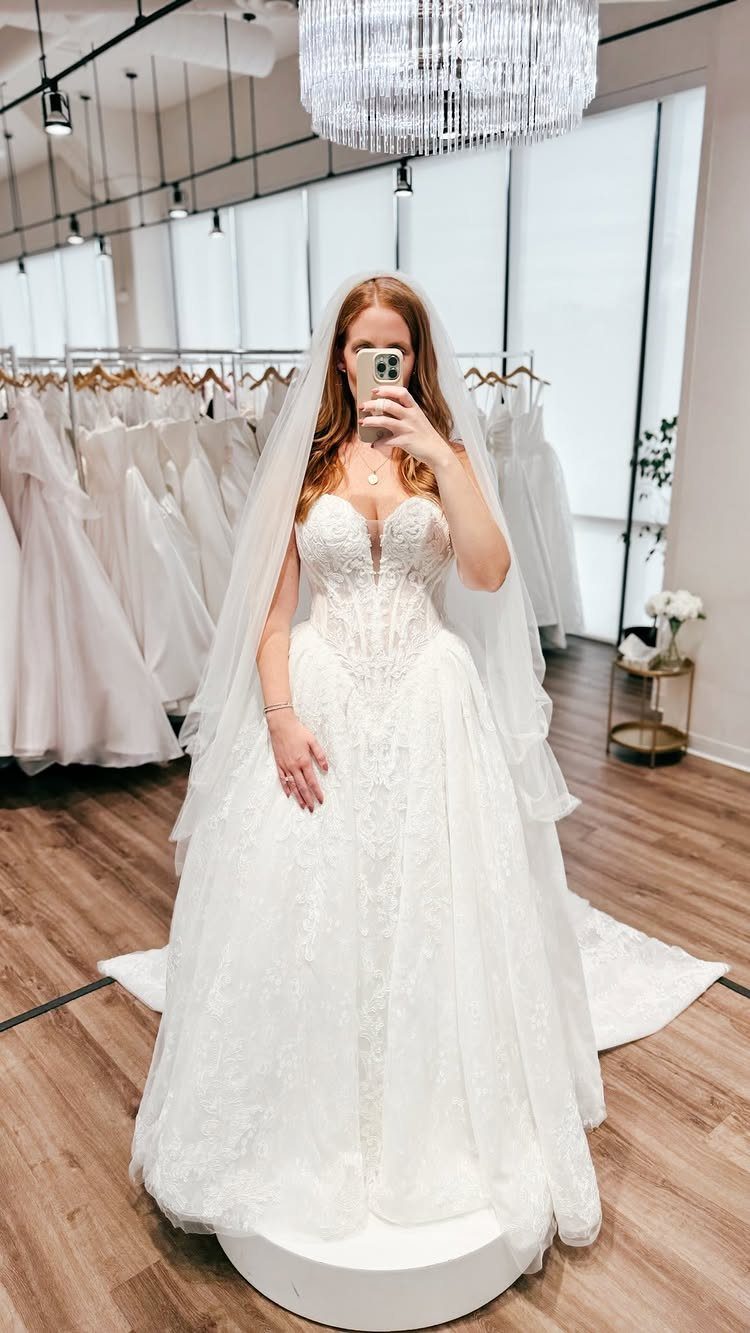
An A-line lace ball gown keeps the volume but lets it start lower, from the waist or just below rather than from the hip.
That gentler slope is what makes the shape feel airy; the skirt moves more freely because there is less structure forcing it out. In lace, the pattern shows across a larger surface without the breaks of a more built silhouette.
The Madison James collection uses a lace the designer describes as beaded and dimensional, with a structured bodice and an extended sheer train.
That combination, a fitted upper body and a long lace fall behind, is what you are looking at in the mirror: the dress reads as formal from the front and gains its presence from the back as you walk.
If you are comparing this to a fuller ball gown, try both seated. The A-line needs less space around you and is easier to manage at a dinner table.

Lightweight & Not Itchy: Our full shape petticoat made with T230 durable material, which is lightweight and soft, it is not itchy at all. The velcro closure around the waist is SUPER stretchy and very forgiving, it can be easily accommodating women from size 2 to much fuller figures.

Material: This hoopless crinoline underskirt for women is made of four layers of high-quality stiff tulle and a soft, skin-friendly satin lining for all-day comfort. The hoopless design adds volume to your dress while allowing easy movement and sitting.

Design: Elegant flower girls dresses for weddings princess formal long maxi evening prom ball gown birthday party full length dress for kids junior girls, floral lace, hidden back zipper closure, featuring beautiful design. Your little princess will be thrilled with this gorgeous floral lace bow layered tulle tutu dress.
6. Strapless Lace Ball Gowns
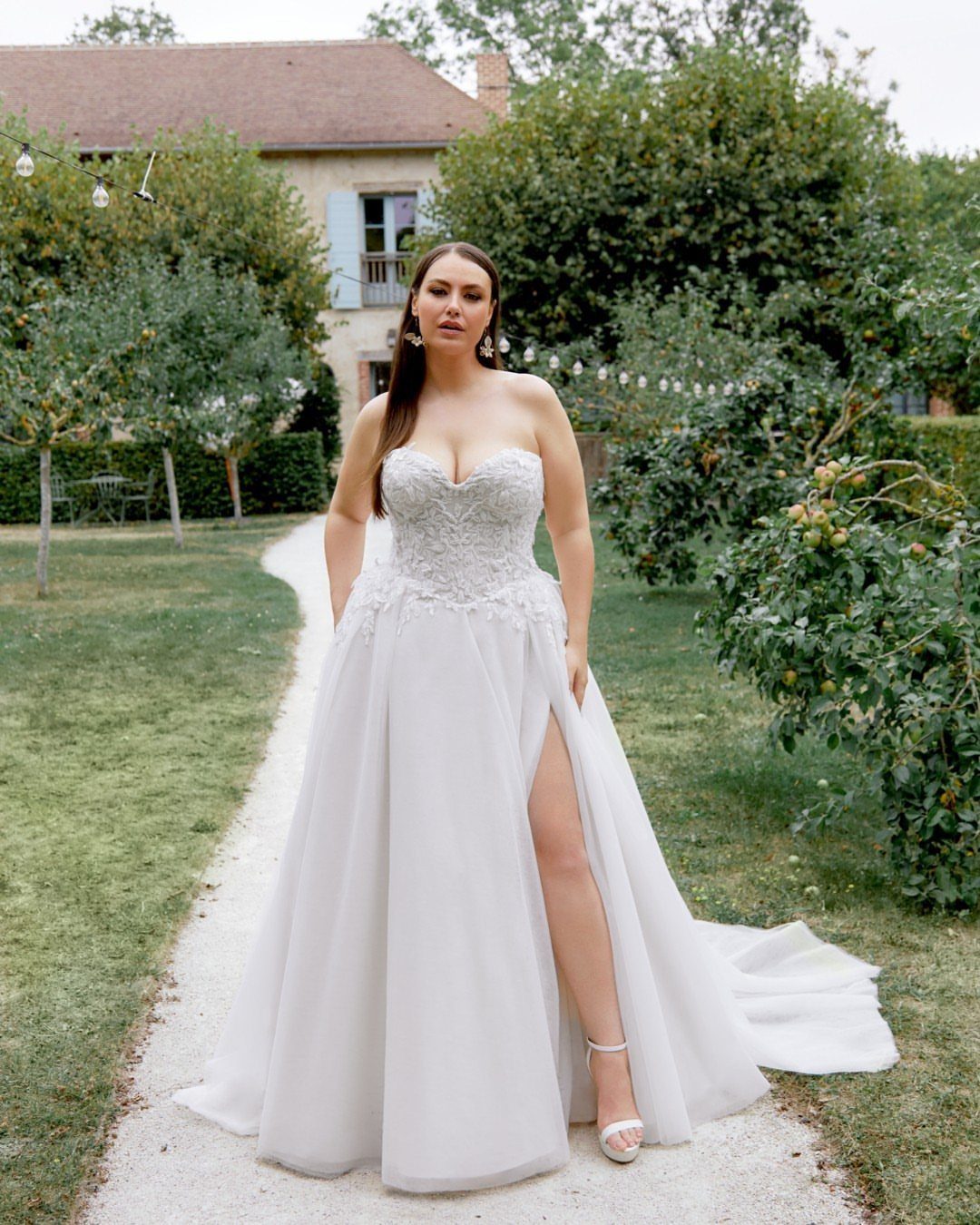
A strapless lace ball gown with a sweetheart neckline keeps the upper body clean so the lace pattern and the skirt volume do the work.
The heart-shaped dip of the neckline softens the bare shoulder line, and the lace texture keeps the bodice from reading as plain.
The visible gown adds a high leg slit, which changes how the skirt moves and how you walk in it.
That detail is worth deciding on deliberately: it opens the shape and lets you show a shoe, but it also means the inner layers need finishing and the slit itself will shift as you move.
Before trying this style, check your undergarment options. A strapless gown needs real support in the bodice, and lace over boning or a built-in corset feels different than lace over a separate foundation.
Ask what structure is in the sample you are wearing, because that is what you are buying, not just the outer fabric.

OFF-THE-SHOULDER NECKLINE: Features a classic scalloped neckline with removable long lace sleeves, letting you switch between a romantic long-sleeve look and a sleek strapless style.

Features:Lace mermaid wedding dress for women;sweetheart wedding gowns for bride;appliques bridal gowns for women;plus size wedding Dress;lace mermaid bridal dress;v neck ball gown for bride;vintage church wedding dress;beach wedding dress

Champagne Sequins Long Shoulder Lace Detachable Train Mermaid Bridal Ball Gowns Wedding Dresses for Bride
Choosing the Right Silhouette
The silhouette decides how lace behaves on your body. I have watched brides try both and realize the same lace reads entirely different when it hangs versus when it clings.
A back detail, though, turns the lace into something you only fully see as you walk away. Direction matters more than prettiness here: where the eye travels depends on the lace placement, not the label.
When you stand in the sample, notice where the lace sits under your hands, against your arms, across your back.
That contact point is where you will feel the dress all day. The right silhouette is the one where that feeling matches how you want to move through the hours.

Elegant Gown Design: Floor-length formal evening gown featuring an off-the-shoulder straight neckline, quarter sleeves, bodycon silhouette, and dramatic ruffle trim for sophisticated style.

Size:US standard size 2-26,but if you want to customize,please contact me after ordering,your detailed measurements are needed Bust,Waist,Hips,Arm Length,Hollow to floor,Height,shoes heel height

Design: off the shoulder gothic wedding dress for women, beaded bodice bridal wedding dress corset back, sweetheart tulle tiered vintage long sleeves wedding dress with tassel
Lace’s Timeless Appeal
Lace works because it gives the eye 2 distances at once. From across the room, you register the pattern as texture, a softening of the gown’s shape.
Up close, the same dress shows the hours in the placement. That shift is what keeps lace from going flat in photographs or in memory.
The restraint matters as much as the detail. Lace that covers every inch competes with the bride; lace used as accent or finish lets the person and the fabric share the frame.
I look for where the designer stopped: a plain edge, a clean seam, a break before the lace becomes wallpaper.
A three-layer lace construction gives these ball gowns their living shimmer: the bead catching light the thread does not makes the gown change as you turn.

ELEGANT SILHOUETTE: Stunning princess ball gown style features a voluminous layered tulle skirt that creates a dramatic, fairytale-inspired look.

Features: Mermaid wedding dresses for bride 2024 features long sleeve, lace, off shoulder, strapless, v-neck, backless, train, bodycon, long, built-in bra, zipper. Lace and mermaid on the wedding dress makes the wedding dress elegant and charming.

♥Features:Long Sleeve Wedding Dresses for Bride,Satin Lace Wedding Dresses 2026,Long Sleeve Satin Bridal Ball Gowns for Women,Lace Appliques Wedding Bridal Gowns 2026,V-Neck Satin Wedding Dresses,Mermaid Lace Wedding Dresses for Women,Simple Long Sleeve Satin Beach Wedding Dresses.A-Line,Long Sleeve,V-Neck,Satin Lace Appliques,built in bra.The simple wedding dress is suitable for every bride!
Bridal Mood and Vision
Start with the feeling, not the fabric. Softness, structure, drama, ease: pick one and let it narrow the field before you touch a hanger.
I have seen brides fall for a lace they loved in isolation, then struggle because the gown it belonged to delivered the wrong mood.
A classic romantic look wants lace that flows and trails, nothing that fights the line.
Something more streamlined needs lace as punctuation: a panel, a edge, a single back detail that gives texture without weight. Madison James runs both directions, which helps only if you already know which way you are walking.
The question to ask in the salon is not "do I like this dress" but "what does this dress do to the room when I enter it." That effect is your mood made visible.
Try the gown and picture the moment: the door, the turn, the first sight. The lace should belong to that moment, not distract from it.

Fabric: Lace appliques, Tulle

【Unique Design 】The off shoulder lace bride dress for wedding,it is a soft long strapless wedding dress for women, modern aline bridal gown, satin wedding ball gowns,elegant wedding dress for brides,elegant bridal dress.detachable creates an elegant and unique style.It also has other design details worth paying attention to,open back,empire waist.

Features:Off shoulder satin wedding dress, Strapless long Ball Gown ball gowns for women, satin Strapless bride gown. High slit, Strapless , a line, plus size, empire waist, corset wedding dress, satin long Ball Gown prom dresses, floor length, Strapless up back,built-in bra.
Experience in Person
No photograph shows how lace feels against your skin or how the skirt moves when you walk. The sample gown on the hanger is a guess; the same gown on your body is information.
I would not buy a shoe without walking in it, and I would not commit to lace without seeing how it reads in the light you will actually stand in.
In the salon, move.
Sit, stand, raise your arms, turn quickly. Lace that looks perfect still may catch, itch, or pull at a seam.
Kleinfeld Bridal carries the Madison James collection, and their appointment format gives you time to compare. That comparison is the point.
One gown teaches you what to notice in the next. By the third, you are not just choosing a dress; you are calibrating your own preference, which is the only standard that will matter on the day.

Extra‑Voluminous A‑Line: This oversized 8-hoop crinoline delivers full A‑line volume, specially built for ball gowns. No more flat, lifeless dresses. It retains its wide open silhouette under heavy quinceanera or wedding gowns, creating the show‑stopping fairytale princess look ideal for weddings, Quinceañera and Sweet 16 events or any occasion where you want a full, voluminous petticoat.

OCCASIONS : Petticoat Crinoline for Wedding Dresses, Prom Dress, Quinceanera Dress, and other special occasion dress.

High-Quality Tulle Petticoat: The Edith qi Women's A-Line Hoopless Petticoat is crafted from premium polyester fabric, featuring 8 layers of high-quality stiff tulle that provide exceptional support for your bridal dress. This floor-length petticoat ensures your wedding dress maintains its beautiful shape while offering a soft inner lining for added comfort against the skin