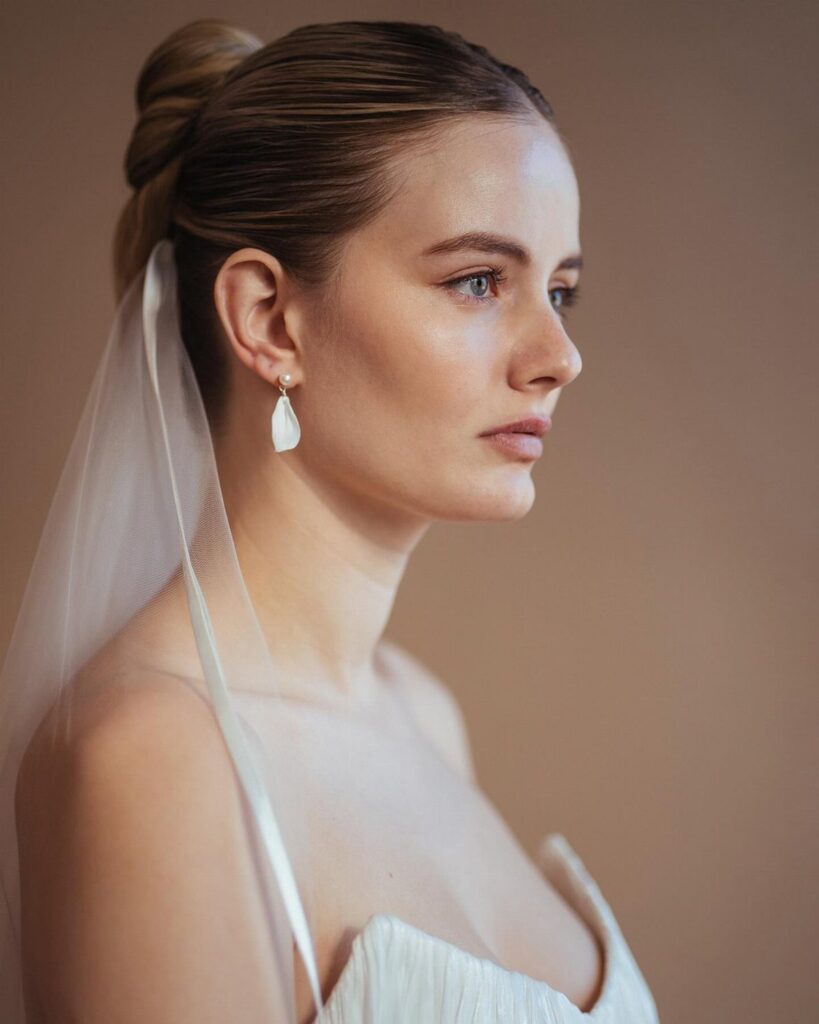
The right pairing depends on whether your hair holds weight on its own or needs a hidden anchor to keep the comb from slipping.
Airy tulle works with all-down styles only if the fabric lets the curls move instead of flattening them.
[link-whisper-related-posts]1. Half-Up, Half-Down
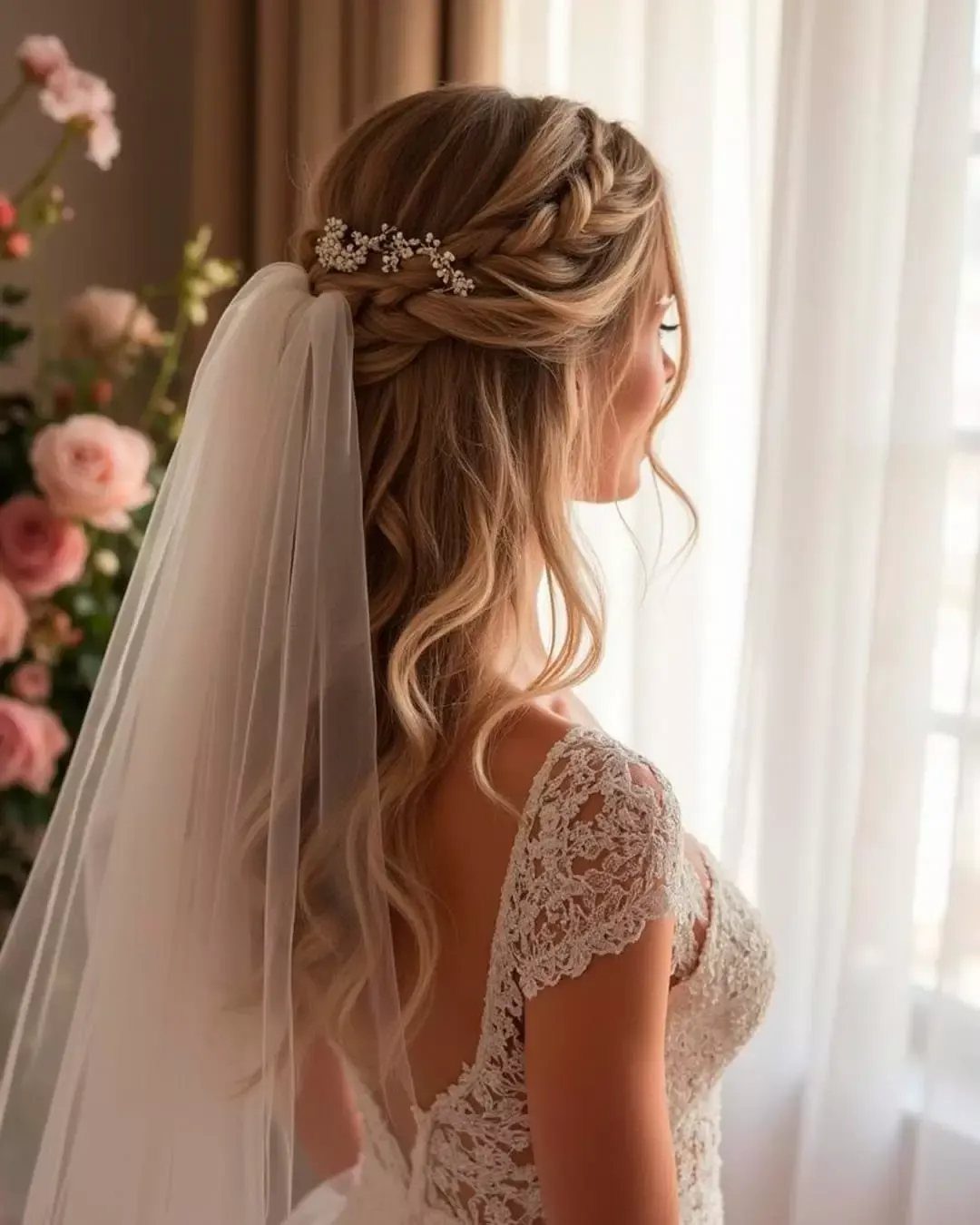
Braids, twists, or simple gathers at the crown give this style its anchor, and that is exactly where the veil comb slips in. You keep waves around your face without the worry of everything sliding south during photos.
More volume in the gathered section reads romantic; smoother reads polished. I like an off-center part with a few wispy pieces framing the face, but the placement is flexible.
A fingertip or chapel veil with soft cascade works well here. Ruffles or a small bow where the veil begins add something unexpected without fighting the shape.
Fresh flowers or a simple pin at the anchor point are easy to add and easy to skip.
2. Sleek High Bun
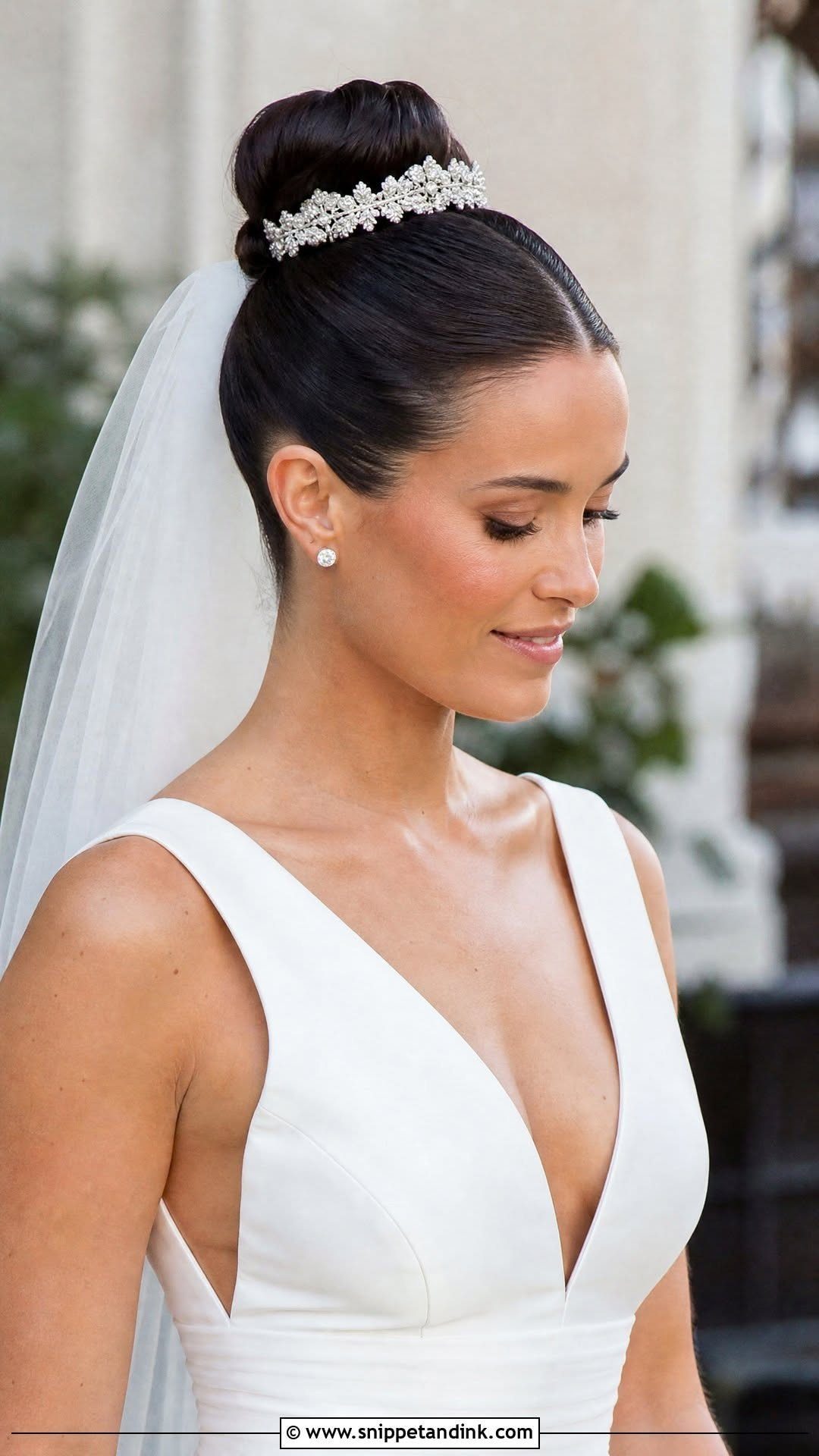
A tight ballet bun lifts everything and gives a modern, uncluttered line. The veil can sit over the bun, under it, or with the comb tucked between the bun and any hair accessory.
I prefer the veil beneath the bun for this look; it keeps the shape clean and the silhouette uninterrupted.
A satin-trimmed edge stays in the same minimal register as the hair itself. A sheer drop veil softens the look without breaking the clean line of a sleek high bun.
A blusher, the shorter face-covering layer, works here too, though that choice tilts more dramatic than I would go.
3. Side-Swept Hairstyles with Veil
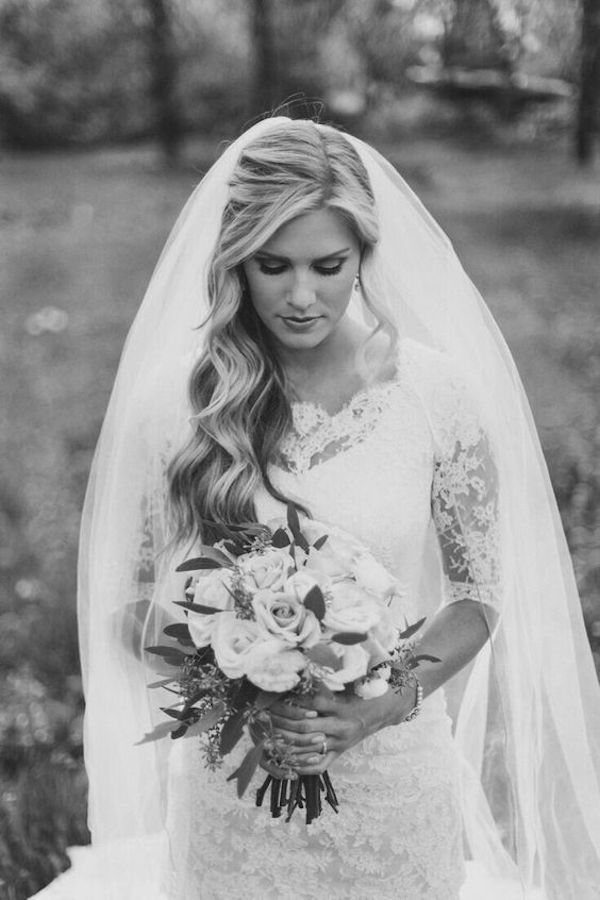
Asymmetry does the work in this style.
Hair gathers over one shoulder, the other side stays open, and the veil balances rather than mirrors the sweep. Set the comb at the back of the crown or on the side opposite the sweep so the veil hangs straight.
A fingertip or chapel length in classic tulle keeps the focus on the shape itself. A blusher works only if it is light; anything heavy pulls the asymmetry off-center and the whole look collapses into lopsided.
With hair pulled to one side, earrings stay in full view, which flatters a strapless or one-shoulder neckline. Pin curls firmly behind one ear so the sweep holds; hidden pins do the job without showing.
4. Blunt Bob
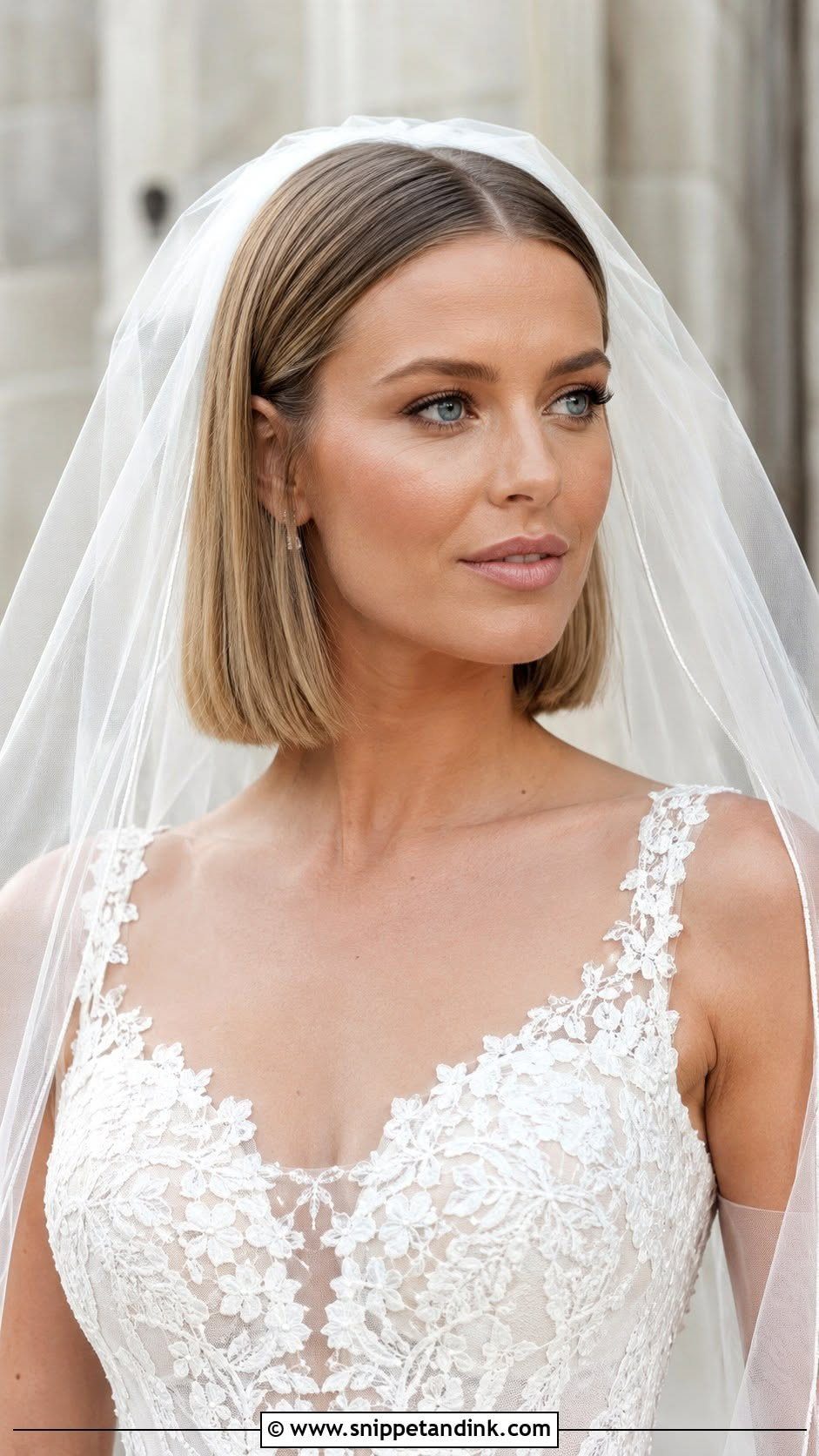
The sharp line of a blunt bob reads even cleaner against the soft drift of tulle. The contrast reads modern and deliberate, and it only gets better at the reception when the veil comes off and the shape still holds.
Birdcage or shoulder-length veils suit this length best; fingertip can work if the fabric stays light.
A small hidden braid, slim headband, or firm comb base gives the veil something to grip, since short hair does not anchor on its own.
Soft bends in the bob read romantic; smooth and straight reads sharper. One side tucked behind an ear is a small move that shows a pin or earring without cluttering anything.

Brand : Sensationnel Instant Up and down unique 4 style in 1 solution with a half wig and pony tail wrap in one single pack.

Brand : Sensationnel Instant Up and down unique 4 style in 1 solution with a half wig and pony tail drawstring in one single pack.
5. Loose Curls
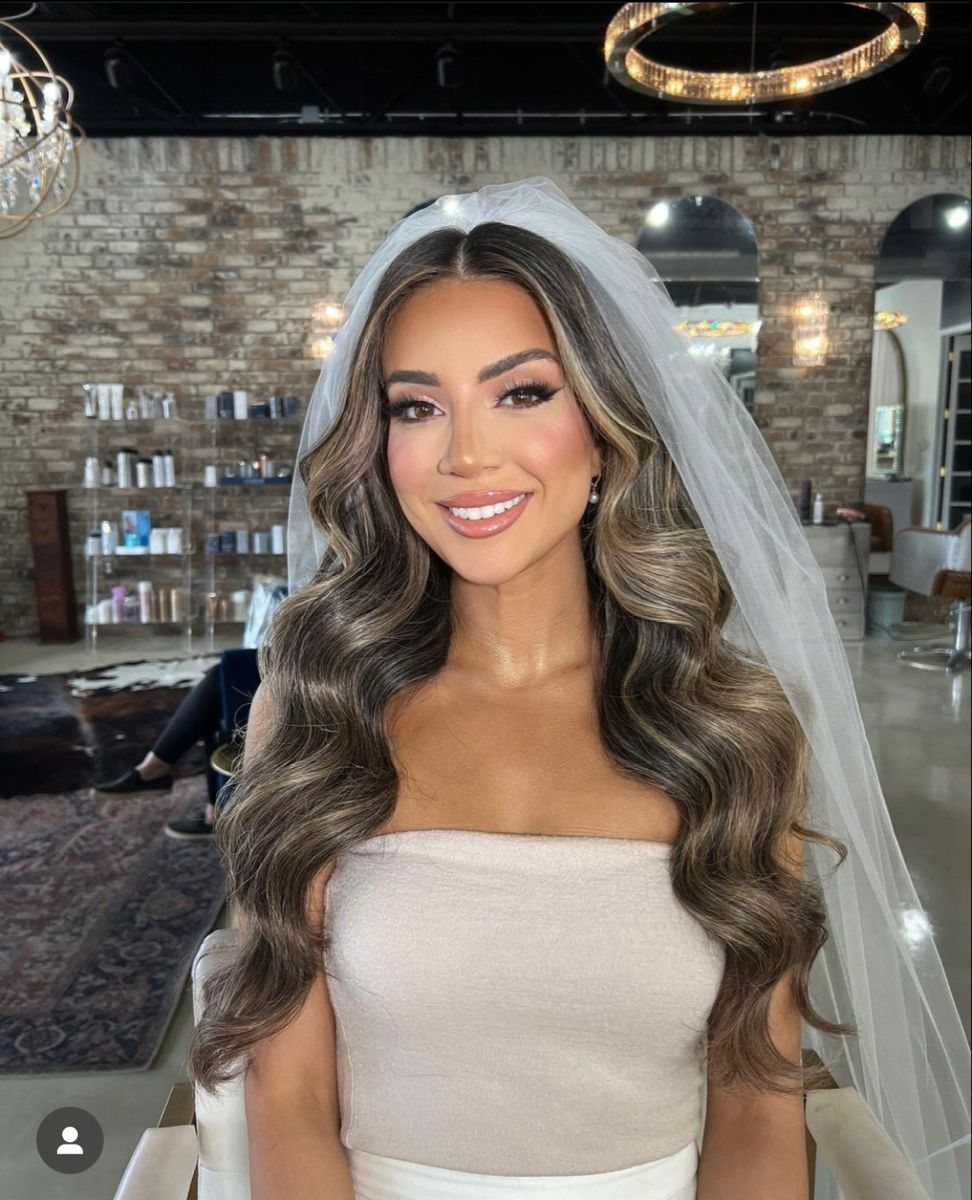
Wearing hair fully down with a veil is possible, but it needs hidden support.
Your stylist can weave a small braid, cross pins beneath the top layer, or add a tiny clear elastic where the comb will sit. All of it disappears under the hair and the veil holds.
A lighter veil works better than a heavy one; airy tulle or a delicate mantilla with lace trim keeps the curls from flattening. Setting the veil at the crown sends the weight upward so it does not flatten the curl.
Stacey, whose work I have followed, favors lightweight veils with all-down styles for exactly this reason. The fabric needs to let the curls move.

[ Size ] This 79-Inch White Wedding Veil Features a Graceful Chapel Length for a Dramatic and Formal Look. With a Generous 59-Inch Width, This Bridal Veil Creates a Stunning Silhouette as You Walk Down the Aisle.

MATERIAL: Bridal Italian Tulle.

Two length,choose between chapel Length 91 inch/230cm,and cathedral length 118 inch/300cm to match your wedding dress style and venue. The veil width is approximately 39.3 inch/100cm
6. Relaxed Up-do with Minimally Adorned Veil
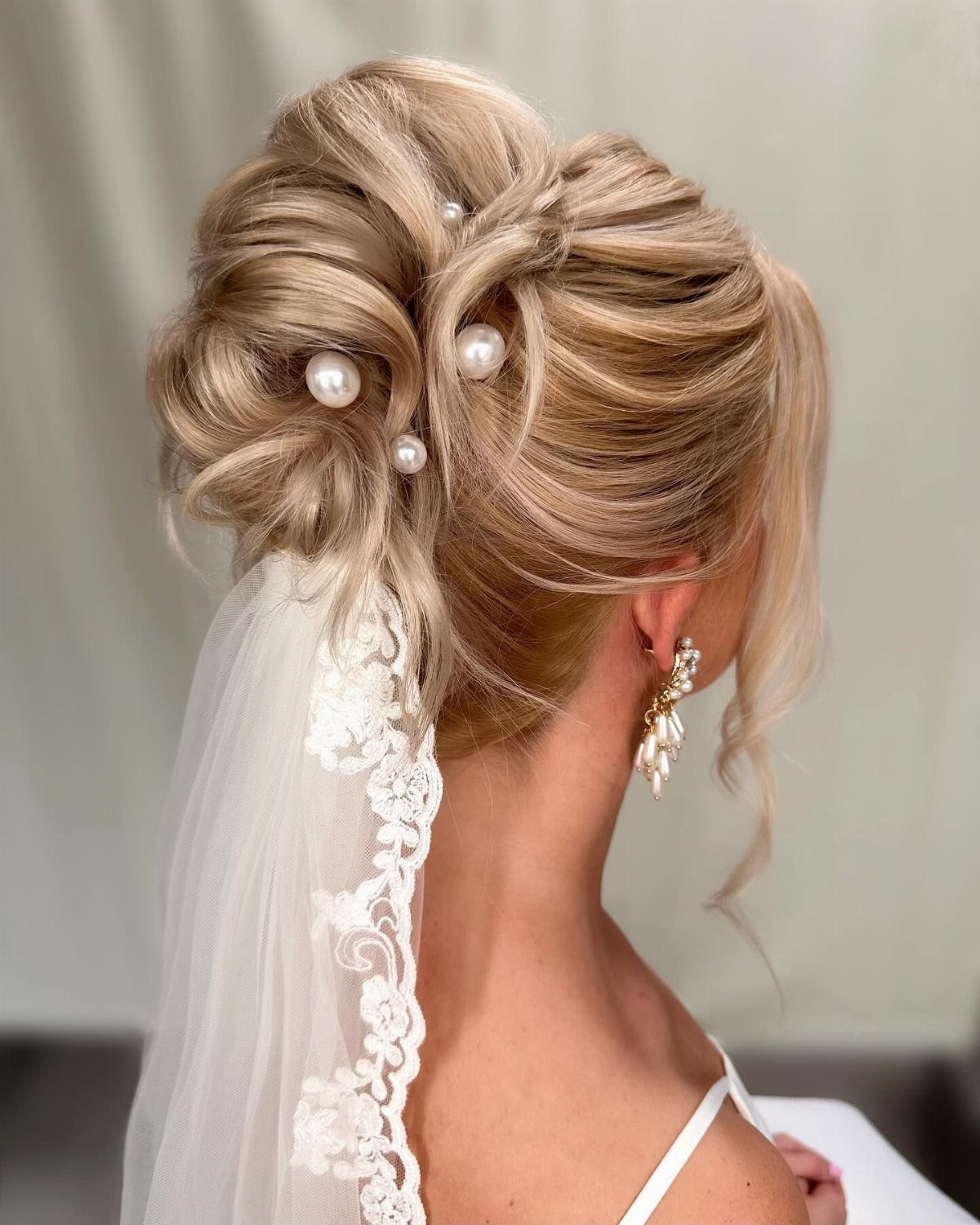
Texture is what separates this from a formal updo.
Loose pieces around the bun, soft tendrils, pinned braids woven in. The veil sits in the middle of the style or just below it, which keeps the profile balanced from every angle.
Pearl pins scattered through the up-do add quiet detail without competing with a simple veil.
The veil should stay simple near the face so the two do not compete; lace trim or soft tulle edges work, but skip heavy beading or thick borders.
Loose pieces around the face soften the jawline, though they need a trial run in the humidity or wind you expect that day. Wind or humidity can turn romantic into frazzled.


Birdcage veil is made of soft tulle and pearls, lightweight, durable and not easy to break.

Hair Clip Combs Measurement: the length of these veil comb is about 7.5 cm/ 3 inch and approx. 3.6 cm/ 1.8 inch in width, proper size for inserting into your hair
7. Sleek Low Bun with Veil
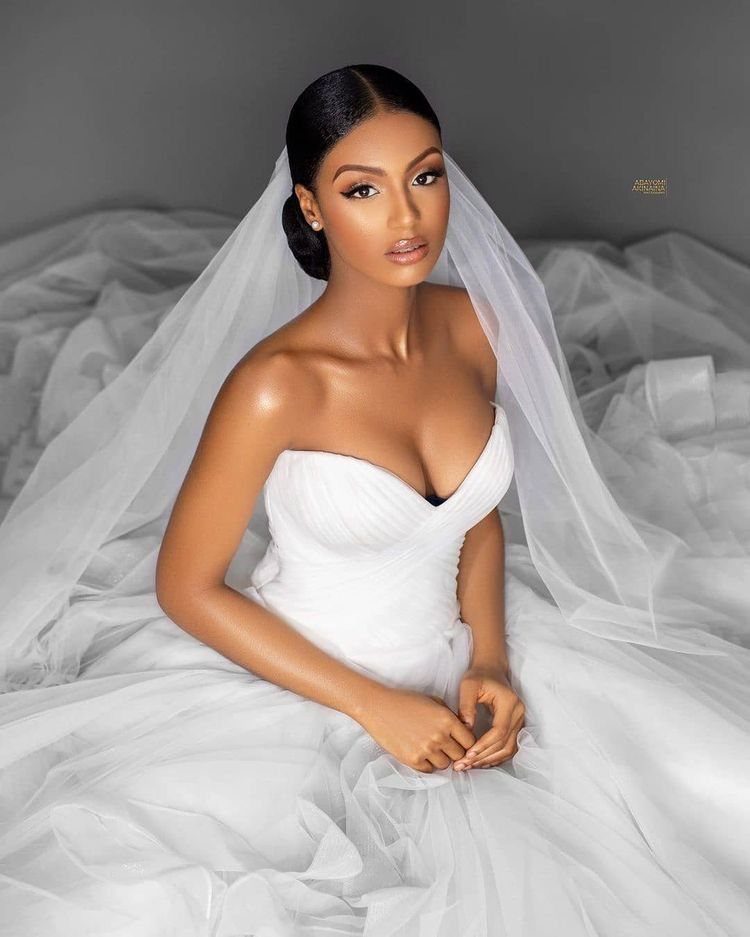
A low bun at the nape keeps everything calm and controlled, and the veil gains movement when it falls from above rather than nestling against the bun itself.
A low bun builds gentle fullness at the crown and holds the veil’s weight without the sagging that looser styles tend toward.
Cross 2 bobby pins into an X where the comb will sit, and a fingertip or chapel veil stays put through the whole ceremony. I like the slight nod to mantilla placement this gives, though the bun itself stays modern.
Face-framing wisps or a clean fringe change the mood entirely; one reads relaxed, the other precise. Check both in your trial.

💖[Package Details]: The 4pcs half up half down ponytail extension set comes with 3 extension wefts and 1 mini wrap around ponytail. Also comes with gifts, a wide-toothed comb, a hair tie, and a hair clip.

Brand : Sensationnel Instant Up and down unique 4 style in 1 solution with a half wig and pony tail drawstring in one single pack.

Wedding hairband--you can wear our hair vine at your wedding, photo shoots, birthday parties and other ceremonies,bridal pearl hairpin
8. Short Hair with Headband and Veil
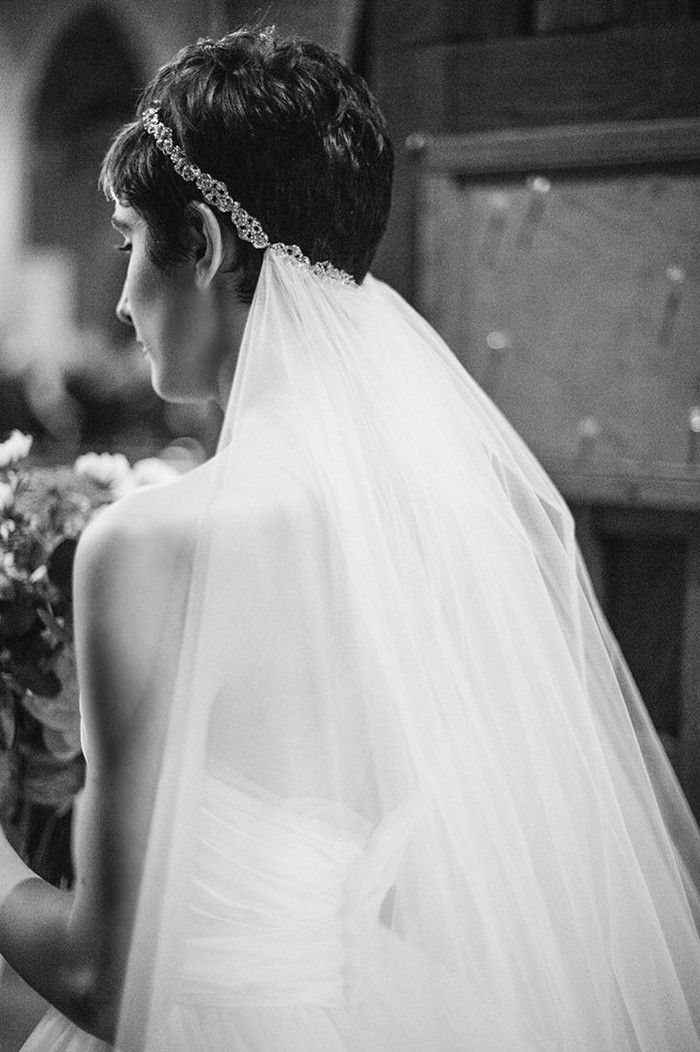
Short hair needs an anchor, and a beaded or jeweled headband that the veil attaches to solves it with one piece. The headband becomes the feature; the veil becomes the trailing part, and nothing relies on grip against short layers.
A birdcage or shoulder-length veil keeps the proportions balanced, though a longer tulle fall works if the headband is substantial enough to carry the visual weight.
Test the comb or attachment during your hair trial; short hair offers nothing to catch against if the mechanism slips.

Wedding Long veils is made of delicate tulle and quality hair comb Cathedral Veils are not only available in white and ivory,but also in single and double layers,suitable for...
Choosing the Right Veil
Your veil and hairstyle should not compete for attention. One carries the detail, the other stays quiet.
A plain veil leaves room for braids, twists, or decorative pins. The same rule runs the other way: textured hair calls for simple tulle.
Weight matters more than most couples expect. Thick or curly hair can handle more weight but needs stronger anchoring.
Your dress back is part of the calculation too.
An intricate train or detailed lace panel shows better when hair stays up. A plain dress leaves room for curls down or soft waves brushing the shoulders.

High Quality - This bridal veil clip is exquisitely designed with two layers, softly and flowy.Soft tulle fabric with dainty pearls. Pearls are fastened to the veil with clasps which not fall off easily, suitable for you to use for a long time

Elegant Design: These hair comb clips adopt vintage and elegant design with white ribbon wrapped, adding a touch of sophistication to your hairstyles. These hair clips have 20 teeth, can holding your hair firmly.
Veil Placement
Moving the comb an inch changes the silhouette more than you would expect.
A high-placement veil sits at the crown of the head, just behind the hairline, and this placement suits loose curls and half-up styles where the volume already lives high on the head.
Mid-back placement reads softer and works with braids or hair worn fully down. Very low, near the nape, keeps everything minimal and calm.
The comb itself needs testing for pressure.
Check the view from front, side, and back before you commit. A high veil can crowd a round face; a low one can disappear in profile against a detailed neckline.
Testing Styles
Bring your actual veil to the trial, not a photo. The comb shape, the weight of the fabric, and the exact length all change how a style sits and holds.
Bring every accessory you plan to wear: pearl pins, flowers, clips, headbands.
Your stylist needs to place them together, not guess at spacing. Bring clear shots of your dress front, neckline, back, and straps so the stylist sees what the hair will frame or cover.
Two or three hairstyle photos help, but choose ones with hair near your length and texture. A style built for thick waist-length hair will not translate to a fine shoulder-length cut without extensions or a different approach.
Test movement.
Walk, turn your head, sit. The hair needs to hold its shape once the anchor comes out.
Balancing Details
One element leads; the rest support. Two competing focal points cancel each other out.
A heavily jeweled veil with a head full of crystal pins and a beaded dress back gives the eye nowhere to rest.
Pick the place you want attention to land: the face, the profile, the gown’s construction, or a single striking accessory. Build around that choice.
The veil stays plain near the face so the 2 elements share space rather than argue.
This balance also decides what photographs well. A busy frame catches light in too many places; a clear hierarchy reads clean in every shot your photographer takes.
Frequently Asked Questions
How do you put a veil in your hair?
Most veils attach with a comb that slides into your hairstyle where the hair is already anchored.
Short hair needs a headband or comb base since there is nothing for grip to catch against. Test your actual veil during your hair trial, not a photo, because comb shape and fabric weight change how everything holds.
Do brides always wear a veil?
No.
Some brides skip it entirely; others use it for ceremony only and remove it at reception. The blunt bob section notes the shape still holds after the veil comes off, which only matters if you planned to remove it.