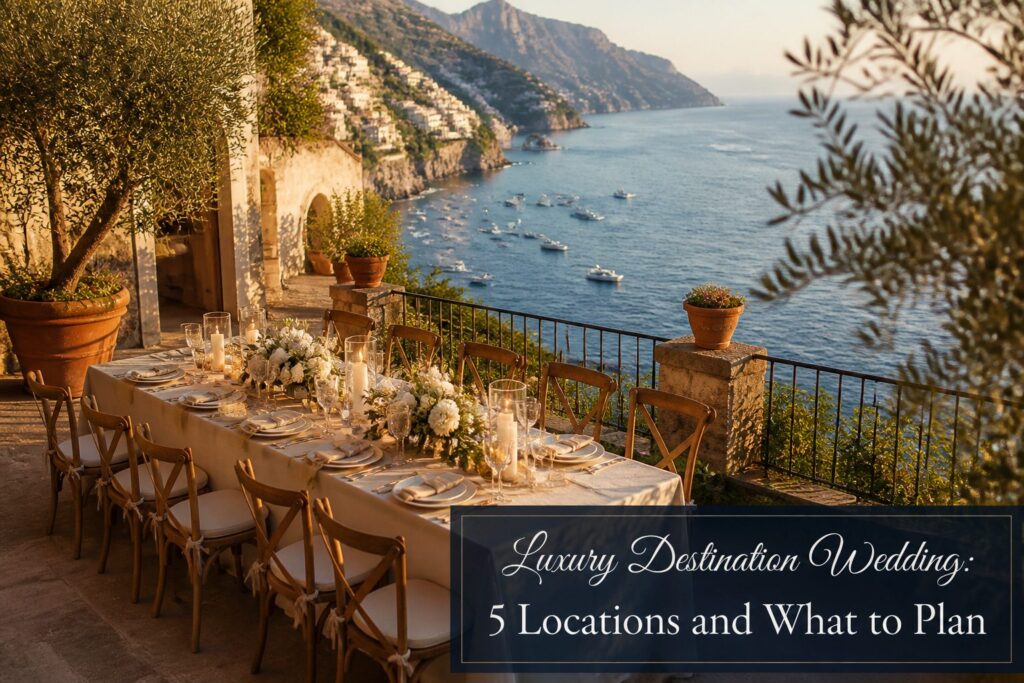
A luxury destination wedding is a ceremony held away from home where the location itself becomes part of the event’s design, and the complication is that "luxury" shifts meaning depending on whether you book an all-inclusive resort or a private estate.
At Secrets Tulum, the full event runs $15,000 to $25,000, a figure that in most American cities barely covers venue rental before anyone eats.
The real condition that changes everything is what you are willing to manage yourself: one route bundles food, lodging, and ceremony under a single invoice, while the other hands you keys to an empty house and expects you to build the infrastructure.
[link-whisper-related-posts]Mexico and Caribbean All-Inclusive Resorts
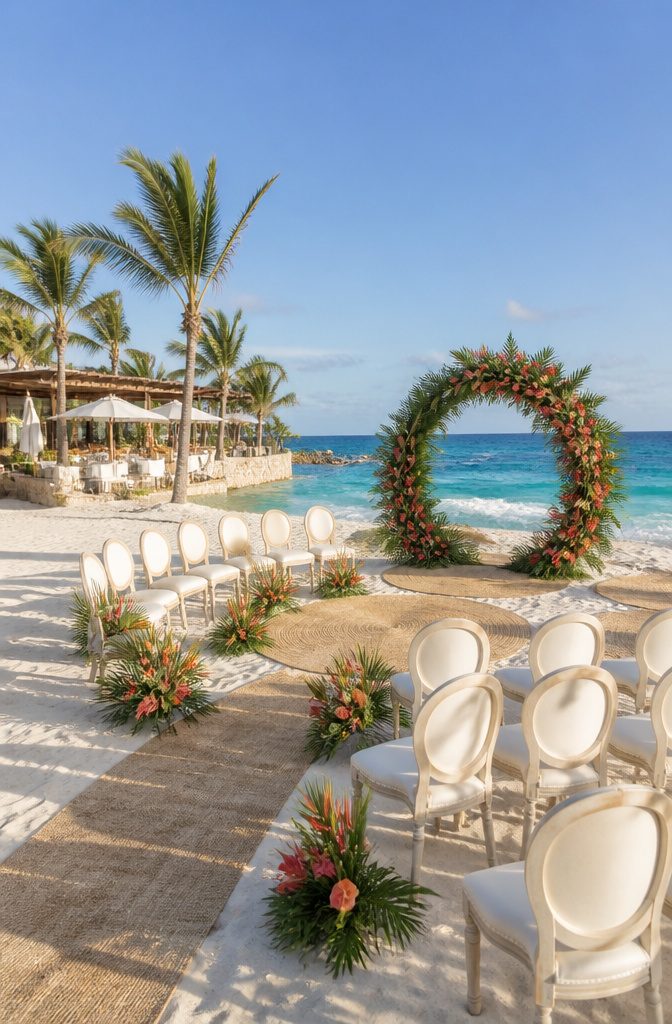
Bespoke Bride’s list of nine all-inclusive resorts in Mexico and the Caribbean points to a 70% savings over typical US wedding costs, and the math holds up once you trace what each property actually covers.
Secrets Tulum Resort & Beach Club runs $15,000 to $25,000 for the full event, which in most American metro areas barely covers the venue rental before you have fed anyone.
The sky deck and the Jasmine restaurant handle rehearsal dinners without a second vendor contract, and the beach club itself doubles as ceremony space, so you are not paying a premium for exclusivity that sounds good on paper and empties the budget.
Majestic Elegance Costa Mujeres works on a room-night threshold: hit 105 room-nights, roughly fifteen rooms for a week or twenty for five nights, and the wedding package itself drops to zero.
That includes the ceremony, champagne toast, semi-private dinner, and basic décor for sixty guests.
Shoulder-season rates for a junior suite sit near $270 per night, and the property opened recently enough that the rooms still feel crisp against pricier neighbors in Playa Mujeres.
For every ten paid rooms, one is comped, which usually covers the couple’s own stay. The rooftop Sky Terrace, normally a premium add-on, is included once you clear that free-package mark.
Couples Swept Away offers a free wedding package on three-night bookings, the shortest threshold of the group.
The all-inclusive structure means guests are not reaching for wallets at every turn, which matters more than it sounds when you have twenty or thirty people in tow.
What it actually covers varies by property, but the core promise is consistent: one point of contact, one invoice, and no surprise catering minimums or corkage fees appearing two weeks before the date.
Logistics are the real challenge. Costa Mujeres sits forty minutes north of Cancun airport, so shared shuttles need booking early, and Saturday slots at the popular properties often lock up eighteen months out.
Start the room count early, treat each RSVP as a payment toward that free package, and the wedding nearly funds itself.

Harbour Island Boutique Properties
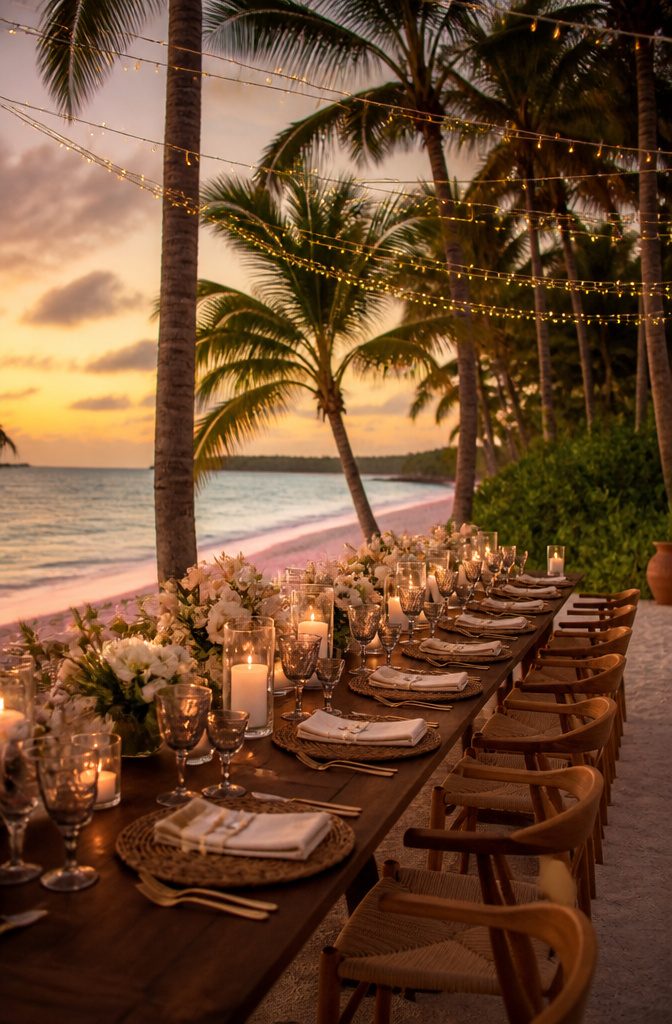
Harbour Island in the Bahamas runs along a pink-sand beachfront on the eastern shore, with boutique properties that trade resort scale for hospitality-first character.
Wedding packages run $5,000 to $18,000, with full-service luxury celebrations climbing past $30,000, and reception dinners price separately at $120 to $250+ per guest.
The intimate scale means your guest list shapes the budget fast; a fifty-person dinner lands in a very different place than twenty.
The legal side carries its own math.
Bahamas wedding licenses run $365 to $500, and residency requirements apply that few venues advertise upfront. You will need to arrive ahead of the ceremony to satisfy them, so build that buffer into both timeline and lodging costs.
The contrast with larger resort properties is real: you lose the all-inclusive convenience and the built-in entertainment, but gain scenery you cannot replicate elsewhere and a guest count small enough that you actually talk to everyone.


This dress is in a loose fit with a sleeveless cut, offering comfort and unrestricted movement for everyday wear. The relaxed it suitable for a variety of occasions and is an for summer dresses for women seeking breathable apparel.
Provence Exclusive Estates
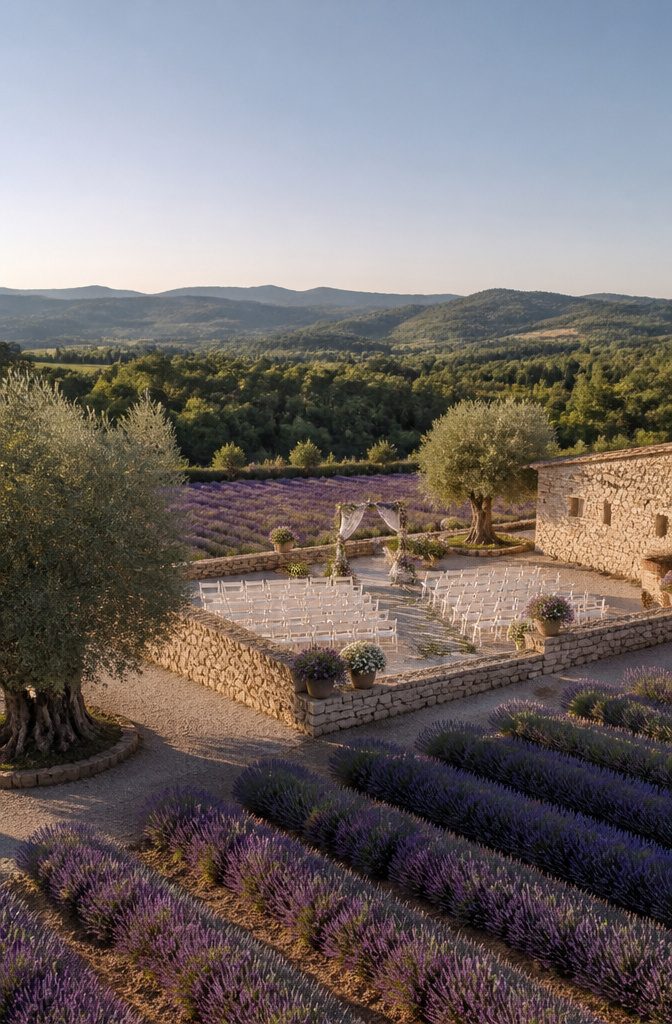
Private estates in Provence operate on a different calendar than resort weddings.
Exclusive-use properties mean you control every arrival and departure, which sounds like freedom until you realize it also means you are the one scheduling the wine delivery and the florist’s van.
The privacy factor is real: no other bride in the next garden, no tourists wandering through cocktail hour.
But that seclusion comes with a price tag that sits noticeably above beach or resort locations, and the setting changes your wedding’s rhythm entirely.
A Provence estate wedding moves slower. Guests wake up on property, drift through lavender fields before breakfast, and the day unfolds without shuttle buses or check-in lines.
The downside is logistical weight. Where an all-inclusive resort handles the timeline internally, here you are importing or assigning every role.
The countryside hush becomes part of the experience, but only if you planned for it: the nearest town might be twenty minutes away, and a forgotten boutonnière is not a quick fix.
I would not book a Provence estate without confirming what "exclusive use" actually covers.
Some properties include staff quarters and kitchens; others hand you keys to an empty house and expect you to build the infrastructure. The cost tier reflects this variance, and assuming one estate works like another is where budgets quietly double.

Breezy Coastal & Beach Elegance: Bring the serene beauty of the sea to your grand entrance. Featuring a gorgeous oceanfront arch profile, a refreshing seafoam blue background, and elegant wave-inspired scrollwork, this sign is the ultimate choice for tropical beach weddings, seaside receptions, or coastal resort celebrations.

ROMANTIC SUNSET BEACH DESIGN – Features a colorful ocean sunset with hearts drawn in the sand, creating a warm and memorable Save the Date announcement.
Cayman Islands Full-Service Venues
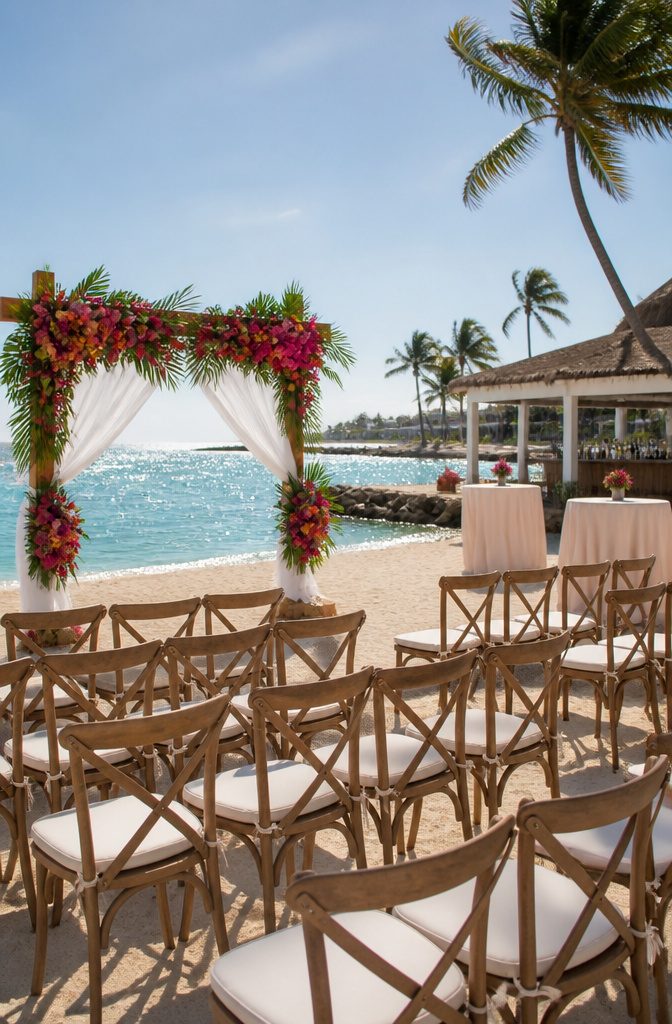
Celebrations Ltd. operates out of Grand Cayman as a full-service wedding planner, which changes what a couple actually has to handle themselves. Their setup covers venue scouting, vendor coordination, and day-of execution under one roof.
For someone booking from the mainland, that removes the usual late-night calls to separate florists, caterers, and sound technicians in a time zone that does not match their own.
The Cayman Islands also run from 5-star hotels to private villas to public beach ceremonies, so the full-service model matters more here than in a single-resort location where every wedding looks roughly similar.
A couple can land on polished ballroom floors or barefoot sand, and the same planner handles both.
The real workload difference sits in vendor management.
At many destination spots, even upscale ones, the couple still signs individual contracts for photography, rentals, and transport. Full-service planning in the Caymans folds those into one point of contact.
That is the part that justifies the premium: not the view, which any island sells, but the hours reclaimed from cross-referencing arrival times and menu counts from 1,200 miles away.

【Let The Beauty of Coral Reefs Creatures Light Up Your Life】Turtles, seahorses, starfish, and giant clam. Each icon is carefully designed with rich details. Each one is a...
Cartagena Tailored Experiences
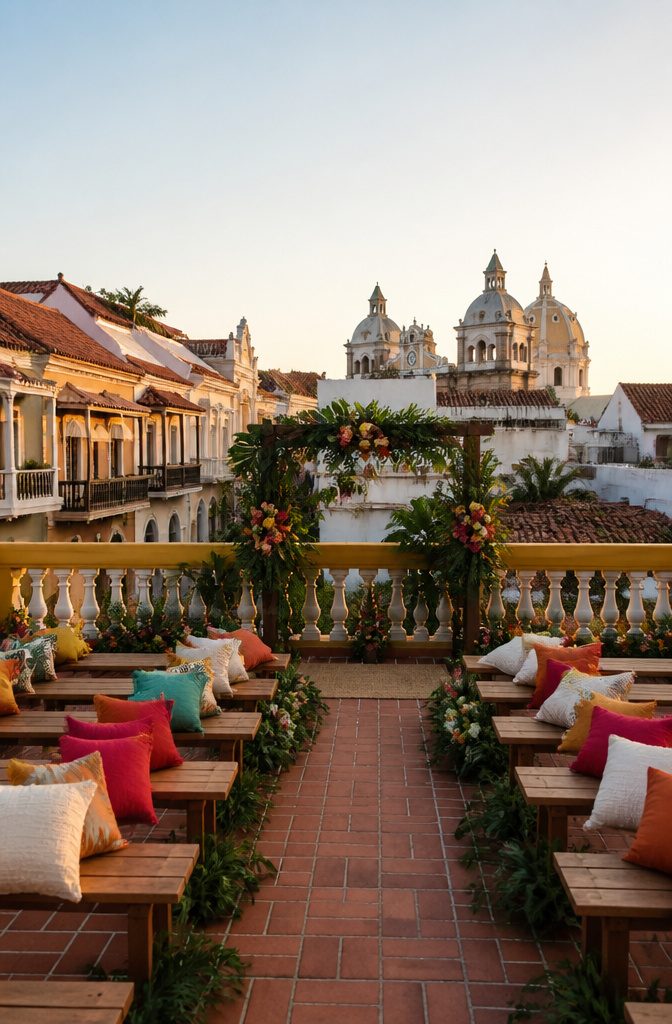
Cartagena, Colombia runs on a different model than the resort wedding most American couples expect.
No cookie-cutter packages exist at Cartagena Dreams or Forum4Travel. Instead, planners there build from the city’s actual fabric: colonial mansions like Casa 1537, rooftop terraces at the Movich Hotel, or private homes in the Walled City.
Beachfront happens at Playa Blanca Villas, but even that is chosen to fit a particular vision rather than assigned from a brochure.
The tailored approach shows in what gets included. Hair and makeup artists, live music, boat parties, welcome dinners, each couple pulls from the list or ignores it.
An English-speaking planner coordinates by video call, which matters when you are planning from abroad and need someone acting as eyes on the ground. VIP treatment and trusted local vendors are the stated standard, not upgrades.
What separates this from standardized resort packages is the starting point. A resort typically offers tiers: silver, gold, platinum, with set guest counts and preset menus.
Cartagena’s planners begin with the couple’s timeline, whether that means an intimate elopement or a three-day celebration, and build outward. The colonial architecture and Caribbean sunsets are fixed; how you move through them is not.

The Complete Wedding Planner - Our 132 page wedding planning book and organizer is designed for American weddings, with lots of helpful pointers, tips and budget savvy advice.
What Destination Weddings Actually Cost
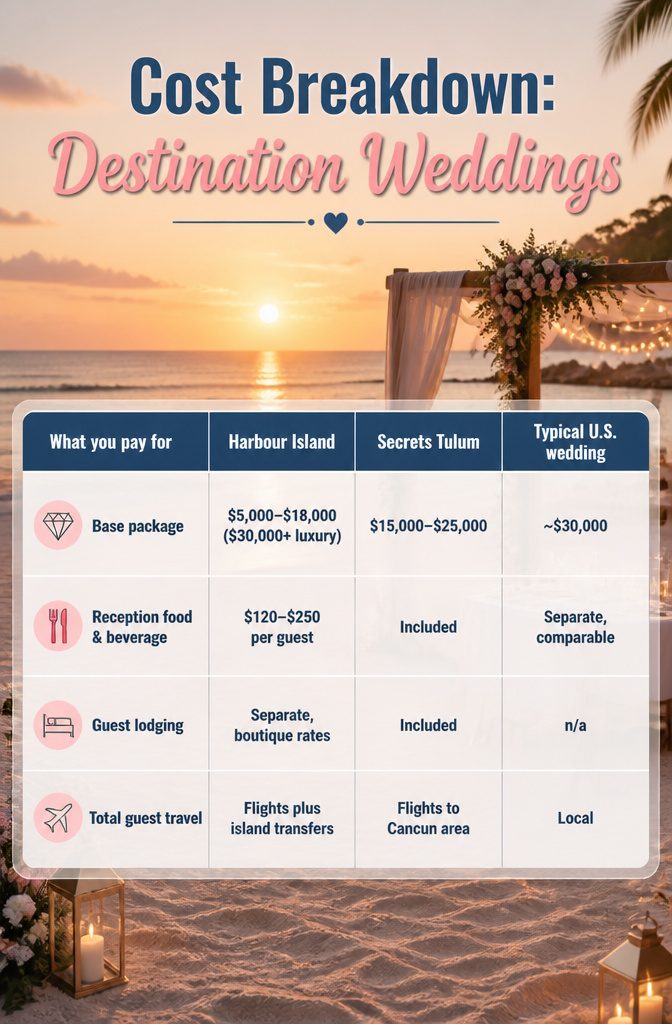
A luxury destination wedding runs anywhere from $5,000 to $30,000-plus, but that single figure hides how the money actually moves. The venue package itself might sit at one end while food, lodging, and guest travel stack on top at the other.
At Secrets Tulum, the average lands between $15,000 and $25,000 all in. Harbour Island breaks out differently: the wedding package starts at $5,000 and climbs to $18,000 for mid-tier, with full luxury celebrations hitting $30,000-plus, then reception dinners add $120 to $250 per guest on top.
Room rates there drive total guest spend since everyone needs somewhere to sleep.
Mexico and Caribbean all-inclusives can cut the traditional U.S. wedding cost by about half. The $30,000 hometown bash becomes a $15,000 beach ceremony with scenery built in.
| What you pay for | Harbour Island | Secrets Tulum | Typical U.S. wedding |
|---|---|---|---|
| Base package | $5,000–$18,000 ($30,000+ luxury) | $15,000–$25,000 | ~$30,000 |
| Reception food & beverage | $120–$250 per guest | Included | Separate, comparable |
| Guest lodging | Separate, boutique rates | Included | n/a |
| Total guest travel | Flights plus island transfers | Flights to Cancun area | Local |
Where the savings come from matters more than the sticker price. An all-inclusive bundles food and lodging with the venue; a boutique property like Harbour Island unbundles them, which gives control but demands separate spreadsheets for food, rooms, and transport.
Venue Features That Define the Experience
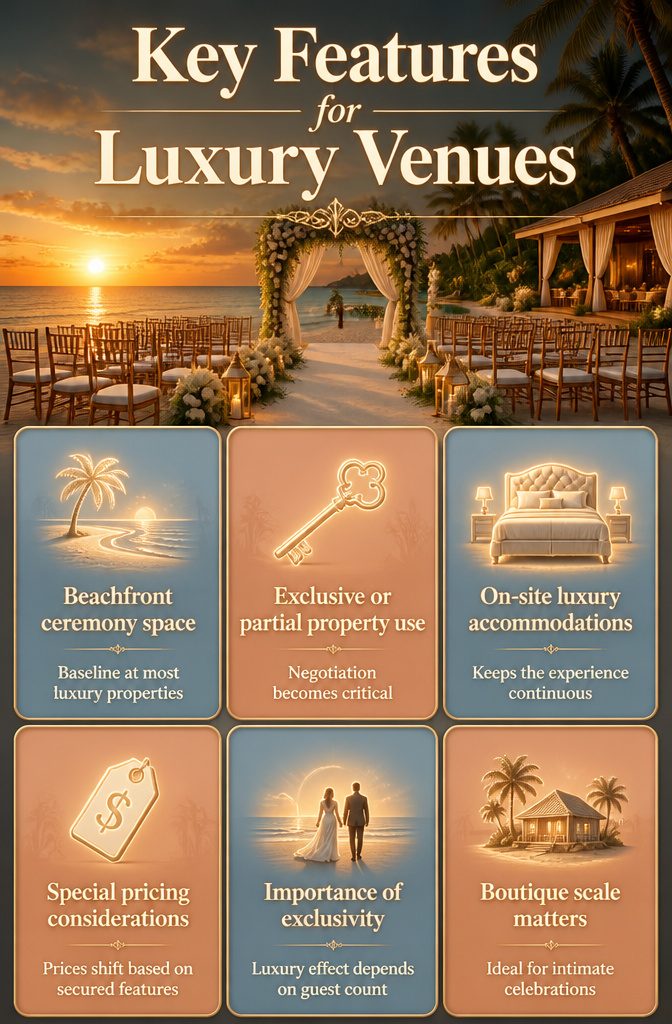
Beachfront access alone does not make a destination wedding feel luxurious. The properties that pull it off combine three features in deliberate balance, and the price shifts depending on which ones you secure.
- Beachfront ceremony space is the baseline at most properties advertising a luxury destination wedding. Resorts like Grand Velas Riviera Maya and Pink Sands Resort both lead with it, though the experience differs: Grand Velas runs $15,000–$25,000 and layers in jungle gardens as backup venues, while Pink Sands sits at a boutique scale with 25 cottages across 20 acres and specializes in 15- to 50-guest celebrations.
- Exclusive or partial property use is where negotiation becomes critical. Pink Sands offers a partial property buyout for multi-day events; Nizuc, at $20,000–$40,000, does not package anything and leaves you to build the event from scratch. That freedom costs more and demands more legwork.
- On-site luxury accommodations tied directly to the venue keep the experience continuous. The Cayman Islands range shows the spread clearly: 5-star hotels and private villas keep guests inside the event footprint, while public beach ceremonies break it. The latter saves money; the former protects the atmosphere.
The judgment call is whether partial exclusivity suffices.
For 40 guests, it usually does. For 120, anything short of a full buyout means sharing the property with strangers, and the luxury effect thins out fast.


Planning Timeline and Guest Logistics
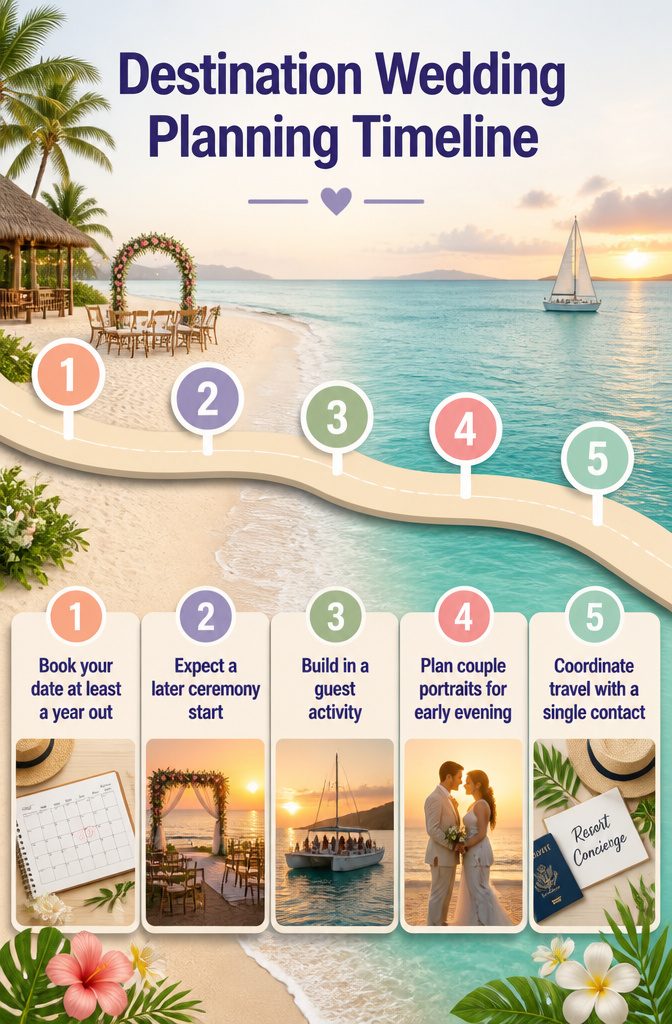
- Book your date at least a year out, especially if you want a photographer who will arrive a few days early to scout locations and read the light. Jo Greenfield notes she tries to land early to cut locations and adjust to weather, so your preferred photographer’s calendar may fill faster than the venue’s.
- Expect a later ceremony start. Most destination weddings begin at 4 or 5 p.m. to dodge midday sun, which means the day often splits across two days of events rather than one marathon session.
- Build in a guest activity. A sunset boat tour or bus outing does double duty: it cools guests off when heat and humidity peak, and it gives your photographer genuine content rather than staged smiles.
- Plan couple portraits for early evening. The sinking sun delivers the best light, and a photographer working a destination schedule will want a few short windows rather than one long absence from your guests.
- Coordinate travel with a single point of contact. Resorts handle logistics from booking through checkout, but continuity matters more than convenience: a planner who joins at the start, not just the final walkthrough, prevents a disjointed weekend.
Local Culture in the Wedding Experience
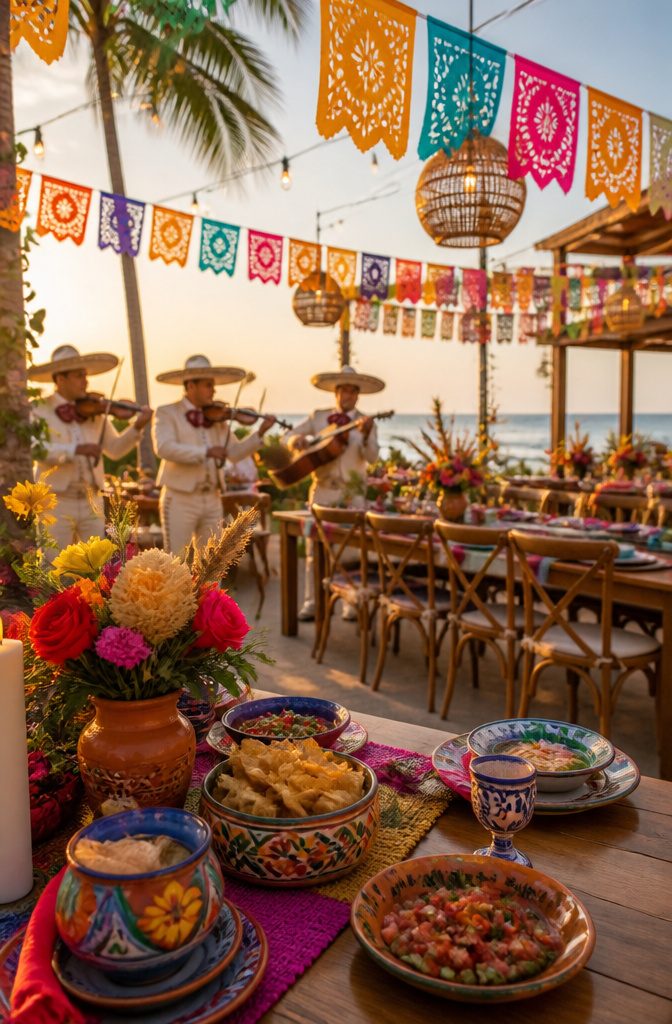
A luxury destination wedding in Mexico practically insists on local culture woven through the event.
Mariachi bands, regional cuisine, and bold décor are standard offerings rather than add-ons, so the experience feels grounded in the place rather than assembled in a conference room.
The Caribbean runs on two different tracks.
Harbour Island’s boutique properties build their identity on hospitality-first character rather than spectacle, but the island itself is the draw; cultural programming is thinner, and a couple could marry there without ever tasting conch or hearing rake-and-scrape.
In Grand Cayman, full-service planners focus on smooth remote coordination, which translates to a wedding that could happen identically in Scottsdale or Singapore if the couple wished.
Provence sits somewhere between. Chateau de Tourreau’s 17th-century architecture and 20-acre estate provide immediate context; Sophy Turner and Joe Jonas stayed there with guests, using the property’s chapel and courtyard garden.
You still choose how French the wedding feels: local chefs and wine can be brought in, or the event can read as generic European elegance against a dramatic backdrop.
The judgment call is whether "luxury" to you means effortlessness or immersion. If you want the place to leave fingerprints on the memory, pick a location where the local culture is hard to avoid.
Photography Timing and Location Strategy
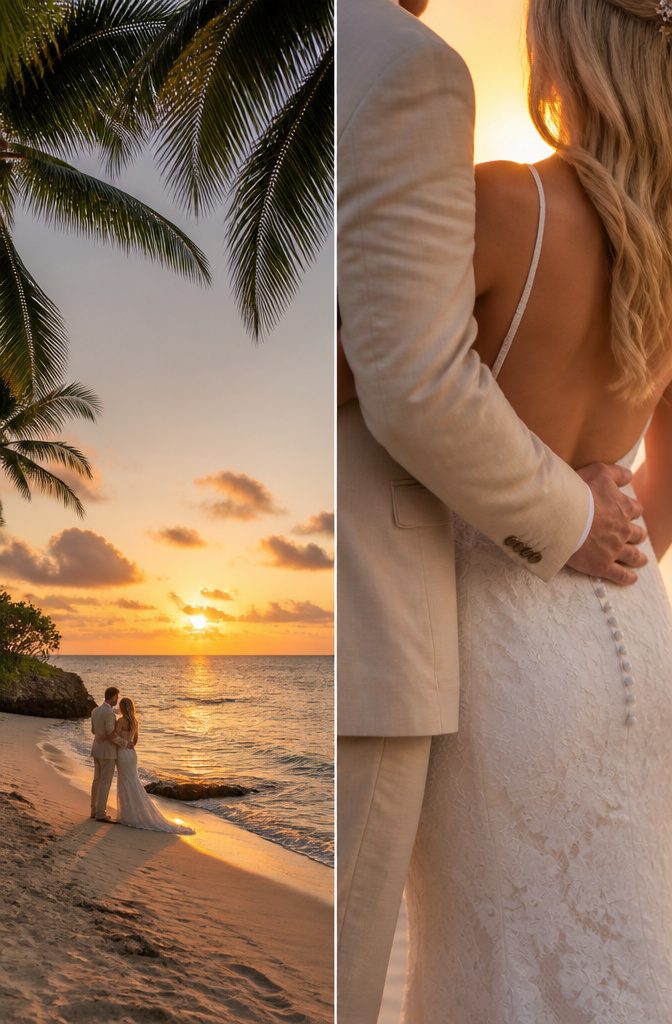
Arriving a few days before the ceremony lets your photographer scout locations and find the best times for the best light rather than hoping the schedule happens to match golden hour.
That mid-afternoon ceremony you planned for 3 pm might land in harsh sun that flattens every face, which is why many destination weddings start at 4 or 5 pm instead, letting the heat break before anyone walks down the aisle.
The unfamiliar setting works against you at first. Your photographer has not spent years learning where the shadows fall in this courtyard or how the light bounces off that particular sea.
Give them the runway to cut locations, test angles, and get accustomed to weather patterns that shift faster than at home.
Build in pockets for couple shots throughout the day, not one rushed session. Early evening as the sun sets is typically strongest, though the real constraint is how long you can pull away from family who traveled with you.
A sunset boat tour kills two purposes, cooling guests off after a hot sticky afternoon while giving the photographer genuine movement to work with.
The couple who only plans formal portraits misses the unscripted moments that destination weddings produce, the ones that happen while everyone is still relaxed and unguarded.


Legal Requirements by Location
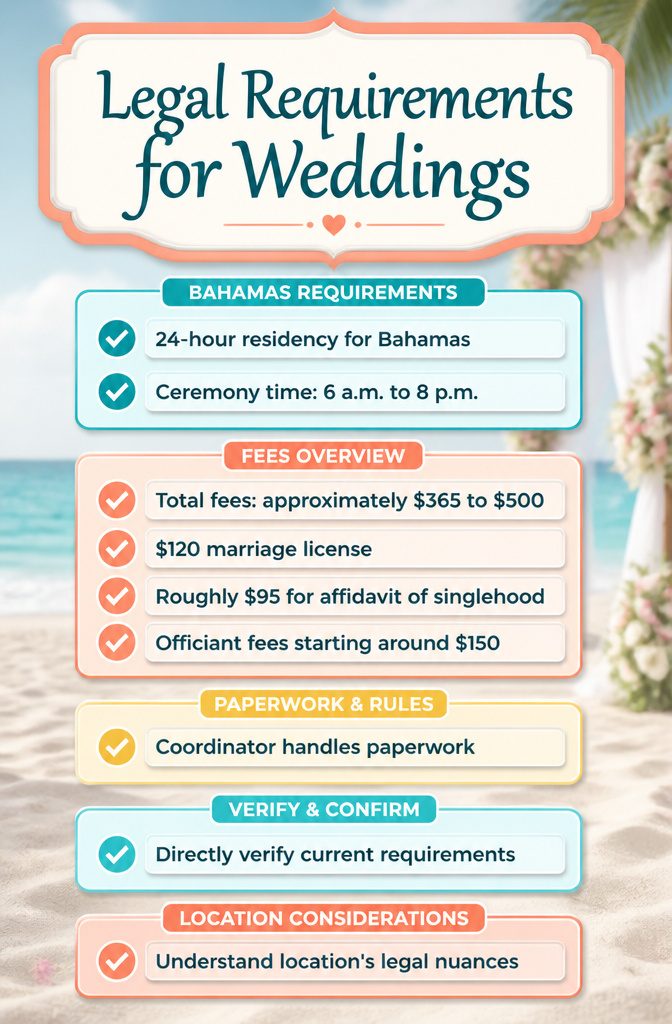
Legal requirements for a luxury destination wedding shift the moment you cross a border, and treating one country’s rules as standard for another is the fastest way to a ceremony that isn’t binding.
- The Bahamas requires 24 hours of in-country residency before you can even apply for a marriage license. Ceremonies must then happen between 6 a.m. and 8 p.m., no exceptions.
- Total legal fees there run approximately $365 to $500 or more: a $120 marriage license, roughly $95 for an affidavit of singlehood from a Bahamian notary, and officiant fees starting around $150.
- Your resort coordinator typically handles the paperwork, but the rules themselves can change without much notice. What held last season may not hold now.
- A location’s ease or difficulty legally is not transferable. Harbour Island’s relatively straightforward 24-hour residency says nothing about what France, Mexico, or the Cayman Islands will demand of you.
Verify current requirements directly with the destination’s registrar or embassy before you book anything nonrefundable.
What All-Inclusive Packages Include
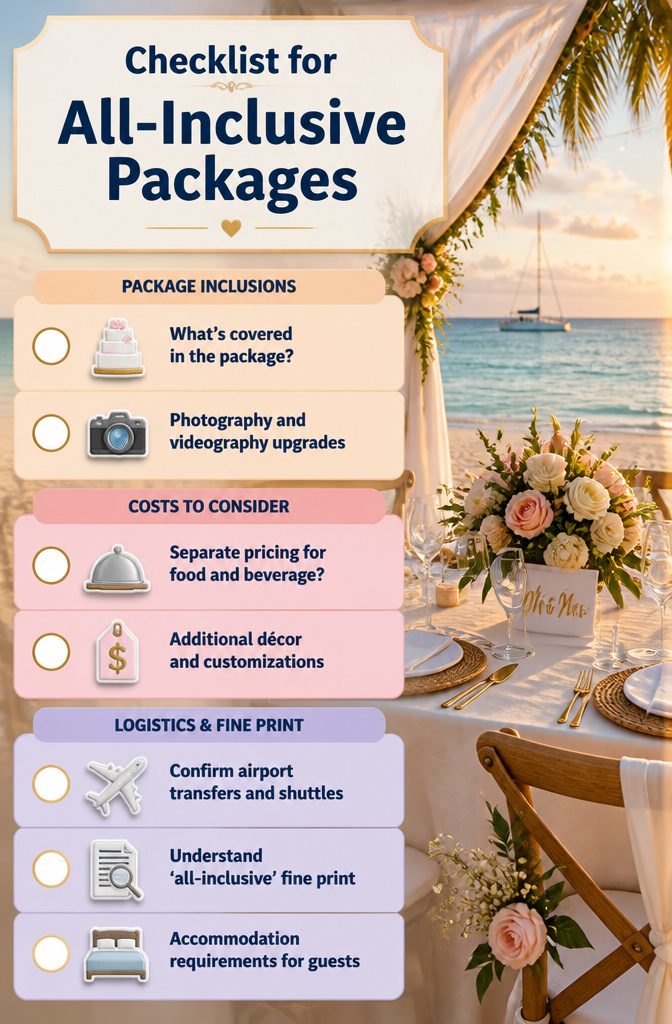
Resort packages usually tier from a free base level up through mid and luxury brackets, though what each tier actually contains is harder to pin down than the brochures suggest.
Book three nights at Couples Swept Away in Jamaica and the One Love package is complimentary, covering the officiant, bouquet, boutonniere, cake, sparkling wine, and one professional photo.
Rooms there average $330 in shoulder season, with catamaran cruises, snorkeling, unlimited golf green fees, and a certified scuba dive folded into the rate.
Harbour Island works differently. Its boutique properties price food and beverage separately from the wedding package itself, with reception dinners running $120 to $250+ per guest.
Package tiers there range from $5,000–$8,000 for intimate ceremony setups up to $22,000–$30,000+ for full luxury treatment with partial property buyouts. The gap between what is bundled and what is not is where most couples get surprised.
What I found in comparing these two models:
- All-inclusive resort packages tend to wrap the ceremony basics, meals, and guest activities into one rate, but photography beyond a single shot, extended videography, and custom décor usually sit in the upgrade column.
- Boutique properties like Harbour Island’s separate the wedding package from the reception entirely, so the per-guest dinner cost hits on top of whatever ceremony tier you chose.
- Airport transfers, guest shuttles, and age restrictions (Couples Swept Away is strictly adults-only) fall to the couple to confirm and coordinate.
- The fine print on what "all-inclusive" means for the wedding versus the stay is where the real budgeting happens.
Frequently Asked Questions
How much does a luxury destination wedding cost?
A luxury destination wedding typically runs $5,000 to $30,000-plus, though the exact figure depends heavily on location and what gets bundled. Mexico and Caribbean all-inclusives often land at $15,000 to $25,000 all in, about half the typical $30,000 U.S. wedding cost.
Harbour Island breaks out differently: wedding packages start at $5,000 and climb to $18,000, with full luxury celebrations past $30,000, then reception dinners add $120 to $250 per guest on top.
What are the best locations for a luxury destination wedding?
The five strongest options for American couples are Mexico and Caribbean all-inclusive resorts, Harbour Island in the Bahamas, private estates in Provence, the Cayman Islands, and Cartagena, Colombia.
Mexico and the Caribbean lead on value and logistics; Provence trades convenience for privacy and scenery; the Caymans offer full-service planning from abroad; Cartagena builds fully custom events from colonial mansions and rooftop terraces rather than preset packages.
What legal requirements are there for a destination wedding?
Rules shift at every border, so verify directly with the local registrar or embassy before booking anything nonrefundable.
The Bahamas requires 24 hours of in-country residency before you can apply for a marriage license, with ceremonies restricted to 6 a.m. to 8 p.m. and total legal fees around $365 to $500.
What works in Harbour Island says nothing about France, Mexico, or the Cayman Islands, where requirements differ entirely.
What is the most luxurious wedding destination in the world?
No single destination holds that title universally; luxury depends on whether you value all-inclusive ease, boutique privacy, or full customization. Provence estates offer exclusive-use properties with no other guests on site, but demand you coordinate every vendor yourself.
Cartagena builds events from colonial mansions and private homes with white-glove service. For American couples prioritizing smooth logistics plus high-end treatment, the Cayman Islands’ full-service planning model or Mexico’s top-tier resorts typically deliver the most polished experience.
What is the 50/20/30 rule for weddings?
For luxury destination weddings, the more useful split is tracking what the venue package covers versus what stacks on top: guest lodging, flights, reception dinners, and upgrades like extended photography or custom décor often sit outside the base price.
What are the top 10 destinations for destination weddings?
Mexico and the Caribbean dominate for all-inclusive value and built-in guest entertainment. Harbour Island offers pink-sand beaches at boutique scale.
Provence delivers exclusive-use estates with countryside privacy. The Cayman Islands specialize in full-service remote planning.
Cartagena provides fully tailored experiences from colonial architecture and Caribbean light. For American couples, these five cover the main decision types: resort ease, boutique character, European privacy, planner-heavy support, or custom design.