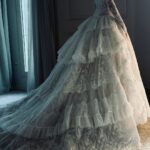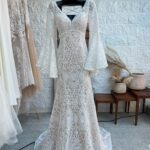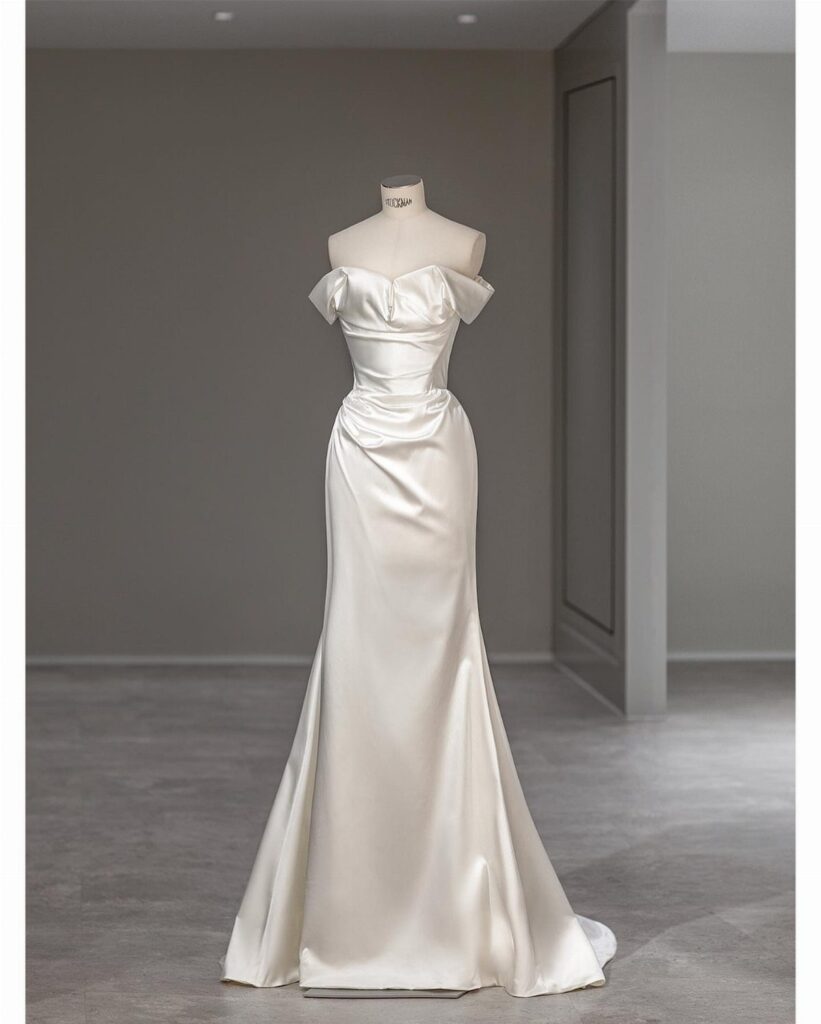
The fabrics ahead range from barely-there tulle to substantial duchess satin, each with its own weight, behavior, and best use.
Start with the season and setting: a July ceremony in open air above 75°F needs chiffon or silk crepe that lets breeze through, while a January chapel below 50°F gives you room for the heavier satins that would feel stifling inside.
[link-whisper-related-posts]1. Silk
Silk carries a soft glow that shifts when you move, the kind of living sheen no synthetic quite matches. I would pick charmeuse for a sleek silhouette or chiffon if I wanted the skirt to float behind me.
The fabric breathes across seasons, which matters when your ceremony runs long or the venue has unpredictable heat. Crepe de Chine offers more weight and a gentler drape against the body if you prefer coverage without stiffness.
A plain silk gown needs no embroidery to read as formal. Check whether your chosen type requires a particular understructure; some weights hold their own, others need built-in support to keep the line clean.
On the other hand, many brides prefer a less structured style. And List suggests that “if you are more of a free spirit who wants plenty of movement in her gown, opt for chiffons and organzas.”

Each tulle fabric spool measures 54 inch x 40 yards, sufficient length, continuous and uninterrupted. Made of Polyester, and lead-free dye. Lightweight, soft, no peculiar...
2. Lace
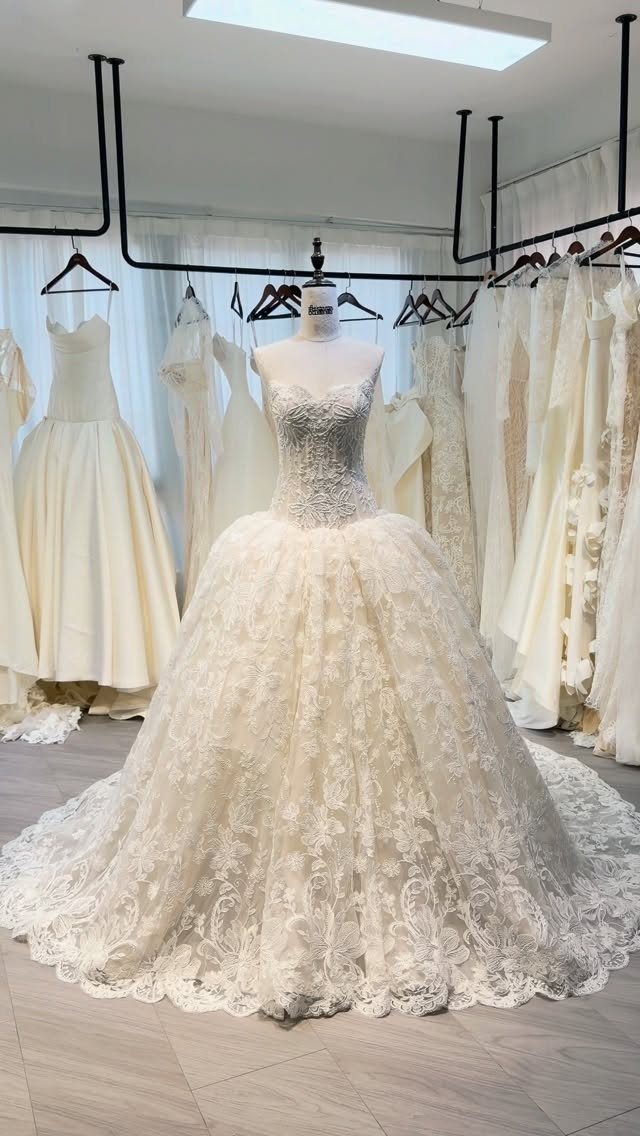
Lace builds romance through what it hides and reveals at once. Alençon brings dense, raised patterning; Chantilly stays lighter and more fluid; Guipure carries the most body and texture of the three.
I tend toward Chantilly for sleeves or overlays that need to move, since stiff lace can fight the line of the arm.
Most lace gowns mix it with another fabric underneath, silk or satin, which sets the color base and lets the lace read as detail rather than full coverage.
The sheer areas photograph beautifully but check placement against your comfort level for sitting, hugging relatives, and hours of wear. A lining layer solves scratchiness; ask your salon what they recommend for the specific lace weight.

Wide Range of Colors: Choose from a variety of vibrant colors, including White, Black, Navy Blue, Pink, Silver Grey, Red and many more. Our satin fabrics are sold...
3. Satin
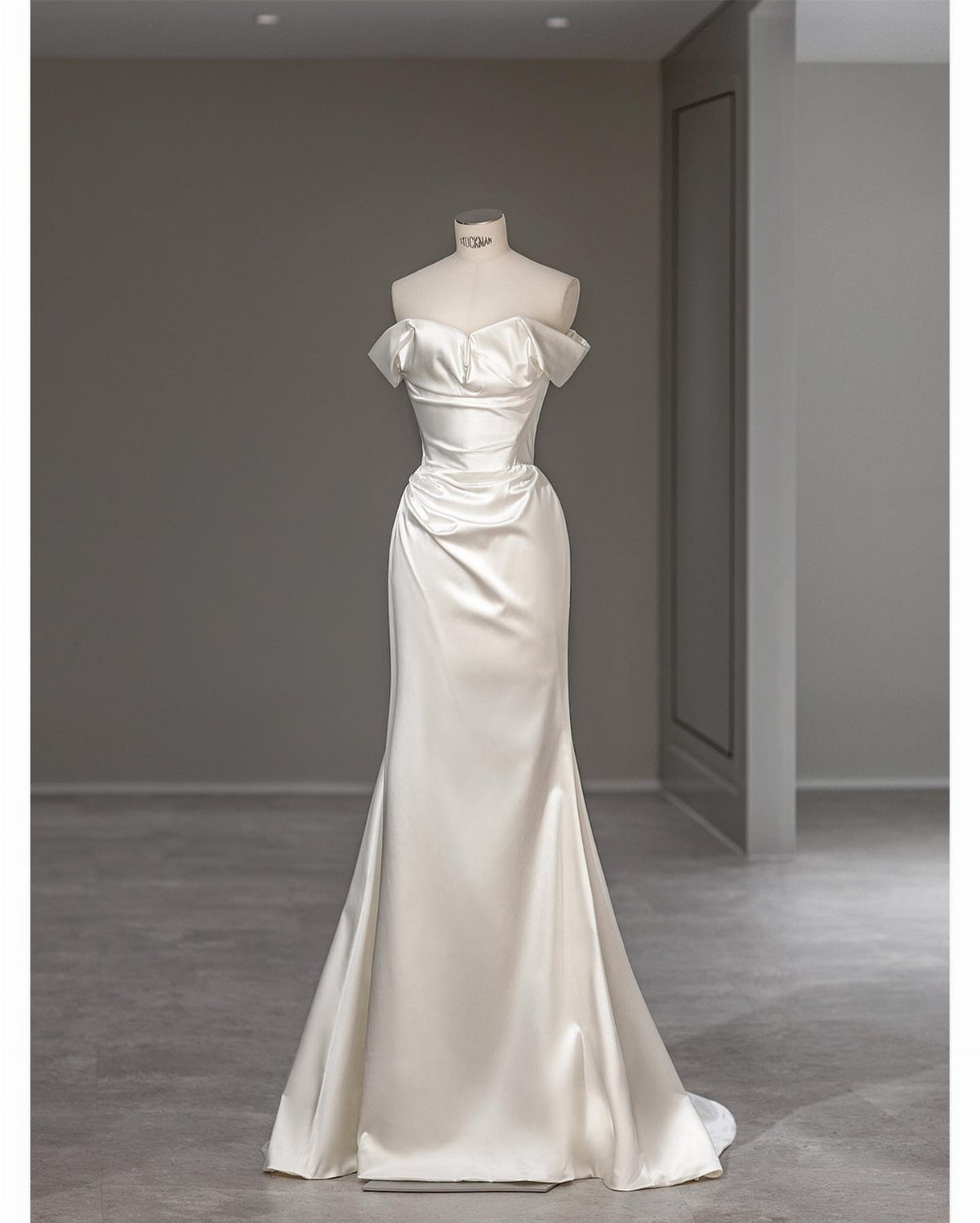
Satin shows every curve because of how it grips and releases light, one side glossy, the other matte.
That same surface marks easily; water spots, oil from hands, and flash photography glare are real hazards. I would budget for professional pressing the morning of and assign someone to carry water bottles, not me.
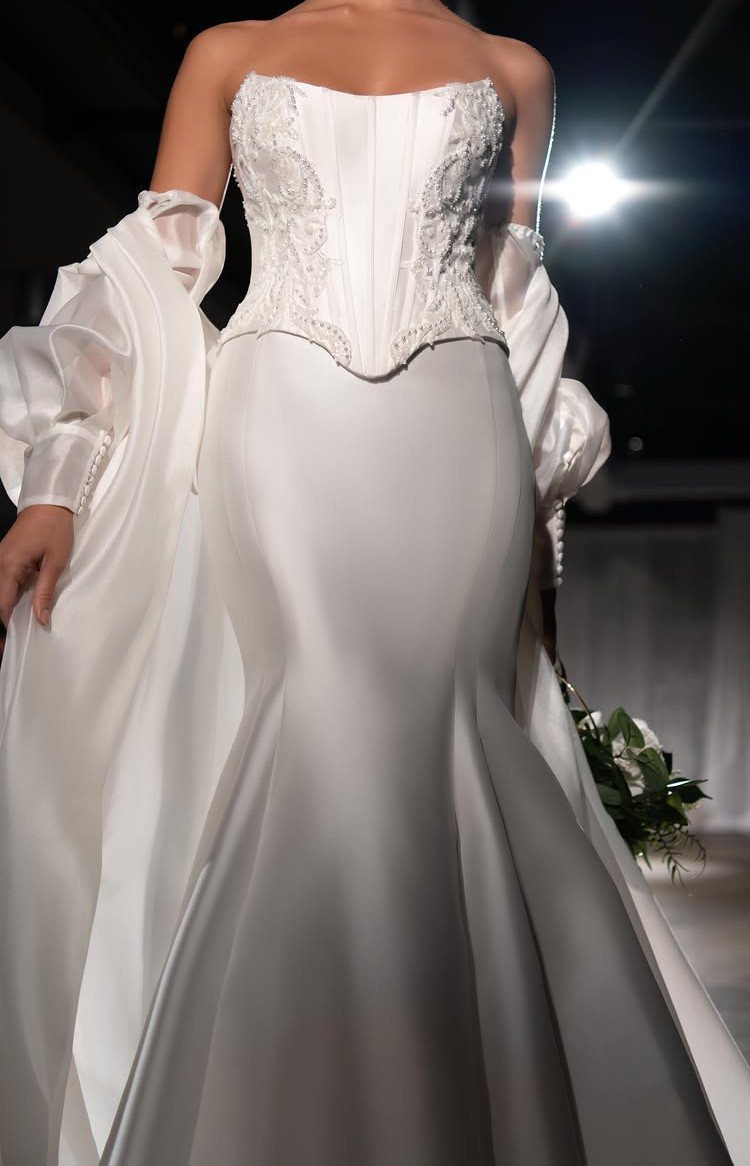
The weight works best in cooler months or climate-controlled churches. Duchess satin, heavier and more structured, builds the architectural bodices that stay crisp through hours of standing and dancing.
A mermaid cut in ivory satin follows the body closely then releases below the knee, which is the silhouette this fabric was made for. Summer brides might look to lighter alternatives; winter ceremonies gain the warmth and gravity satin provides.

Generous 60 x 120 Inch Cut: Premium soft nylon Chantilly lace provides seamless, continuous draping for large-scale projects like sweeping table runners, floor-length window curtains, and bridal trousseaus

Generous Continuous Cut: You receive one seamless 3-yard (108-inch) piece of 60-inch wide material, eliminating awkward seams in large-scale projects like long veils, sweeping window drapes, or flowing table runners

Content : 100 % Polyester
4. Tulle
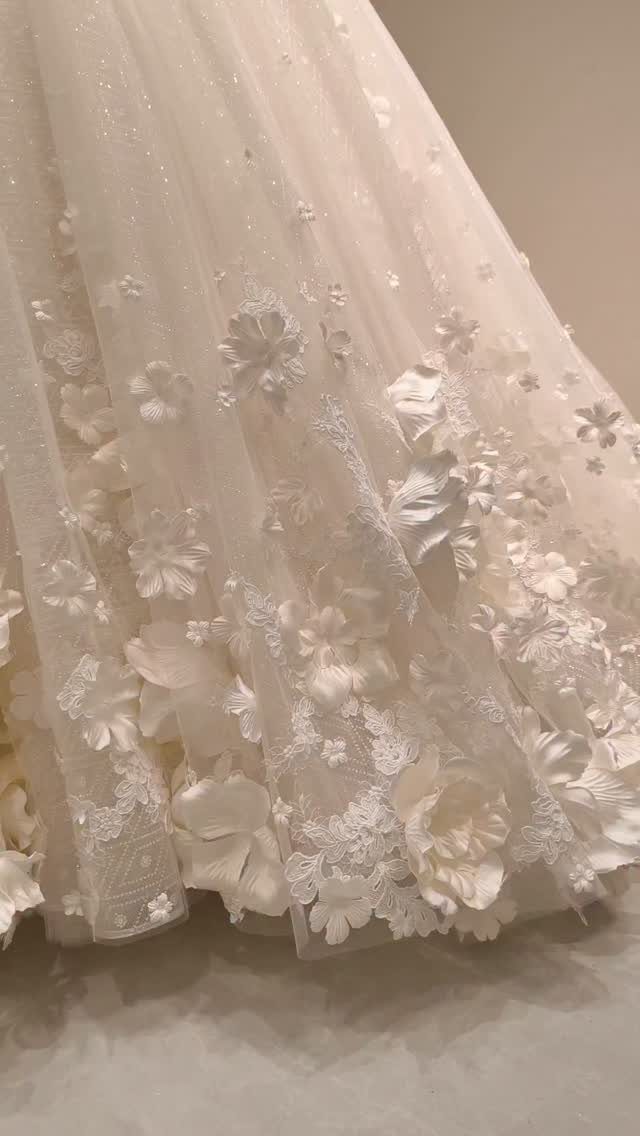
Tulle builds volume without adding the pounds that would tire you by hour three of the reception. The net comes in degrees of stiffness; stiffer layers hold a ballgown’s architecture, softer tulle collapses into a more casual, wearable cloud.
I would ask to see the specific hand of the tulle in my own skirt before committing, since sample gowns often soften with handling.
Photographers catch tulle in motion, which is its purpose, but the same open weave snags on jewelry, nails, and rough doorframes.
A silk lining underneath solves the itch factor of unlined tulle against bare legs. Veils use the same material, so your skirt and veil can speak to each other or deliberately contrast in opacity and finish.

WIDE USE SCENARIOS - By upgrading the production process, this silky satin fabric is softer than traditional smooth fabrics and does not feel stiff. Soft satin fabric is very suitable for making satin clothing, such as dress pajamas, scrunches, bonnet, robe, pajama pans, bridal dress, head scarf, tie, gowns, costumes and more.

[ HIGH-QUALITY FABRIC ] – Matte L'Amour Satin Fabric is 100% Polyester fabric fibers which make this fabric very lightweight, durable, soft to touch, breathable, and comfortable to wear

PREMIUM MATTE PEAU DE SOIE: Experience the luxury of Fabric Collections Inc. Lamour satin. Unlike cheap, high-gloss fabrics, our Duchess Peau de Soie features a sophisticated semi-dull, matte finish that provides a rich, elegant look without the glare.
Comfort and Fit
Your skin will notice the fabric before your guests do. Silk breathes through a long ceremony, which matters when the day runs hot or the schedule slips.
Satin grips light but also traps heat, so a summer outdoor ceremony in full duchess weight can feel like wearing armor by the cocktail hour.
Movement tests matter more than mirror tests.
Sit, raise your arms, and hug someone in the fitting room. Stiff lace at the sleeve fights every gesture; charmeuse stretches and recovers with you.
Budget an extra fitting if you are between sizes or the fabric has no give. The gown that looks perfect standing still can pinch or gape at the waist when you bend to greet a table.

LIGHTWEIGHT & SOFT CHIFFON FABRIC:Made from soft fabric, this women’s shawl and wrap feels lightweight, breathable, and comfortable to wear for extended periods. Perfect as an elegant cover up for evening dresses, formal gowns, and special occasions.

LIGHTWEIGHT & SOFT CHIFFON FABRIC:Made from soft fabric, this women’s shawl and wrap feels lightweight, breathable, and comfortable to wear for extended periods. Perfect as an elegant cover up for evening dresses, formal gowns, and special occasions.
Venue Suitability
The venue sets the temperature and the ground rules.
Outdoor summer ceremonies above 75°F call for chiffon, silk crepe, or anything that moves air against your skin. A January chapel below 50°F gives you room for the heavier satins that would feel stifling inside.
Indoor winter venues with reliable heat reward the same fabrics as summer; the calendar matters less than the thermostat and the minutes you will spend outside.
Grass, gravel, and sand punish trailing hems.
A ballgown in stiff tulle clears most ground, but satin that pools at the floor drags moisture and stains. Wind turns unlined tulle and light chiffon into a fight; structure and weight become practical, not just aesthetic.
Indoor churches and ballrooms free you to choose sheen and delicacy without weather calculations. Match the fabric to the place you will actually stand in, not the one you imagined in March.

PREMIUM SHEER ORGANZA FABRIC – Elegant 44-45 inch wide organza fabric by the yard in continuous length with a lightweight, transparent finish that adds a luxurious touch to...
Mixing Fabrics
Most gowns already mix fabrics; the question is whether the combination serves the design or just fills a catalog page. Tulle over a solid skirt builds volume without demanding that every layer be formal.
Contrast in weight matters more than contrast in color. A heavy Guipure bodice on a soft chiffon skirt fights itself; the eye reads tension where you wanted balance.
Charmeuse under Alençon lace works because both move with you. Ask to see the gown in motion, not just on the hanger, since mixed fabrics shift against each other when you walk.
The seam where 2 materials meet is a stress point; check the finishing at the waist or neckline where the eye will travel.

[ WHAT WILL YOU RECEIVE ] This satin fabric is sold separately by size. For example, if you choose size 3 with a quantity of 2, you will receive 2 pieces of size 3 fabric...
Frequently Asked Questions
What fabrics are used for wedding dresses?
The common ones are silk, satin, lace, tulle, chiffon, and crepe. Most gowns mix two or more, like lace over silk or tulle over a solid skirt.
Is $3000 a lot for a wedding dress?
That sits in the middle of the typical range for a US bride buying from a salon, neither budget nor splurge.
Most gowns in that bracket use quality natural fabrics like silk or lace rather than synthetics, and the price usually covers construction, not just materials.