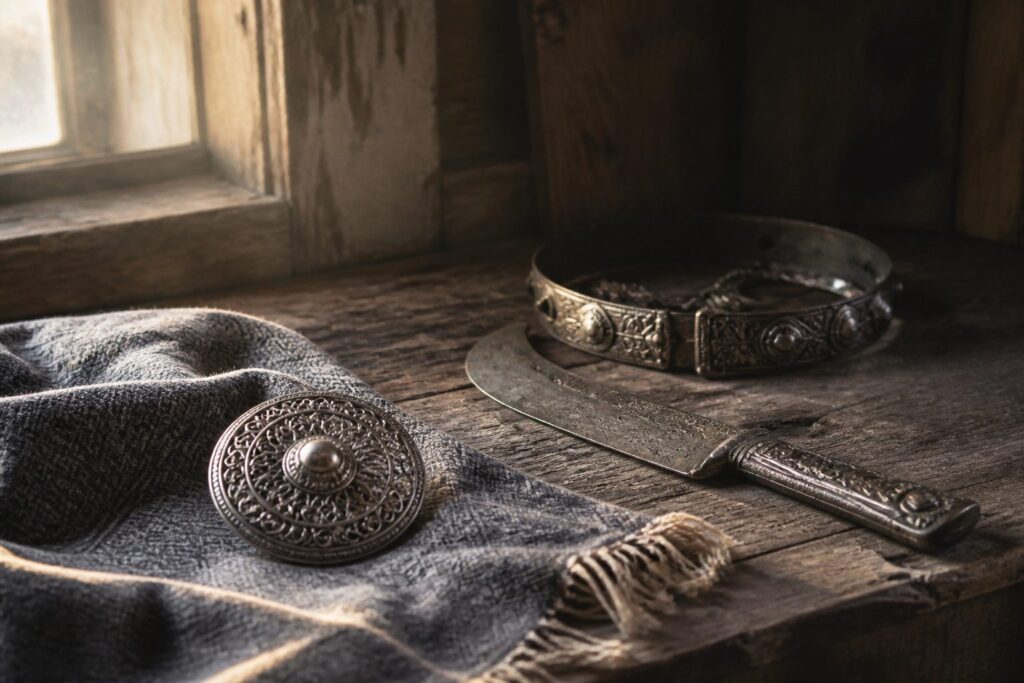
Norse wedding traditions were legal transactions between households before they were celebrations.
The groom’s family owed at least 8 ounces of silver in Iceland, 12 in Norway, just to secure the betrothal, and young men who could not cover all three required payments sometimes sailed straight onto Viking raids for quick capital.
[link-whisper-related-posts]Betrothal and the Marriage Contract
Viking marriages began as transactions between households, not as love stories. The sagas treat romance as an afterthought at best; phrases like "their love began to grow" appear only after the wedding, signaling the couple has exited the narrative.
Political alliance and economic survival drove the match, with fathers and guardians hashing out terms while the prospective bride and groom waited at the margins.
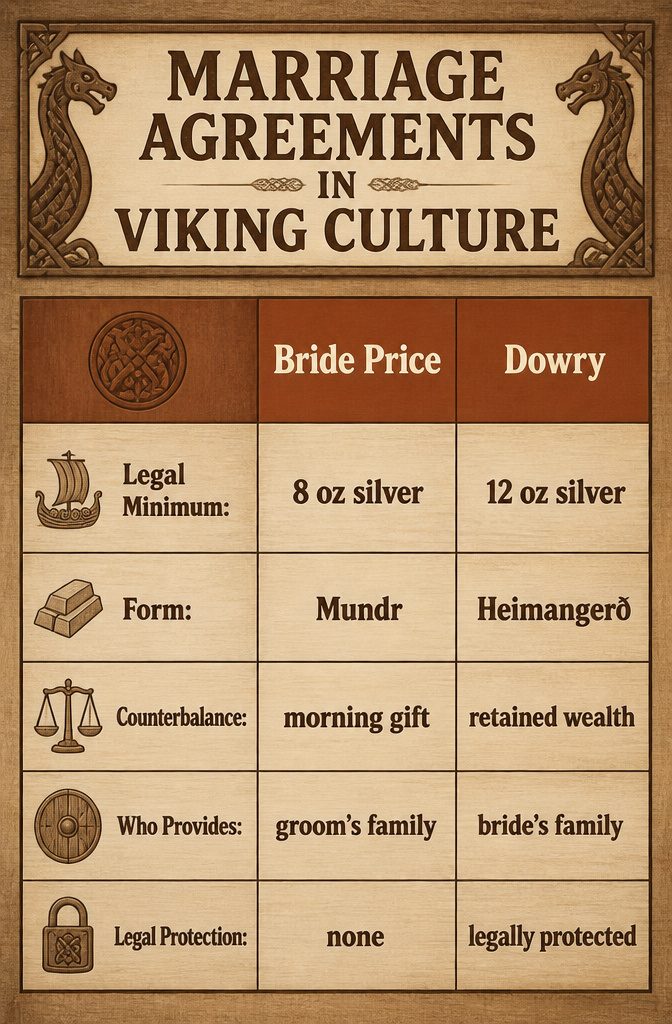
Three payments structured the deal. The groom’s family delivered mundr, or bride price, with legal floors set at 8 ounces of silver in Iceland and 12 ounces in Norway.
The bride’s counterweight was heimangerð, a dowry typically bundling personal goods, land, livestock, and cash, legally protected so a husband’s poor judgment could not drain it.
After consummation, the morgen-gifu or morning gift followed, valued at roughly one-third of the dowry, usually taking the form of clothing, jewelry, or household goods.
The sagas hint that covering all three obligations pushed some young men straight from betrothal onto Viking expeditions for quick capital.
Once terms satisfied both sides, the parties sealed the agreement with a handshake, a Viking custom that set the wedding date, typically within the year.
The daughter and her mother might then be consulted, though refusal was the exception rather than the rule.

Viking Rings for Men Man Women: Unique viking ring with norse runes; In norse mythology,runes are not only symbols,but also believed to bring luck,power,protection,hope,happiness,victory etc; The tree of life symbol represents positive energy, growth,strength, rebirth, bright future, longevity, good health, and new life; Wearing it as amulet ring,it will bring good luck for wearer

AUTHENTIC NORWEGIAN DESIGN: A finely crafted band ring inspired by traditional openwork Rosemaling floral patterns, celebrating Nordic heritage. This filigree wide Nordic band ring can serve as statement jewelry in your living and give you a feeling of your fellowship in the Norwegian community

Classic and Timeless Design : This affordable mens wedding band features an unique design that never goes out of style, making it a perfect choice for those seeking a timeless piece of jewelry.
Pre-Wedding Purification
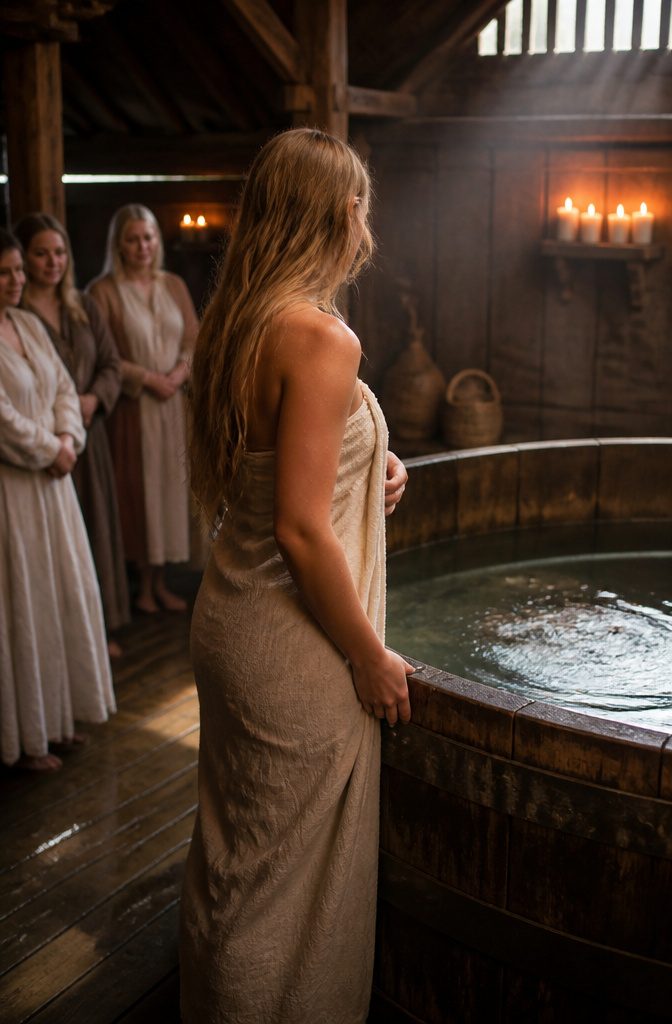
Pre-wedding purification in Norse tradition meant stripping away your old identity before stepping into a new life.
The bride removed her kransen, the circlet that marked her as unmarried, and set it aside for a daughter she might one day have. Female relatives gathered to help, married women who had already made this crossing themselves.
The bath itself carried real weight. Brides cleansed in a bathhouse, a ritual washing away of maiden status that prepared them for the vows ahead.
Some modern Norse pagans still keep this shape, trading the bathhouse for a hot spring or a cold plunge after a long sauna sweat. The goal stays the same: being born anew into married life.
Hair mattered more than dress.
The bride wore her hair long and loose for the last time, since married women covered or tied theirs. Over it sat the bridal crown, usually silver and worked with crystals, red and green silk cords, crosses and leaves.
Poorer women braided crowns from hay and dried flowers instead. The crown replaced the kransen and marked the shift from one state to another.
Friday carried its own significance.
The day honored Frigg, goddess of marriage, making it the traditional choice for the ceremony. The couple spent the day before apart, each preparing separately, so they would meet at the threshold as new people.


The Sword Exchange
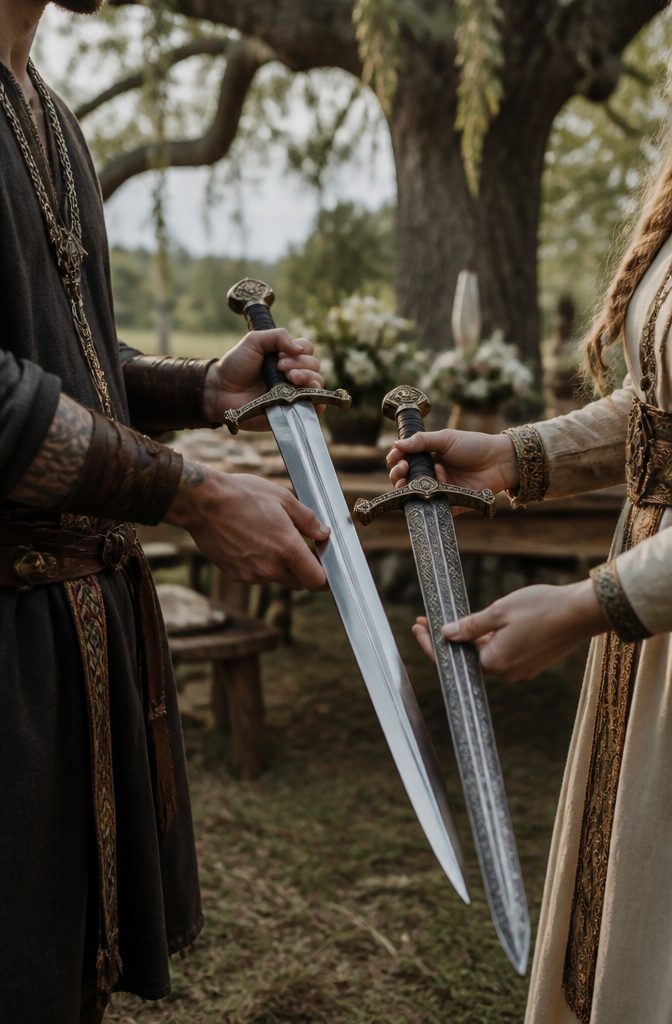
The sword exchange sat at the center of the Norse wedding ceremony, and it worked on two levels at once.
Families passed ancestral blades between the bride and groom, marking the moment when protection for one household became protection for both.
The groom typically offered an heirloom sword drawn from his own line, while the bride’s side presented a new blade, signaling the fresh family now forming between them.
This was not merely symbolic theater. The swords carried inheritance and duty, binding the couple to watch over each other’s kin as their own.
Some ceremonies placed wedding rings on the hilts or tips of the blades, merging the familiar promise of the ring with the older weight of steel.
The exchange usually came after vows or just before rings, serving as the pivot between spoken commitment and tangible obligation.
For anyone adapting this today, the blades need not be functional weapons. Decorative swords, daggers, or even shields engraved with runes or initials carry the same intent: a mutual promise to protect and support what the marriage creates.

Theme of Viking accessories :This viking jewelry idea is from norse mythology ,Yggdrasil,is an immense ash tree that is center to the cosmos and considered very holy. The gods go to Yggdrasil daily to assemble at their things, traditional governing assemblies. The branches of Yggdrasil extend far into the heavens.

Elevate your home decor with this exquisite Norse Viking Odin Trinket Celtic Jewelry Box from hdyv5aa. Crafted with attention to detail, this trinket box features a captivating Yggdrasil design and intricate Celtic motifs, adding a touch of Nordic and Viking charm to any space.

Simple yet elegant Viking cuff bracelet, featuring the sacred Tree of Life named Yggdrasil in Norse mythology
Handfasting and Invocation of the Gods
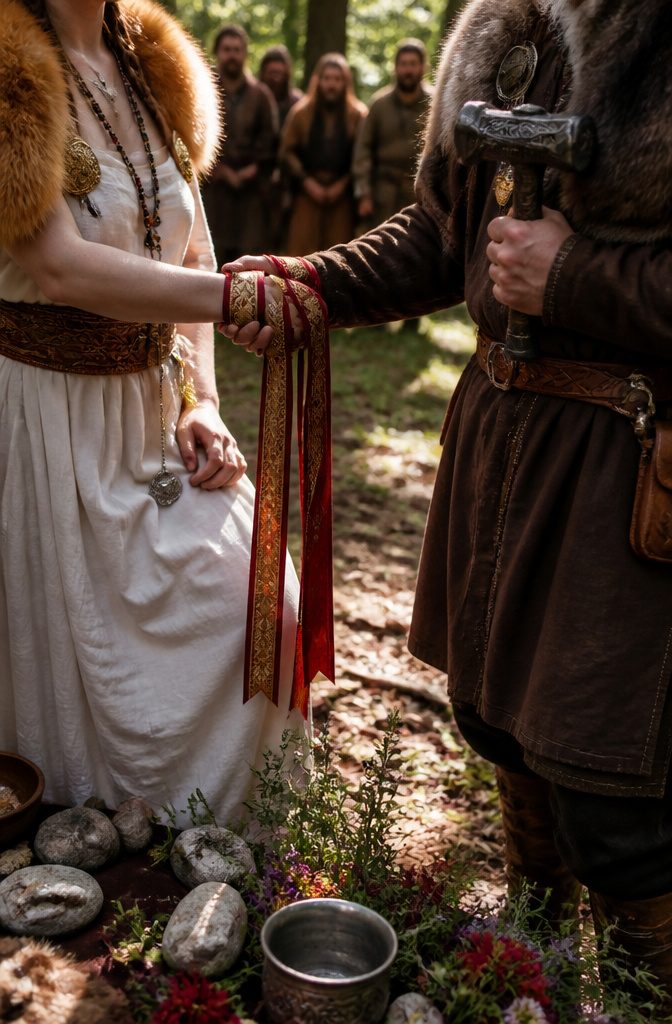
The binding moment in a Norse wedding was handfasting, the clasping of hands to seal the agreement before witnesses and the gods.
A cord or ribbon was wound around the joined hands, and from this gesture we still get the phrase "tying the knot."
Thor received the first and most visible invocation.
His hammer, Mjölnir, was placed in the bride’s lap to bless her fertility, a practice Snorri Sturluson recorded in the 13th-century Prose Edda as part of the hammer’s power to "hallow" a union.
The groom might also carry an axe or hammer as his own symbol of protection.
Frigg and Freyja shared the next call. Frigg, queen of the Aesir and goddess of marriage, gave her name to Friday, the day weddings were held when possible.
Freyja, the Vanir goddess of fertility, was invoked alongside her brother Frey for abundance in the new household. Some ceremonies included Sjofn, who turned hearts toward love, and Var, goddess of oaths, to witness the promises spoken.
Runes appear in modern reconstructions more than in surviving historical accounts. Some couples now inscribe vows onto wood or stone in Elder Futhark, though the sagas emphasize spoken oaths over written ones.
The sword laid between the couple, its blade a silent third party, carried more documented weight than any carved text.

Premium Material: Our tiaras for Women are made of carbide and high quality rhinestones. The alloy with a diamond-like appearance and hard texture is paired with high-quality rhinestones, which will sparkle and sparkle for a long time.

UNIQUE DESIGN: This exquisite headpiece features a unique d design with a sparkling gemstone in the center of the forehead, complemented by elegant diamond chain tassels resembling the moon's elements. Its combination is truly one-of-a-kind and will make you stand out from the crowd.
The Wedding Feast
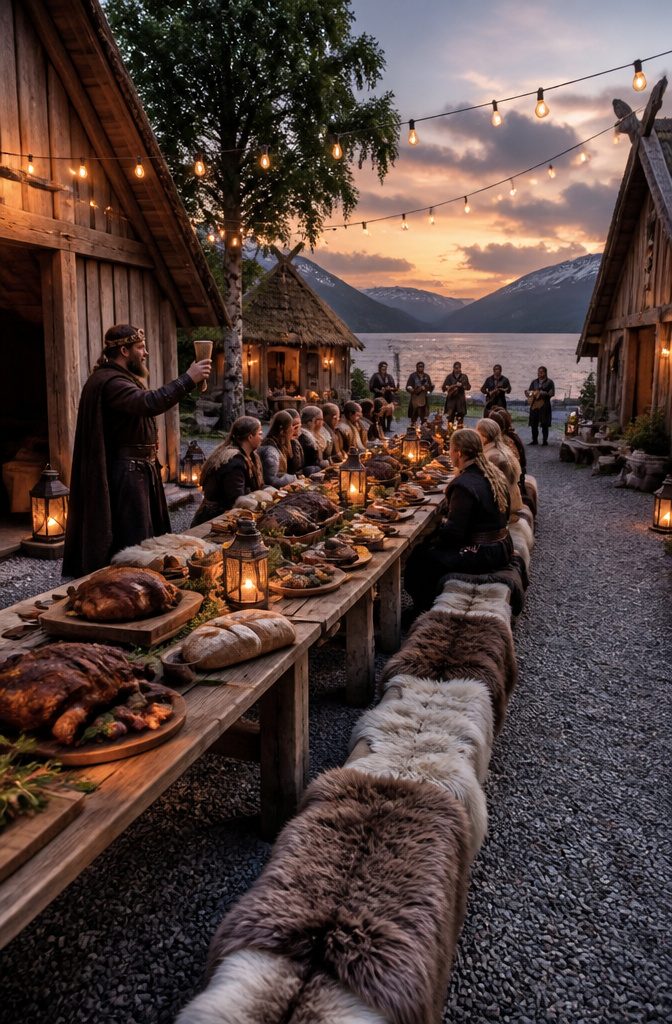
The wedding feast was the center of gravity in Norse wedding traditions, and it could stretch across days or even a full week.
Food and drink were never just sustenance; they signaled abundance, hospitality, and the shared joy of two families becoming one.
The tables would have carried roasted meats like pork shoulder or lamb legs, smoked fish, barley dishes, and rye loaves, all shaped by what the season allowed.
What strikes me most is how communal the whole affair was. The feast gathered not just immediate family but the broader community, with storytelling and music woven through the days.
Toasts ran in a deliberate order, often starting with the father of the bride and moving through parents, attendants, and friends, each speech adding tears or laughter to the evening.
In later Norwegian tradition, a toastmaster kept the rhythm, and the meal could stretch for hours.
After dancing came nattmat, the night food, simple offerings like sausages, soup with bread, or sandwiches to carry guests through until morning.
The point was never a single perfect moment. It was the sustained, collective act of celebration itself.

925 Sterling Silver Elder Futhark Runes Norse Ring: Crafted from high-quality 925 sterling silver, each ring is engraved with a 925 mark, ensuring compatibility with various skin types and minimizing the risk of allergies or discoloration on your fingers.

Unique silver tungsten rings for men & women, with Norse Viking Runes & Hawaii Koa Wood inlay, 8mm width.

[Material]- Our Viking Rune ring for men crafted from premium 925 sterling silver, w/ S925 stamp, nickle free, lead free and hypoallergenic, comfortable for daily wear.
Post-Wedding Customs and the Honeymoon
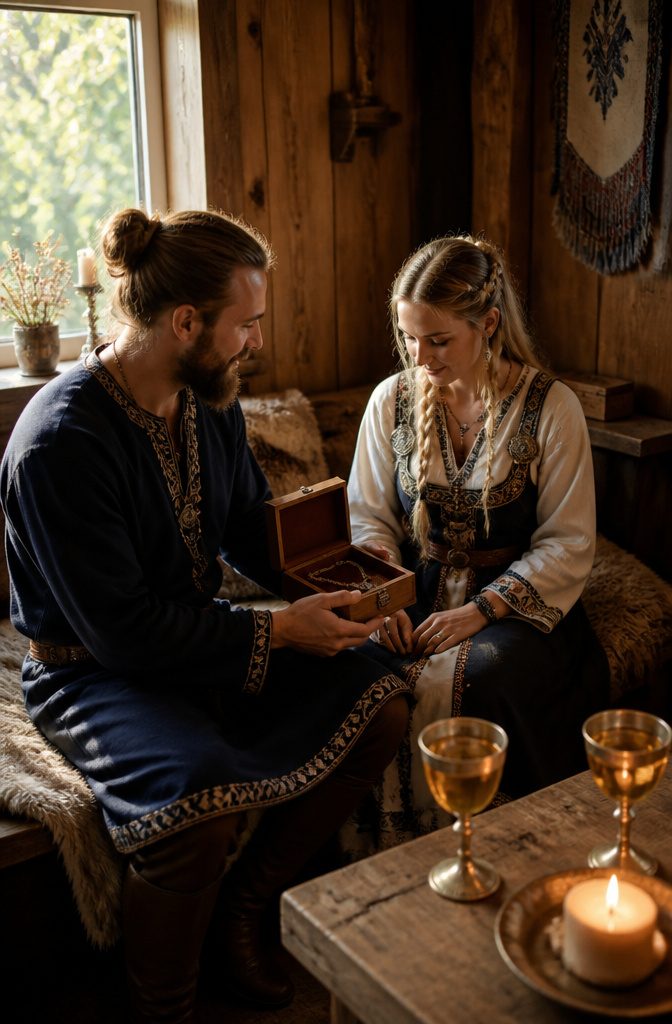
The morning after the wedding, the groom gave his bride the morgen-gifu, or morning gift, a payment typically worth about one-third of her dowry.
Clothing, jewelry, or household goods passed from his hands to hers once the marriage was consummated, a practical acknowledgment that she now entered his household with property of her own.
For the month that followed, the couple drank mead together daily, sharing the fermented honey drink as a kind of extended fertility rite.
This habit of drinking honey mead across one lunar cycle is where the word "honeymoon" likely originates, though whether Vikings themselves used the term is less certain than the custom itself.
If the match soured, either partner could end it. A woman seeking divorce had only to summon a witness to her home and declare her intent before them, and the marriage dissolved.
The contract already spelled out how property would divide, including the return of her dowry to her family. Compared to the restrictions most European women faced for centuries afterward, the ease of this exit was remarkable.
Women’s Rights in Norse Marriage
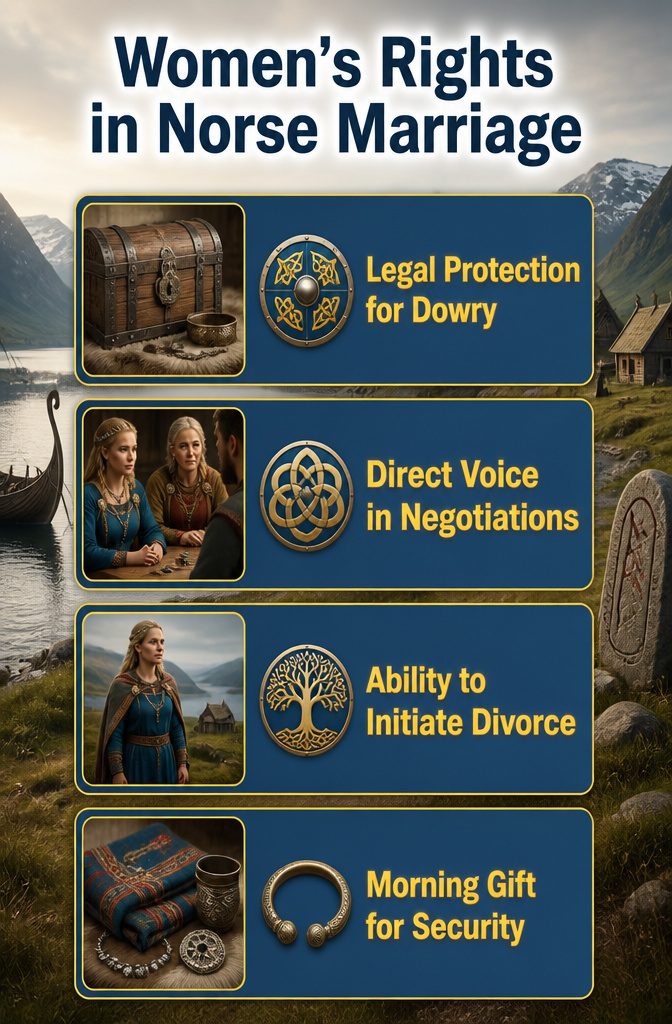
A Norse woman’s dowry, called heimangerð, was not a gift her husband could spend as he pleased.
It came with strong legal protections that kept it intact even if his judgment failed. If the marriage ended in divorce, that wealth reverted to her family rather than staying in his hands.
She also had a direct voice in the deal.
Sagas describe daughters and their mothers being offered the chance to accept or reject a suitor after the bride price and dowry were negotiated. The terms mattered enough that women sat at the table for them.
Property rights went further.
Women could inherit land and other assets, and they could initiate divorce on their own. Rune stones and saga accounts mention women married four times or more, which only happens in a system where leaving is a real option.
The morning gift, or morgen-gifu, added another layer of security. The groom owed it after the wedding was consummated, typically valued at about one-third of the dowry.
Clothing, jewelry, and household items all counted. It was his ongoing obligation to her wellbeing, not a favor but a requirement written into the marriage contract from the start.

Thors Hammer Jewelry Design: Mjolnir symbolizes as a talisman for battle and life, giving the wearer the strength to overcome difficulties, the courage to face fear, and the generosity to those around him. Wearing a mjolnir necklace and reminding people to fight bravely for their beliefs and goals

We create Norse jewelry with love and admiration for the unique culture, Scandinavian mythology, and history of the Vikings.

INFINITY RUNE SYMBOL: Designed in the shape of the Norse infinity loop, this pendant represents eternal strength, unbreakable bonds, and the endless cycle of life and battle.
Regional and Social Variations
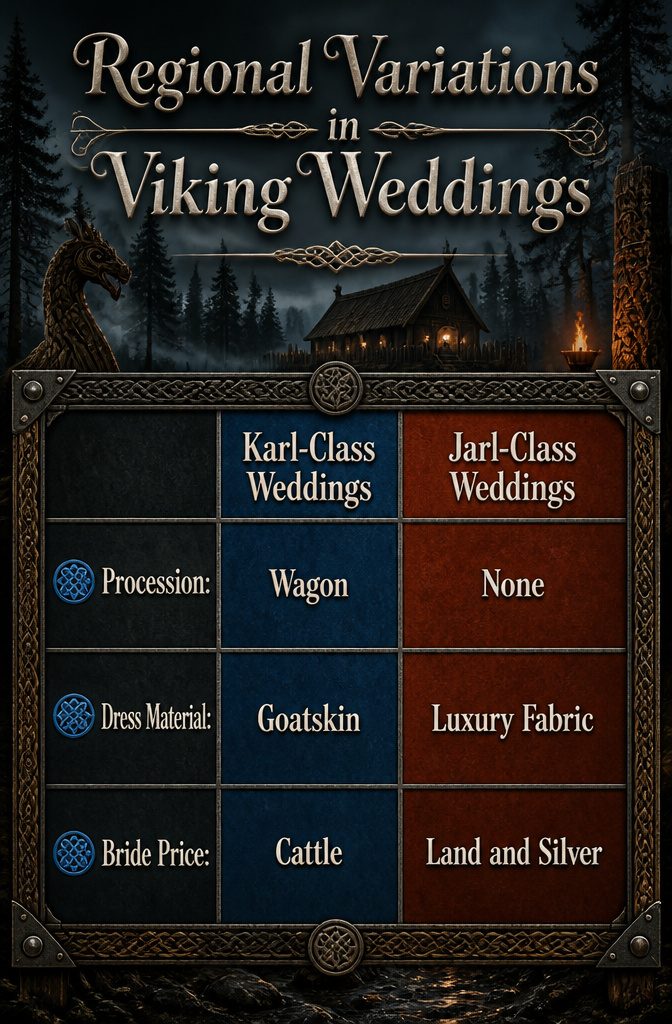
A Viking wedding in the early 900s looked radically different depending on whose hall you stood in.
The bride price for a karl-class wedding, the middle ground of Norse society, might involve a wagon procession and a goatskin dress that cost more than most families saw in a year.
The poem Rigsthula gives us that single snapshot: the bride riding in, bearing keys, sitting veiled while rings exchanged hands and the bed was made ready.
Poorer households, like shepherding families, likely skipped the wagon and the goatskin kirtle entirely, though the sagas stay silent on exactly what replaced them.
Jarl nobility operated on another scale entirely. Their bride prices ran to land, cattle, silver, the kind of wealth that proved alliance rather than mere union.
The sagas suggest industriousness and good nature mattered across classes, but only the wealthy could afford to weigh those virtues after the dowry was settled.
What united every level was the mundr itself, the compensation for a daughter’s lost labor, though the form it took shifted from a few head of cattle to estates that shaped politics for generations.
What Changed and What Stayed
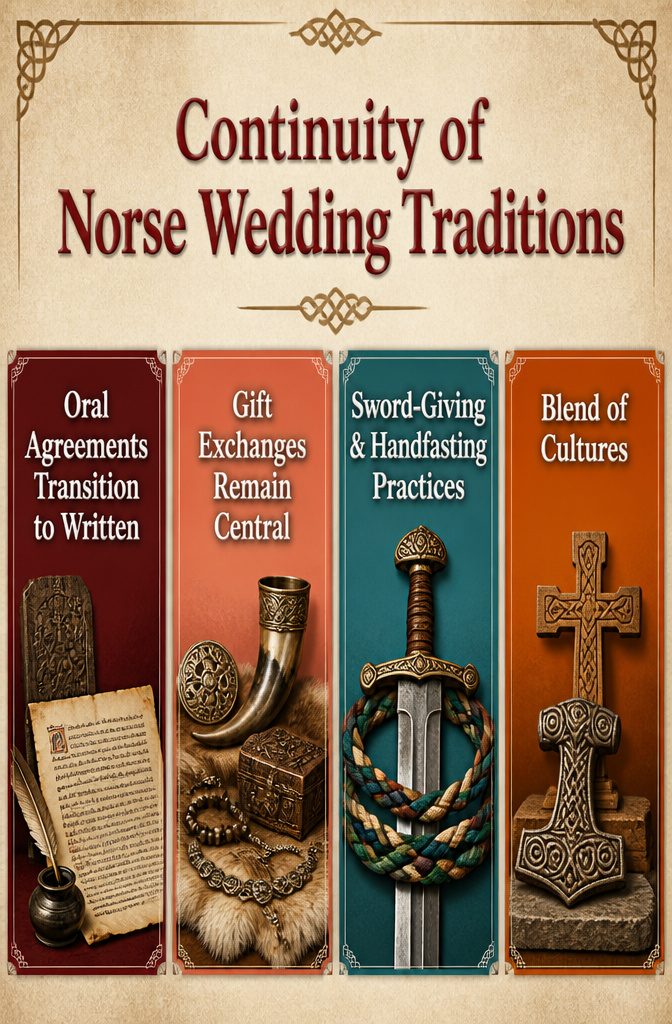
Norse wedding traditions did not disappear when Christianity arrived. They absorbed it, and the result was a ceremony that kept its old bones while speaking a new language.
The earliest Viking marriages ran on spoken agreements witnessed by the community, not paper.
By the end of the Viking Age, written dowry contracts and marriage documents had entered the process, carried in by Christian practice and its preference for formal record.
That shift from oral to written changed how a union was proved and enforced, though the exchange of gifts and the feast itself stayed central.
Sword exchanges and handfasting, where they happened, appear to have been older customs that some families maintained.
Tacitus described sword-giving among Germanic tribes centuries before the Viking Age, and while the tradition may have continued for high-status families, the evidence does not confirm it was universal. Christianity added its own layers without erasing what came before.
The blend was practical, not decorative. Vikings already borrowed across cultures readily, including holding fully Christian medieval weddings when the situation called for it.
What survived longest were the parts that served a social purpose: the alliance between families, the public feast, the transfer of property and protection. The gods invoked at the altar simply changed names, or shared them.

Viking Runes Design – This ring features carved Elder Futhark runes around the band, the ancient Norse alphabet used for divination, protection, and strength. Each rune carries its own meaning – from courage to wisdom.

Viking Ring Design: Unique viking ring with norse runes. In norse mythology, runes are not only symbols, but also believed to bring luck, power, protection, hope, happiness, victory etc. The tree of life symbol represents positive energy, growth, strength and new life; Wearing it as amulet ring, it will bring good luck for wearer

Norse Viking Runes & Mobius Design:The pendant combines a twisted Mobius strip with 24 ancient Norse runes, symbolizing guidance, protection, and resilience—ideal for those seeking direction in life’s challenges.
Frequently Asked Questions
What is the significance of the bride price in Viking weddings?
The bride price, called mundr, compensated the bride’s family for losing her labor and proved the groom could support her.
Legal minimums were set at 8 ounces of silver in Iceland and 12 ounces in Norway. Without this payment, the marriage had no standing in Norse law.
How were Viking weddings celebrated?
Viking weddings centered on multi-day feasts with roasted meats, barley dishes, and rye loaves, plus toasts that ran in deliberate order from the bride’s father through friends and attendants.
Music, dancing, and storytelling filled the hours, and simple night food called nattmat carried guests until morning. The whole affair gathered the broader community, not just family.
What role did women play in Viking marriages?
Norse women held stronger marital rights than most European women for centuries afterward. Their dowry, or heimangerð, carried legal protections a husband could not override, and it reverted to her family on divorce.
Women could inherit land, initiate divorce by simply declaring it before a witness, and were consulted on matches after financial terms were set.
How does a Viking say “I love you”?
The sagas do not record a fixed phrase for this.
Romance was typically expected to grow after the wedding rather than drive the match, with phrases like "their love began to grow" appearing only once the couple had settled into married life. The practical bond mattered more than verbal declaration.
What did Vikings do when a girl turned 12?
Girls became marriageable once they reached puberty in Norse society, which could happen around this age, but no particular ceremony was tied to that birthday.
What are some pagan wedding traditions?
Norse pagan weddings included handfasting with cord-wrapped hands, sword exchanges between families, and invocations to Thor, Frigg, and Freyja.
Thor’s hammer was placed in the bride’s lap to bless fertility, and the sword exchange bound each partner to protect the other’s kin.
The ceremony typically fell on Friday, Frigg’s day, and purification baths stripped away old identity before the vows.
What age did Viking girls get married?
Marriages were arranged by families once a girl was of marriageable age, with the sagas showing far more concern for bride price, dowry, and political alliance than for the partners’ ages or feelings.