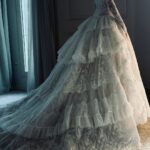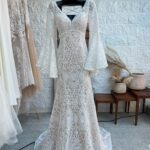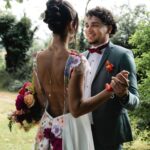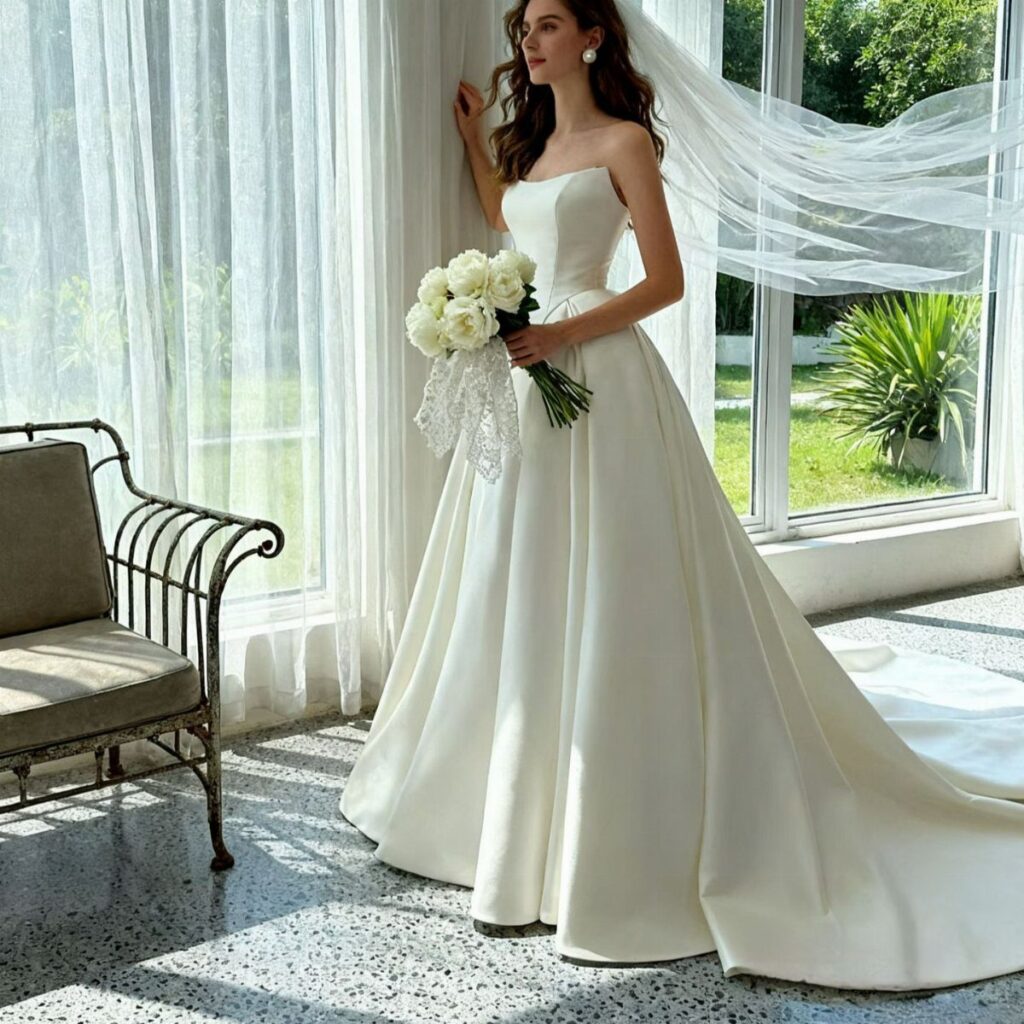
A wedding dress train can run anywhere from a light brush against the floor to more than ten feet of fabric trailing behind you, and the right length depends almost entirely on your venue and how much help you want managing it.
The chapel train at about 60 inches sits where most brides actually land: long enough to show up in photographs, short enough to walk through a hotel ballroom or tented lawn without a team of helpers.
[link-whisper-related-posts]1. Chapel Train
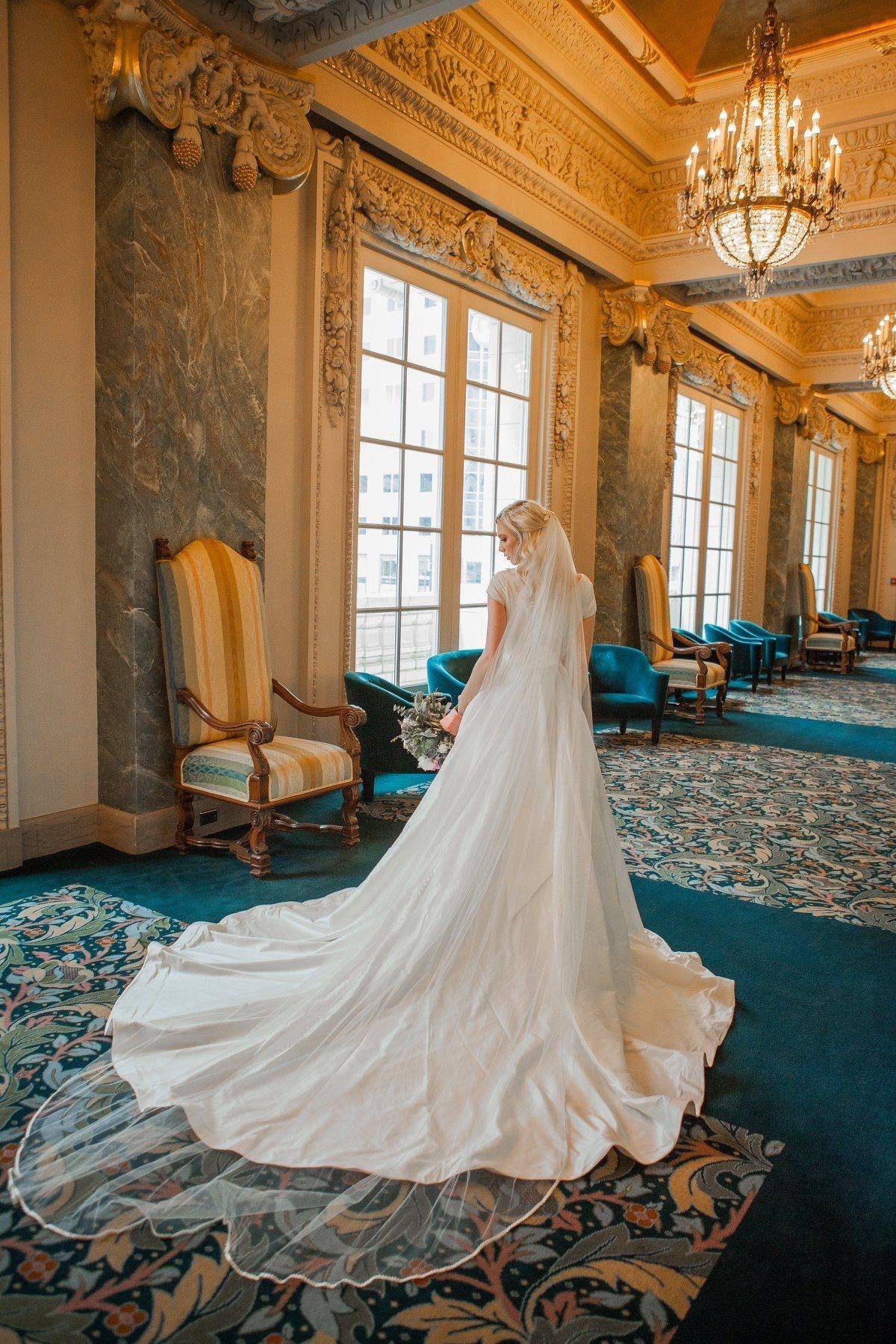
A chapel train extends about 60 inches from the waistline, long enough to announce itself in photos but short enough that you will not need a team to manage it.
This is the length I see most often in real weddings, and for good reason. It works in a church, a hotel ballroom, a historic estate, or a tented lawn without demanding special accommodations.
The five-foot span gives enough fabric for movement and some detail work at the hem without turning every step into a calculation.
If your wedding is outdoors, budget for cleaning or accept some ground contact. The train will pick up grass, dust, or moisture; that is simply the trade-off for the silhouette.

Fabric: Lace appliques, Tulle

ELEGANT DESIGN: Stunning A-line wedding dress featuring a sweetheart neckline and beautifully detailed bodice with intricate embellishments

✨French Leavers Lace & Romantic Florals Crafted with premium French Leavers lace, this gown showcases intricate 3D floral appliqués that cascade from the off-shoulder neckline to the scalloped train. The lace is OEKO-TEX certified – hypoallergenic, breathable, and delicately soft against the skin, perfect for outdoor ceremonies or summer weddings.
2. Cathedral Train
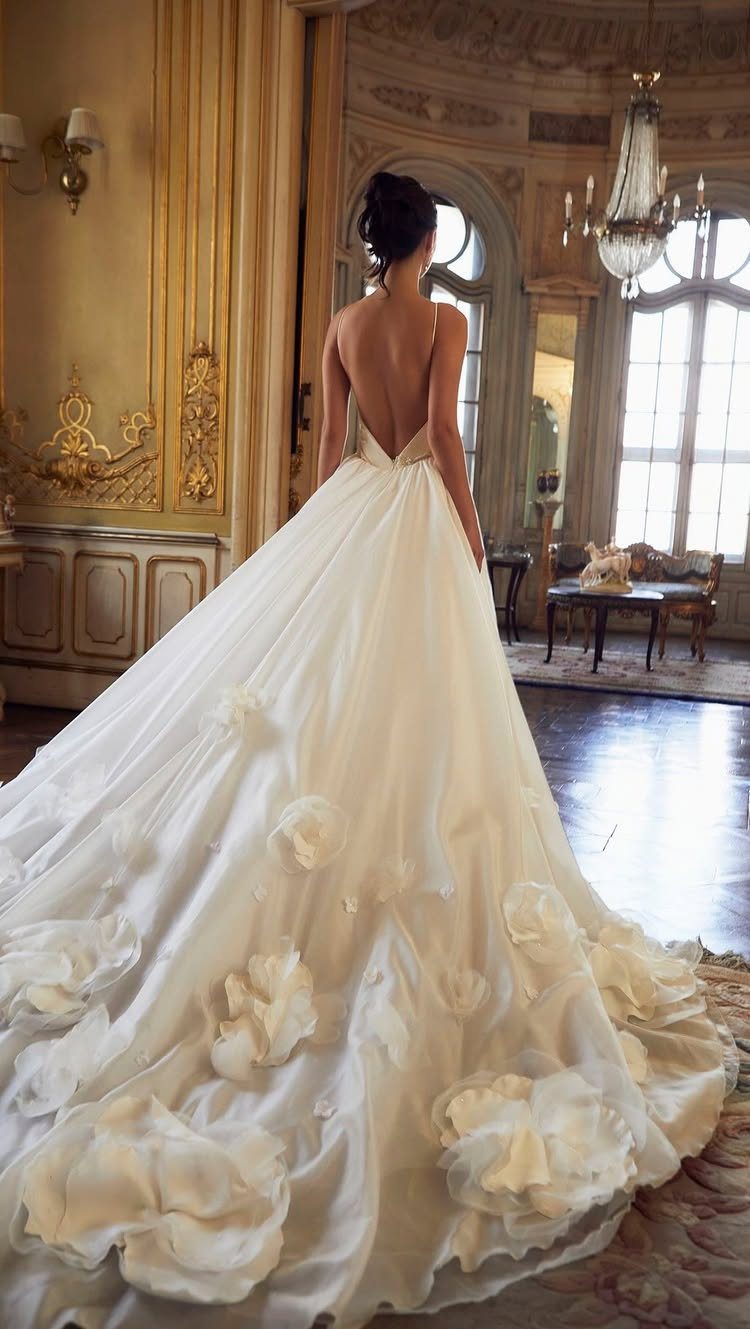
Cathedral trains spill much farther behind you than a chapel train, and the visual weight of that extra fabric changes the whole presence of the dress in a room.
The extra length demands a formal setting with space to display it: a historic church, a grand ballroom, an aisle long enough that the fabric has room to unspool behind you.
You will need help maneuvering, and you will almost certainly need a bustle before the reception.
Without one, the train becomes a hazard to you and a tripping risk to guests. Factor both the bustle cost and the helper into your planning.

Gorgeous wedding veil measures 118 inches in length and 63 inches in width. It is specially designed for a classic wedding. The elegant and flowing royal train perfectly complements the main wedding dress, creating an eternal and romantic atmosphere.

Material: Lace&Tulle

ELEGANT A-LINE SILHOUETTE: This stunning A-line ball gown features a structured corset bodice and a dramatically full skirt with a sweeping cathedral train.
3. Sweep/Brush Train
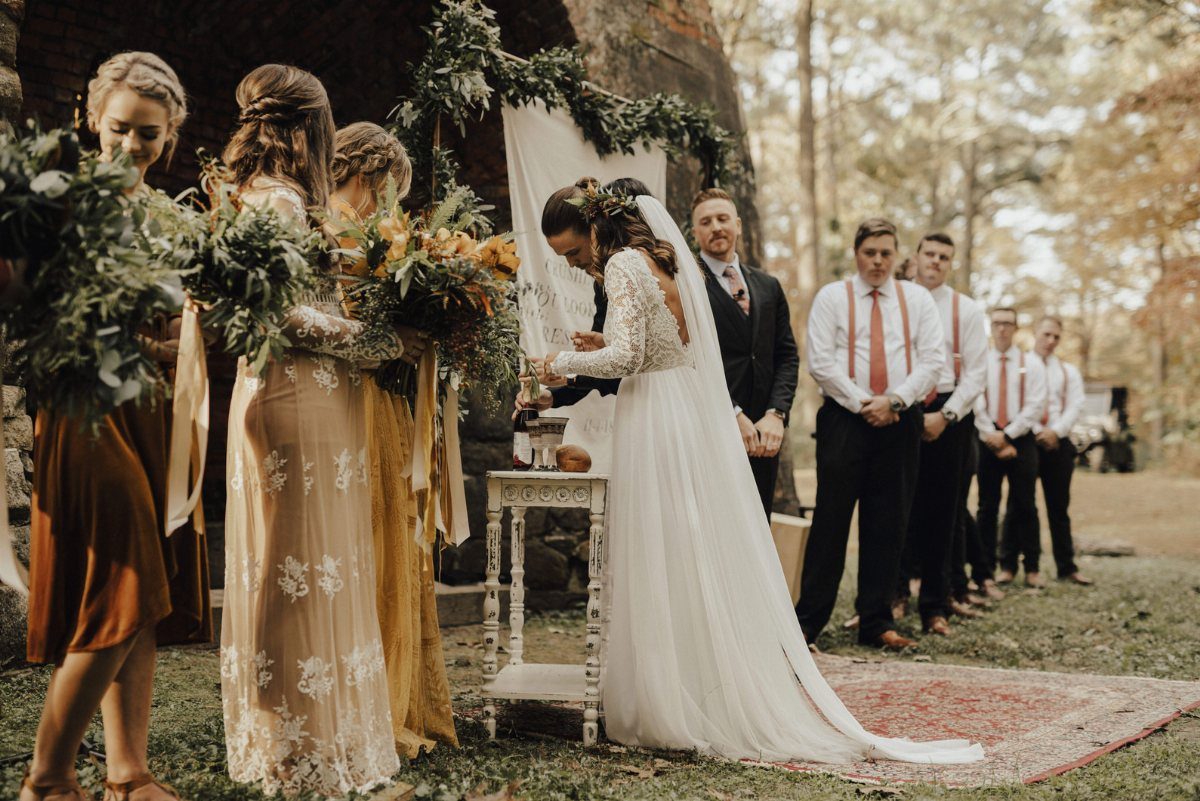
The sweep or brush train barely clears the hem of the dress, touching the floor with just enough length to catch light as you move.
This is the practical choice for outdoor ceremonies, destination weddings, or any setting where a longer train would collect debris, snag on terrain, or require constant attention.
The lack of length also suits minimalist gowns where clean lines matter more than drama.
You sacrifice the photographic impact of trailing fabric, but you gain freedom of movement and one less thing to worry about. For a casual or semi-formal wedding, that is often the right exchange.

Designs: high low wedding dress for brides, off the shoulder prom dress, ball gown high low quinceanera dress for teens, bridal wedding dress corset, Gothic

Designs: high low wedding dress for brides, off the shoulder prom dress, ball gown high low quinceanera dress for teens, bridal wedding dress corset, Gothic

Brush-Train Profile - A sheath column evening gown extends into a sweep brush train with an overskirt finish.
4. Detachable Train
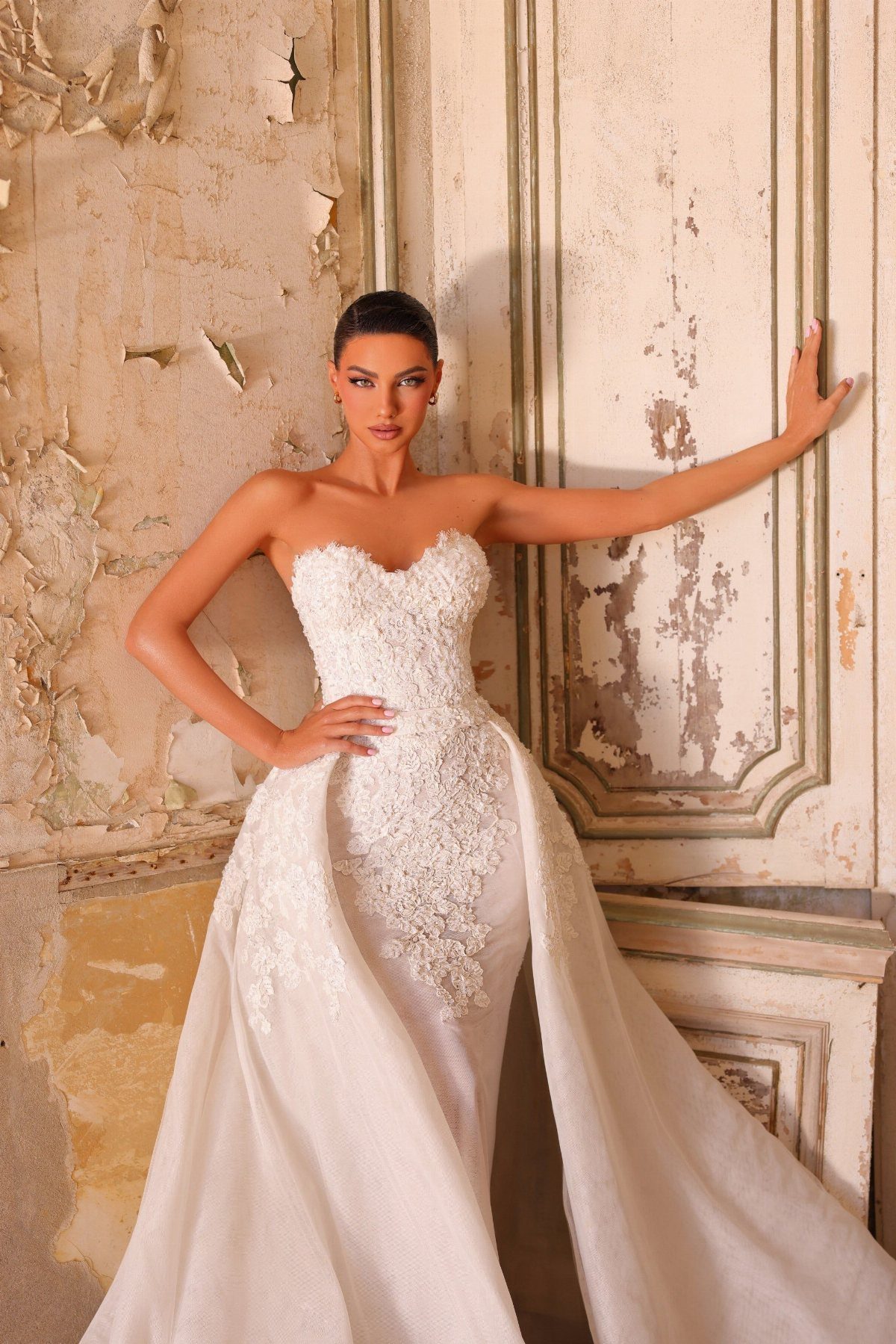
A detachable train fastens at the waist or back and comes off after the ceremony, so one gown carries you from the aisle to the dance floor looking like two different dresses.
I like this option for brides who want the aisle moment but do not want to manage a bustle or change dresses entirely.
The ceremony look carries the drama of tulle, lace, or flowing fabric; the reception look drops the weight and the tripping hazard in one motion.
Some brides pair the removal with a second small change: losing the veil, switching earrings, pulling hair back. The train does the heavy lifting of transformation, so the rest can stay subtle.

Package Inclusion: every purchase includes 1 x satin bow train; Now, achieving the dreamy and classy look for your dress is made more accessible, proper for that removable bow train for a wedding dress you've always wanted

Luxurious Satin – Elevate Your Dress: High-quality satin adds rich gloss and gorgeous flow, making your dress elegant and formal for any special occasion.

Luxurious Satin – Elevate Your Dress: High-quality satin adds rich gloss and gorgeous flow, making your dress elegant and formal for any special occasion.
5. Royal Train
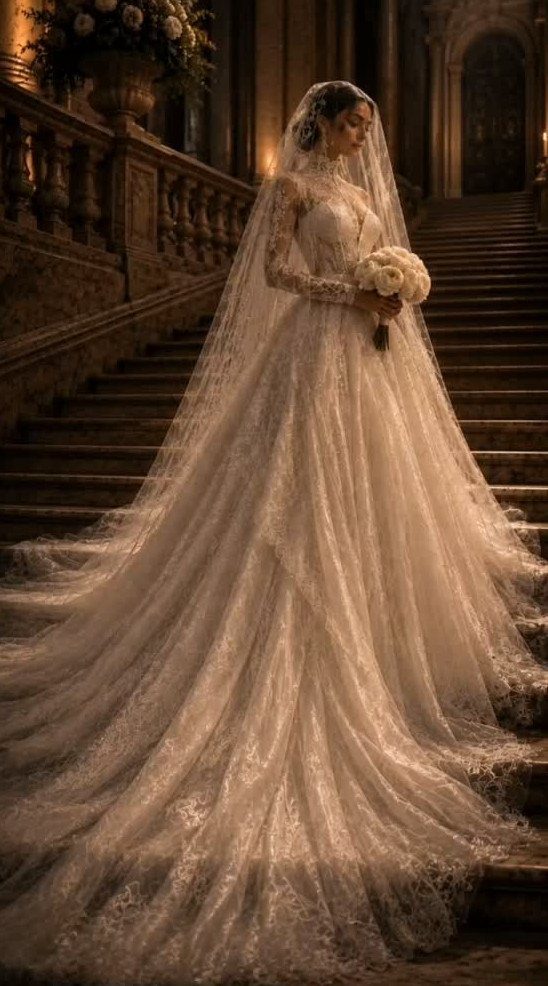
Royal trains extend past ten feet and exist for spectacle.
This length requires a venue that can hold it: a cathedral, a grand ballroom, an expanse of floor where the fabric can lie flat and visible.
The train becomes a canvas for couture detail, but the detail is almost secondary to the sheer scale.
You will need assistance during the ceremony, careful choreography for entrances and exits, and a space large enough that the train does not bunch or loop on itself.
For most budgets and venues, this is impractical. For the rare wedding where the setting matches the ambition, the effect is unforgettable.

Complete 2-Piece Bridal Set Includes 2 matching pearl wrist bustles in one box. Keep one as a backup, add one to a bridal emergency kit, or use them for different wedding and formal dress looks.

Decorative Beaded Floral Design Includes one ivory wrist bustle decorated with a dimensional cluster of pearl-style and faceted white beads, adding an elegant accent to wedding gowns and formal dresses.

【Practical & Pretty Train Management】This dual-purpose is designed to neatly your wedding. Its beaded design adds a decorative touch while solving the practical issue of a long train
6. Court Train
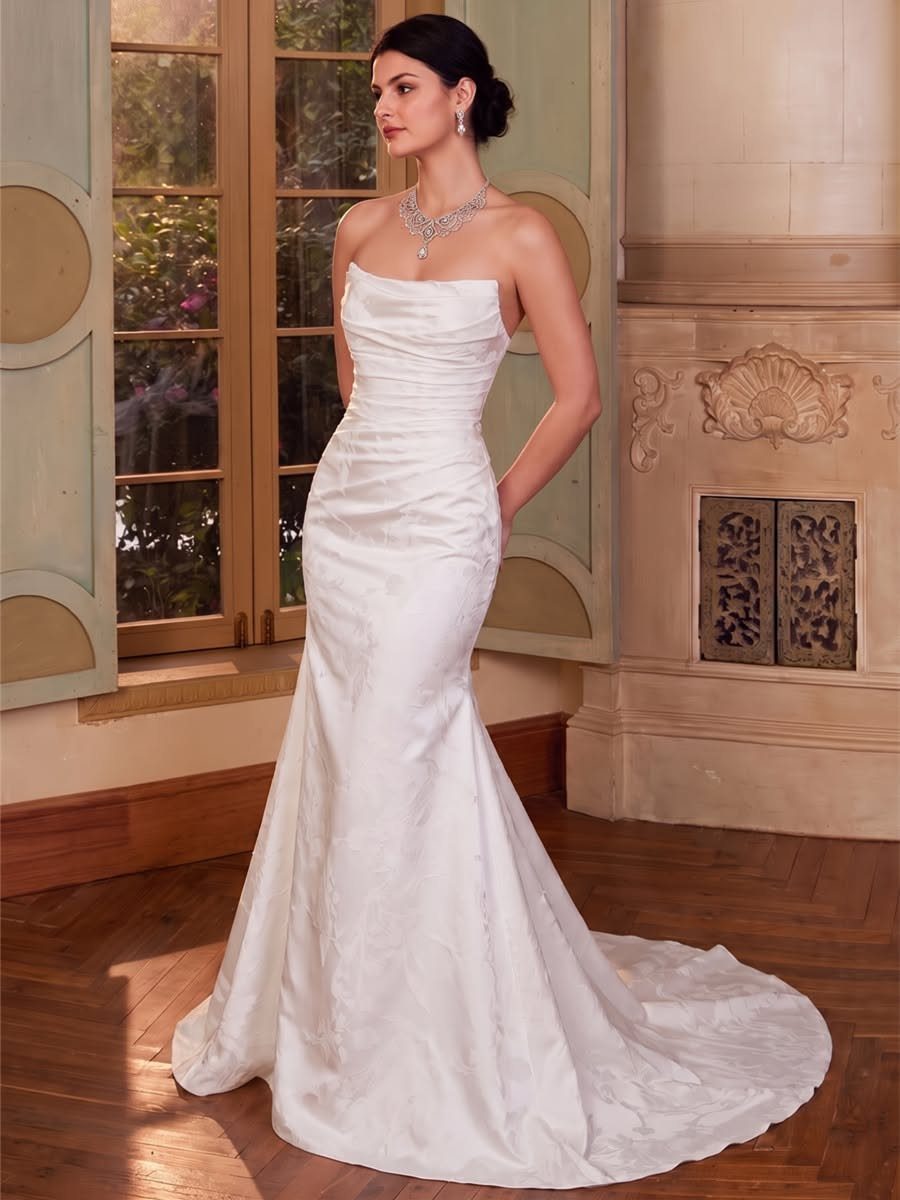
Court trains split the difference between a sweep and a chapel, extending one to two feet behind the bride for movement without statement.
The length suits smaller venues where a chapel train would crowd the space or tangle in seating: intimate churches, garden ceremonies, rooms where the aisle is short and the guest count is modest.
You get some trailing fabric for photographs and a sense of occasion, but you keep the practicality of a train that does not require management. For a bride who wants elegance without theater, this is the understated middle ground.

Features:Spaghetti Straps Wedding Dresses for Bride,Tulle Lace Wedding Dresses 2026,Spaghetti Straps Tulle Bridal Ball Gowns for Women,Lace Appliques Wedding Bridal Gowns 2026,V-Neck Tulle Wedding Dresses with Train,Simple Spaghetti Straps Tulle Beach Wedding Dresses.A-Line,Spaghetti Straps,V-Neck,Tulle Lace Appliques,built in bra.The simple wedding dress is suitable for every bride!
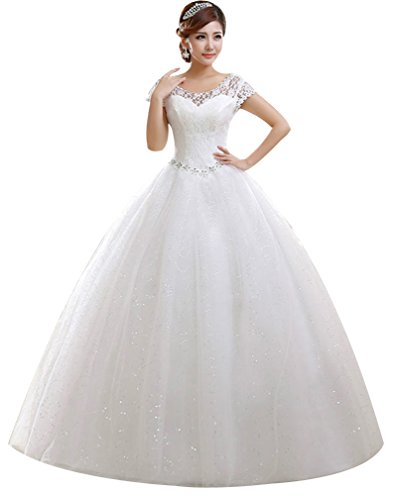
US0 SIZE:BUST:81cm(32");WAIST:62cm(24.5");HIP:88cm(34.5");LENGTH:140cm(55")

STRAPLESS BALL GOWN SILHOUETTE: This stunning bridal gown features a strapless neckline and a voluminous ball gown skirt that creates a dramatic, princess-like look perfect for your special day.
Choosing the Right Train
Your venue should shape the train decision as much as the dress itself. Outdoor gardens and beach settings favor sweep or court trains, or a lightweight detachable option that will not collect sand or snag on terrain.
Historic estates let longer trains read well in photographs because the architecture gives the eye room to travel.
Movement matters too.
A chapel train needs no helper; a cathedral train almost certainly does. Think through the hours after the ceremony, not just the walk down the aisle, before you settle on a train length.

Bridal wedding veil is made by high quality and light-weight soft tulle with comb.

[Extra Long Size for Formal Dresses] Measures 72" x 23.5" x 7" with a side gusset for extra room, designed to store and protect long garments such as wedding dresses, bridal gowns, prom dresses, evening gowns, and formal wear.

32" Gusset Expands to Fit the BIGGEST, PUFFIEST, EXTRA LARGE wedding gowns without wrinkling, but still fits into any standard closet.
Managing Wedding Dress Trains
Most dresses sold today can take a bustle; your tailor will fit one during alterations. The person doing your alterations will pick a bustle shape that matches how your dress is built.
Have your seamstress walk you through the bustle at your final fitting.
Fastening a cathedral train correctly takes a few minutes, and you will not want to be the one doing it in a dress with a ten-foot span behind you.

Designs: high low wedding dress for brides, off the shoulder prom dress, ball gown high low quinceanera dress for teens, bridal wedding dress corset, Gothic

Designs: high low wedding dress for brides, off the shoulder prom dress, ball gown high low quinceanera dress for teens, bridal wedding dress corset, Gothic

Designs: high low wedding dress for brides, off the shoulder prom dress, ball gown high low quinceanera dress for teens, bridal wedding dress corset, Gothic
Best Venues for Train Types
Shorter trains suit outdoor venues by design.
Sweep and court trains clear grass and uneven ground without constant attention. Beach weddings especially benefit from minimal fabric that will not drag sand or add weight once it is wet.

Design: Waistband design for quick attachment and removal. Floor-sweep flowing silhouette, adds dramatic volume and ballgown effect to any fitted gown.

This detachable wedding train material: 4 layers soft tulle, full length, long train, the multiple layers of tulle fit together nicely and give a great shape for wedding dress;

Luxurious Satin – Elevate Your Dress: High-quality satin adds rich gloss and gorgeous flow, making your dress elegant and formal for any special occasion.
Bridal Style Considerations
The train changes how the whole silhouette reads. Extra fabric adds movement to a simple gown and gives lace or beadwork a stage as you walk.
A plain dress becomes formal with a cathedral train; a heavily detailed gown may need only a sweep to keep the lines clean.
Fabric matters.
Tulle and organza hold shape for drama; softer fabrics drape and pool differently. The neckline and waistline should feel continuous with the train, not like 2 ideas stitched together.
I think of the train as part of the same decision as the venue and the silhouette. Choose each piece to agree with the others, and the overall effect takes care of itself.

Practical & Pretty Train Management: This dual-purpose bracelet is designed to neatly hold your wedding dress train. Its beaded design adds a decorative touch while solving the practical issue of a long train.

【Comfortable Walking】This wrist train loop offers an easy way to lift and carry your wedding dress train or veil without clips or complicated bustle hardware. Ideal for brides who need quick mobility throughout the day

Gold & Silver Dual-Tone Design: Comes with 2 gold and 2 silver rhinestone brooches (total 4 pieces), matches various clothing colors (white, black, pastels, etc.)—suitable for both daily and formal occasions
Frequently Asked Questions
What is the name for the train on a wedding dress?
Wedding dress trains have several names based on length. The shortest ones, called sweep or brush trains, just skim the floor behind you, while a court train falls a foot or two longer.
Chapel trains run about 60 inches, cathedral trains spill much farther, and royal trains stretch past ten feet.
Some dresses come with a train that hooks or buttons on at the waist or back so you can take it off after the ceremony and dance without it.
Which wedding dress train is the most popular?
The chapel train is the one I see most often at real weddings.
At about 60 inches from the waist, it has enough length to move well and hold lace or beading, but one person can still carry it. It works in churches, ballrooms, historic estates, and tented lawns alike.
Can you shorten a wedding dress train?
Yes, many trains can be shortened during alterations. Your tailor can adjust the length to suit your venue or comfort level.
Do all wedding dresses need a bustle?
Not all of them.
Shorter trains like the sweep or brush style are usually manageable without one. Chapel, cathedral, and royal trains almost always need a bustle for the reception, since long fabric becomes a tripping hazard to you and your guests.
Is a long train suitable for outdoor weddings?
It depends on the ground you are covering. Smooth stone pathways can handle longer trains, but grass, sand, mud, or uneven terrain make shorter styles far more practical.
I would budget for cleaning or accept ground contact if you choose a chapel train or longer for an outdoor ceremony.
How long was Princess Diana’s wedding dress train?
Princess Diana’s wedding dress had a royal train, which means it extended more than ten feet behind her.
Royal trains require grand venues like cathedrals or ballrooms where the full length can lie flat and visible without bunching or looping on itself.